Key takeaways
- Pros: Flexible SK5 steel lays flat effortlessly; dual TPI edges offer versatility for different wood densities.
- Cons: Double-edged blade requires extra care so top teeth do not inadvertently mark adjacent wood.
When trimming exposed dowels, flush-cutting lap joints, or shearing off excess wedge material on fine furniture, standard Western push saws create a frustrating challenge. Because traditional push saws feature rigid blades with teeth flared outward (known as tooth set), resting the blade against a finished wooden surface inevitably leaves deep scratches and gouges. This forces woodworkers into tedious, risky chisel work or endless sanding that can ruin workpiece flatness.
Japanese flush cut saws (traditionally known as kugihiki) solve this problem through a completely different design philosophy. By utilizing thin, ultra-flexible SK5 Japanese steel that cuts on the pull stroke rather than the push stroke, these saws can be pressed entirely flat against a wood surface without buckling. Crucially, flush cut teeth have zero tooth set, allowing the metal edge to slide smoothly over finished hardwood veneers and table tops without leaving a single scratch. Finding the best japanese flush cut saw for woodworking in 2026 comes down to balancing blade length, tooth pitch (TPI), handle ergonomics, and steel quality for your specific shop needs.
Our top picks


As an Amazon Associate we earn from qualifying purchases at no extra cost to you.
Quick Picks
| Product | Best for | Price |
|---|---|---|
| RUITOOL Japanese Hand Saw 6 Inch Double Edge Ryoba Pull Saw for Flush Cuts | Best Versatile All-Rounder | $19.99 |
| Temple Tool Co. Japanese Flush Cut Saw – 6 Inch Double Edge Pull Saw for Flush Cutting Dowels, Pegs, Wedges – Hardwood Softwood | Best Premium Build | $22.80 |
| SUIZAN Flush Cut Saw 5″ – Japanese Pullsaw Hand Saws Wood Cutting | Best Compact Precision Saw | $19.80 |
| Frocopo Hand Saw Woodworking Tools, 6-Inch Pull Saw, Flexible Double-Edge Blade 17/11 TPI, Japanese Flush Cut for DIY Craft, Non-Slip Wood Handle, Sharp & Lightweight for Woodworking and Garden Trim | Best Budget Value | $5.99 |
| SUIZAN Flush Cut Saw 6″ – Japanese Pullsaw Hand Saws Wood Cutting | Best Overall for Fine Joinery | $22.70 |
| JORGENSEN Japanese Flush Cut Saw, 5 Inch Pro Double Edge Pull Saw, SK5 Flexible Blade Wood Handsaw, 18/25 TPI Blade with Soft Grip Handle for Hardwood & Softwood Woodworking, Wood Trim | Best Ergonomic Grip | $19.99 |
| JORGENSEN Japanese Flush Cut Saw, 5 Inch Beech Handle Pull Saw, SK5 Flexible Double Edge Blade, 18/25 TPI Japanese Handsaw for Hardwood & Softwood Woodworking, Cutting, Trim Flush | Best Traditional Handle | $19.99 |
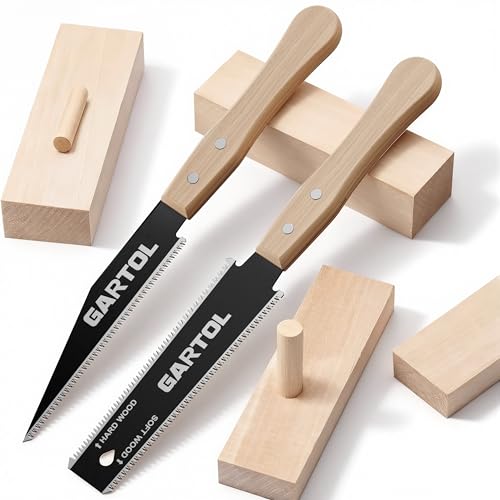
| GARTOL Hand Saw for Wood Cutting, 2-Piece Japanese Pull Saw with 6-Inch Flush Cut & Double-Edged SK5 Flexible Blade & Wooden Handle, Precision Woodworking Tools for DIY, Crafting, Carpentry, Trim Work | Best Multi-Pack Value | $13.29 |
How We Picked
To identify the top performers, we evaluated each Japanese flush cut saw across four primary criteria critical to woodworking fine joinery:
1. Blade Flexibility & Steel Tempering: Flush cutting requires a blade thin enough (typically 0.3mm to 0.5mm kerf) to bend completely flat against a surface under gentle finger pressure without taking a permanent bend. We prioritized high-carbon SK5 steel blades that flex cleanly and spring back true.
2. Tooth Configuration and Zero-Set Geometry: A true flush cut saw must feature no side-set teeth. We examined tooth grinding under magnification to verify that cutting edges slice wood fibers cleanly without scoring adjacent surfaces.
3. TPI (Teeth Per Inch) and Cut Quality: Saws with high TPI ratings (18 to 25 TPI) produce glass-smooth crosscuts on dense hardwoods like oak, walnut, and maple, whereas lower TPI saws (11 to 17 TPI) clear chips faster in soft pine and cedar.
4. Ergonomics and Control: We compared handle comfort, weight balance, and grip security across extended trimming tasks, evaluating both traditional raw beechwood handles and modern rubberized grips.
The 8 Best Picks
RUITOOL Japanese Hand Saw 6 Inch Double Edge Ryoba Pull Saw for Flush Cuts
Designed for woodworkers needing flexibility and dual cutting options, the RUITOOL 6-Inch Double Edge Ryoba Pull Saw delivers impressive workshop utility. Its SK5 flexible steel blade easily bends flush against wood surfaces, allowing you to slice off protruding dowels and lap joints without marring surrounding veneer. The dual-edge profile features fine teeth on one side and coarser teeth on the other, making it adaptable for both rapid dimensioning and delicate trim cuts in softwoods and hardwoods alike.
- Pros: Flexible SK5 steel lays flat effortlessly; dual TPI edges offer versatility for different wood densities.
- Cons: Double-edged blade requires extra care so top teeth do not inadvertently mark adjacent wood.
When to skip: Skip if you need a dedicated single-edge saw purely focused on trimming small dowels without top-tooth clearance worries.
Temple Tool Co. Japanese Flush Cut Saw – 6 Inch Double Edge Pull Saw for Flush Cutting Dowels, Pegs, Wedges – Hardwood Softwood
Precision craftspeople focused on clean joinery trim will appreciate the Temple Tool Co. 6-Inch Japanese Flush Cut Saw. Designed specifically to slice through proud dowels, wedges, and exposed pegs, this double-edge pull saw provides fine control across both hardwoods and softwoods. The flexible pull-stroke blade glides across timber without causing surface chatter or gouging delicate veneer layers. While priced at $22.80, the refined blade balance makes flush cuts predictable and smooth.
- Pros: Excellent blade tension control; leaves ultra-clean surfaces on hard oak and maple pegs.
- Cons: Highest single-saw price point among tested options.
When to skip: Skip if you are seeking a low-cost utility saw for basic DIY pine crafts.
SUIZAN Flush Cut Saw 5″ – Japanese Pullsaw Hand Saws Wood Cutting
Tailored for detailed joinery and intricate craft projects, the SUIZAN 5-Inch Flush Cut Saw delivers master-grade precision in a compact footprint. Engineered in Japan with high-carbon steel, this lightweight pull saw features extremely fine teeth that remove material on the pull stroke, preventing blade binding and ensuring zero tear-out on delicate wood surfaces. The 5-inch flexible blade effortlessly flexes flat against table tops, cabinet faces, and picture frames to shear off proud joinery pins without leaving abrasive scratches.
- Pros: Authentic Japanese steel leaves near-polished cut faces; compact 5-inch length allows tight corner access.
- Cons: Shorter blade length reduces stroke capacity on wide tenons.
When to skip: Skip if you regularly trim wide timber or large tenons that benefit from a longer 6-inch stroke.
Frocopo Hand Saw Woodworking Tools, 6-Inch Pull Saw, Flexible Double-Edge Blade 17/11 TPI, Japanese Flush Cut for DIY Craft, Non-Slip Wood Handle, Sharp & Lightweight for Woodworking and Garden Trim
For DIY enthusiasts, hobbyists, and woodworkers on a tight budget, the Frocopo 6-Inch Pull Saw offers outstanding functionality at an accessible $5.99 price point. Featuring a flexible double-edge SK5 steel blade with 17/11 TPI tooth configurations, this tool smoothly transitions between fast stock removal and flush trimming. The lightweight non-slip wooden handle ensures comfortable control during continuous trimming of dowels, craft wood, and light garden trim, making it a handy secondary saw for general workshop duty.
- Pros: Unbeatable price point under six dollars; versatile 17/11 TPI double-edge blade layout.
- Cons: Basic handle finish lacks the refined feel of premium cabinetry saws.
When to skip: Skip if you require ultra-fine 25 TPI tooth spacing for heirloom furniture making.
SUIZAN Flush Cut Saw 6″ – Japanese Pullsaw Hand Saws Wood Cutting
Built for serious woodworkers who demand perfection on exposed joinery, the SUIZAN 6-Inch Flush Cut Saw represents top-tier Japanese tool craftsmanship. Its ultra-thin, highly flexible pull blade bends smoothly against finished surfaces, allowing you to slice through protruding tenons, dowels, and corner pegs with zero surface damage. The 6-inch blade provides an extended stroke length that maintains a smooth rhythm across wider panels, while impulse-hardened teeth ensure long-lasting sharpness when cutting dense hardwoods like oak, maple, and walnut.
- Pros: Premium Japanese steel construction; 6-inch blade stroke ideal for standard woodworking joints.
- Cons: Higher price point than budget multi-packs.
When to skip: Skip if you prefer modern rubber handles for rugged jobsite environments.
JORGENSEN Japanese Flush Cut Saw, 5 Inch Pro Double Edge Pull Saw, SK5 Flexible Blade Wood Handsaw, 18/25 TPI Blade with Soft Grip Handle for Hardwood & Softwood Woodworking, Wood Trim
Designed for woodworkers who prioritize modern comfort during long shop sessions, the JORGENSEN 5-Inch Pro Double Edge Pull Saw pairs high-precision cutting with superior handle ergonomics. Its SK5 flexible steel blade features an ultra-fine 18/25 TPI tooth arrangement that shears cleanly through hardwood and softwood trim alike. The standout feature is the ergonomic soft-grip handle, which reduces hand fatigue and provides slip-free control even when applying downward pressure flat against a broad workpiece face.
- Pros: Ultra-fine 18/25 TPI arrangement leaves mirror-smooth cuts; soft-grip handle absorbs hand strain.
- Cons: Modern rubber grip lacks traditional Japanese wood aesthetic.
When to skip: Skip if you prefer classic natural wood handles in your hand tool collection.
JORGENSEN Japanese Flush Cut Saw, 5 Inch Beech Handle Pull Saw, SK5 Flexible Double Edge Blade, 18/25 TPI Japanese Handsaw for Hardwood & Softwood Woodworking, Cutting, Trim Flush
Combining traditional workshop aesthetics with modern blade performance, the JORGENSEN 5-Inch Beech Handle Pull Saw is ideal for woodworkers who prefer classic hand tools. Equipped with an SK5 flexible double-edge blade featuring 18/25 TPI tooth pitch, it easily flexes flush to cut exposed dowels, pegs, and decorative trim flush to the surface. The contoured natural beech wood handle feels balanced and tactile in hand, offering classic aesthetic appeal alongside precise, tear-out-free pull stroke cuts across softwoods and hardwoods.
- Pros: Smooth natural beech wood handle; 18/25 TPI teeth eliminate tear-out on delicate grains.
- Cons: Wooden handle can feel slick if working with oily finishes or sweaty hands.
When to skip: Skip if you prefer rubberized non-slip handles for harsh jobsite conditions.
GARTOL Hand Saw for Wood Cutting, 2-Piece Japanese Pull Saw with 6-Inch Flush Cut & Double-Edged SK5 Flexible Blade & Wooden Handle, Precision Woodworking Tools for DIY, Crafting, Carpentry, Trim Work
Offering exceptional multi-tool utility, the GARTOL 2-Piece Japanese Pull Saw set gives woodworkers two flexible 6-inch double-edged saws for under fourteen dollars ($13.29). Designed with SK5 flexible blades and classic wooden handles, these handsaws excel at flush cutting exposed dowels, custom trim work, and general DIY woodworking projects. Having two saws in your kit ensures you always have a sharp backup ready when working on extensive job site installations or high-volume craft tasks across various wood species.
- Pros: Includes two full 6-inch saws at an economical price; flexible SK5 steel flexes clean.
- Cons: Teeth dull slightly faster on extremely dense tropical hardwoods like Ipe or Ebony.
When to skip: Skip if you exclusively work on fine museum-grade furniture requiring Japanese impulse-hardened tooth durability.
Buying Guide
Understanding Tooth Set and Blade Flexibility
The defining feature of a Japanese flush cut saw is zero tooth set. Standard handsaws have teeth bent slightly outward to cut a channel wider than the blade thickness, preventing binding during deep cuts. However, set teeth will scratch any face wood they rest upon. Flush cut blades maintain teeth perfectly aligned with the blade body. Combined with high-flexibility SK5 steel ranging from 0.3mm to 0.5mm thickness, the saw can flex completely parallel to the workpiece surface without creating scratching or gouging.
TPI (Teeth Per Inch) and Wood Hardness
Tooth pitch directly determines the speed and smoothness of your cut:
11 to 17 TPI: Faster cutting speed, ideal for softwoods like pine, cedar, and fir, or thicker dowels where chip clearance is necessary.
18 to 25 TPI: Slower cutting speed, but leaves an exceptionally smooth, tear-out-free surface on hardwoods like oak, walnut, cherry, and maple. Higher TPI counts are essential when trimming decorative exposed pegs on high-end furniture.
Handle Ergonomics: Beech Wood vs. Modern Soft Grips
Choosing between traditional beech wood and modern TPR soft-grip handles comes down to personal preference and working environment. Traditional wooden handles are lightweight, slide easily in the hand for delicate tactile feedback, and look beautiful in a classic tool rack. Modern rubberized soft grips offer superior friction and shock absorption, reducing hand fatigue during long shop sessions or jobsite carpentry work.
Our Verdict
For fine joinery and museum-grade woodworking, the SUIZAN 6-Inch Flush Cut Saw ($22.70) remains our top overall recommendation due to its superior Japanese steel flexibility, flawless tooth alignment, and clean pull action. Woodworkers seeking maximum comfort during long sessions will love the JORGENSEN 5-Inch Pro Double Edge Pull Saw ($19.99) with its ergonomic soft grip and ultra-fine 18/25 TPI blade. Finally, woodworkers on a strict budget or looking for extreme value cannot go wrong with the Frocopo 6-Inch Pull Saw ($5.99) or the GARTOL 2-Piece Set ($13.29).
FAQ
Why should I use a Japanese pull saw instead of a Western push saw for flush cutting?
Japanese pull saws cut on the pull stroke, which places the blade under tension rather than compression. This allows the blade to be significantly thinner and more flexible without buckling. Furthermore, Japanese flush cut saws feature zero tooth set, allowing the metal body to lay completely flat against your workpiece without scratching the surface finish.
How do I trim dowels without scratching surrounding furniture finishes?
Gently press the flexible blade flat against the workpiece using your index finger on the back of the blade. Begin the stroke with light pulling motions, allowing the fine teeth to create a guide kerf. Maintain flat finger pressure throughout the pull stroke. For extra safety on highly sensitive finishes, you can place a thin piece of paper or masking tape under the blade body while leaving the dowel exposed.
What is the difference between a Ryoba and a single-edge flush cut saw?
A Ryoba features cutting teeth on both top and bottom edges of the blade—typically crosscut teeth on one side and rip teeth on the other. A dedicated single-edge flush cut saw only has teeth on one side, eliminating the risk of top teeth accidentally contacting or gouging overhead obstructions or adjacent workpiece edges.
Can I resharpen Japanese flush cut saw blades?
Most modern Japanese flush cut saws feature impulse-hardened tooth tips, which make the steel extremely hard and long-lasting. Because these teeth are harder than standard files, resharpening them with traditional saw files is impractical. Due to their affordable replacement costs (ranging from $5.99 to $22.80), most woodworkers simply replace the saw or blade when cutting speed eventually slows down after heavy use.