Key takeaways
- Airflow Capacity (CFM & Pressure): High-volume collection (600–1,300 CFM) is essential for large stationary tools like 4-inch port planers, whereas high static pressure (100–150 CFM) works best for small-port handheld power tools like track saws and random orbital sanders.
- Footprint and Mounting Flexibility: Small shops require spatial efficiency. We prioritized units with caster wheels, wall-mount brackets, or compact cylindrical designs.
- Filtration Efficiency: We looked at filter ratings ranging from standard 5-micron cloth bags for coarse chips down to certified HEPA filters capable of trapping 99.97% of fine 0.3-micron dust.
- Motor Power and Usability: Motor draw (ranging from 5.7 amps up to 14 amps or 1.2 to 6.5 HP) was compared against feature sets like remote control operation and tool-triggered auto-start outlets.
Managing air quality in a compact workshop is one of the most critical challenges woodworkers face. Whether you are running a single-car garage setup or a dedicated basement corner, fine sawdust created by sanders, planers, and table saws quickly coats surfaces and poses serious health risks. Finding the best dust extractor for small woodworking shop spaces requires balancing suction power, footprint, noise, and overall budget.
In 2026, dust collection technology offers highly efficient options tailored specifically for tight floor plans. From wall-mounted single-stage collectors to portable HEPA-filtered vacuum extractors, modern units capture fine particles at the source before they contaminate your shop. Below, we breakdown the top eight dust extraction solutions to help you select the ideal machine for your machinery and layout.
Our top picks



As an Amazon Associate we earn from qualifying purchases at no extra cost to you.
Quick Picks
| Product | Best For | Price |
|---|---|---|
| DEWALT 6 Gallon Dust Separator (DXVCS002) | Budget Shop Vac Pre-Filter | $80.99 |
| WEN 5.7-Amp 12-Gallon Dust Collector (DC3401) | Benchtop Tools & Wall Mounting | $126.35 |
| ECOMAX 8 Gal 6.5 HP HEPA Vacuum | Power Tool Auto-Start & Handheld Tools | $159.99 |
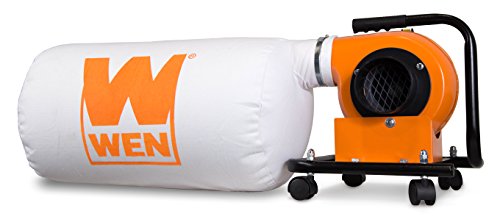
| WEN DC1300 1,300 CFM Dust Collector | Stationary Machinery & High CFM | $391.80 |
| DYNAVEX 10A 12-Gallon HEPA Extractor | Jobsite Portability & Fine Dust | $209.00 |
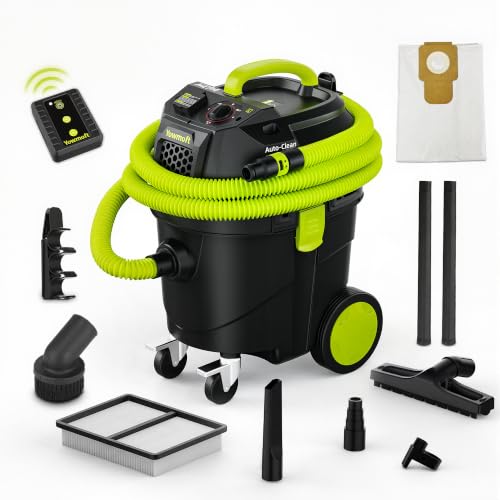
| YOWMOFT 8 Gallon Vacuum with Remote Control | Convenient Wireless Operation | $169.99 |
| YOWMOFT 8-Gallon 150CFM Extractor | High-CFM Sanding & Routing | $359.99 |
| BUCKTOOL 1.2HP Wall Mount Dust Collector | Zero-Floor-Space Installations | $161.10 |
How We Picked
Selecting the right dust extractor involves evaluating how airflow dynamics match specific woodworking machinery. We evaluated these units across four main parameters:
- Airflow Capacity (CFM & Pressure): High-volume collection (600–1,300 CFM) is essential for large stationary tools like 4-inch port planers, whereas high static pressure (100–150 CFM) works best for small-port handheld power tools like track saws and random orbital sanders.
- Footprint and Mounting Flexibility: Small shops require spatial efficiency. We prioritized units with caster wheels, wall-mount brackets, or compact cylindrical designs.
- Filtration Efficiency: We looked at filter ratings ranging from standard 5-micron cloth bags for coarse chips down to certified HEPA filters capable of trapping 99.97% of fine 0.3-micron dust.
- Motor Power and Usability: Motor draw (ranging from 5.7 amps up to 14 amps or 1.2 to 6.5 HP) was compared against feature sets like remote control operation and tool-triggered auto-start outlets.
The 8 Best Picks
DEWALT 6 Gallon Dust Separator for Wet/Dry Shop Vacuums (DXVCS002)
The DEWALT DXVCS002 6-Gallon Dust Separator is designed for woodworkers seeking an affordable way to keep fine dust out of their primary vacuum filter. Placed inline before your wet/dry vacuum, this cyclone separator captures large wood chips and fine debris inside its 6-gallon drum. It is ideal for small shops using palm sanders or miter saws on a tight budget.
- Pro: Substantially extends primary wet/dry vacuum filter lifespan.
- Pro: Sturdy 6-gallon drum handles heavy wood chip volume.
- Con: Requires an existing wet/dry shop vacuum to function.
Skip this separator if you want a standalone, powered dust extractor with its own integrated motor.
WEN Woodworking Dust Collector, 5.7-Amp Motor with 12-Gallon Bag (DC3401)
The WEN DC3401 features a 5.7-amp motor driving a compact 12-gallon collection bag system. Designed specifically for tight basement shops or garage corners, this unit includes a built-in mobile caster base along with mounting hardware for optional wall installation. It performs exceptionally well for localized chip collection on benchtop jointers and small planers.
- Pro: Versatile setup with both wall-mount hardware and mobile casters.
- Pro: Small footprint fits easily under bench wings.
- Con: 12-gallon capacity fills quickly during heavy thickness planing.
Skip this model if you need massive airflow to extract chips through long runs of ductwork.
ECOMAX Shop Vac, Dust Extractor, 8 Gal 6.5 HP HEPA Vacuum
Engineered for handheld power tool extraction, the ECOMAX 8-Gallon Shop Vac packs a strong 6.5 HP motor paired with HEPA filtration. This unit suits craftspeople operating track saws, sanders, and routers who require ultra-clean shop air. Its integrated power tool outlet automatically powers the vacuum on and off when you activate your connected power tool.
- Pro: Powerful 6.5 HP motor with high-efficiency HEPA air filtration.
- Pro: Auto-start power outlet synchronizes with connected tools.
- Con: Vacuum hose diameter is smaller than standard 4-inch collection ports.
Skip this extractor if your primary requirement is collecting heavy shavings from stationary jointers.
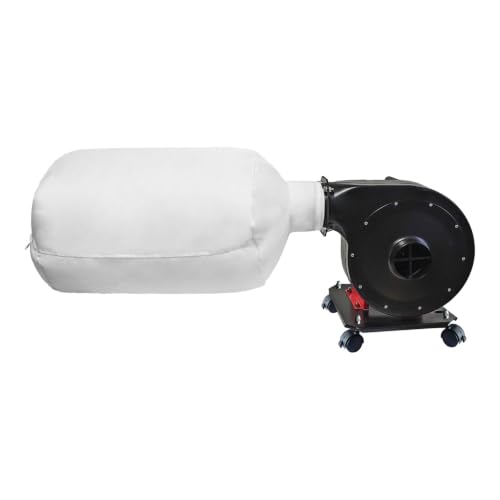
WEN DC1300 1,300 CFM 14-Amp 5-Micron Woodworking Dust Collector
The WEN DC1300 is a heavy-duty single-stage collector featuring a powerful 14-amp motor that pushes 1,300 CFM of airflow. Equipped with a large 50-gallon collection bag and a 5-micron filter rating, it handles high-volume chip producers like 15-inch planers and large cabinet saws. Mobile casters allow you to roll this black collector directly between major machines.
- Pro: High 1,300 CFM airflow easily services 4-inch tool ports.
- Pro: Massive 50-gallon bag capacity reduces emptying frequency.
- Con: Physical size takes up significant floor space in tiny shops.
Skip this machine if your shop floor lacks room for a full-size vertical collector frame.
DYNAVEX 10A Woodworking Dust Extractor Portable 12-Gallon Tank HEPA Filter
The DYNAVEX 10A Dust Extractor combines a reliable 10-amp motor with a 12-gallon tank and HEPA filtration. Built for carpenters and woodworkers needing portability, it effectively traps hazardous invisible wood particles down to sub-micron sizes. Swivel caster wheels make transport across shop floors and job sites smooth and effortless.
- Pro: True HEPA filter keeps hazardous fine dust out of ambient air.
- Pro: Generous 12-gallon tank capacity minimizes cleanup breaks.
- Con: Frame is slightly bulkier than basic 8-gallon shop vacuums.
Skip this unit if you need dedicated high-volume 4-inch duct collection for heavy machinery.
YOWMOFT 8 Gallon Dust Extractor Shop Vacuum with Remote Control
Convenience is the defining asset of the YOWMOFT 8-Gallon Dust Extractor Shop Vacuum, which features a wireless remote control for instant power switching. Ideal for woodworkers moving between assembly tables and sanding stations, this vacuum lets you activate suction without walking back to the wall outlet. Its 8-gallon drum keeps weight low and maneuverability high.
- Pro: Wireless remote switch saves steps across the workshop floor.
- Pro: Lightweight 8-gallon body navigates tight spaces easily.
- Con: Remote control battery requires periodic replacement.
Skip this option if you operate heavy 4-inch port stationary tools requiring massive CFM volume.
YOWMOFT 8-Gallon Dust Extractor for Woodworking 150CFM
Outputting a strong 150 CFM of suction airflow, this specialized YOWMOFT 8-Gallon Dust Extractor is tailored for woodworkers prioritizing fine dust removal. It creates strong vacuum pressure required to draw dust through narrow tool dust ports on plunge routers, miter saws, and random orbital sanders, maintaining continuous air clarity in small spaces.
- Pro: Dedicated 150 CFM rating provides exceptional high-pressure suction.
- Pro: Compact 8-gallon frame tucks neatly under workbench wings.
- Con: Higher price point than general-purpose shop vacuums.
Skip this extractor if you are seeking a low-cost, multi-purpose shop cleaner for simple debris pick-up.
BUCKTOOL 1.2HP Wall Mount Dust Collector, 660 CFM Airflow
The BUCKTOOL 1.2HP Wall Mount Dust Collector is designed for shops where floor space is non-existent. Delivering 660 CFM airflow, this wall-mounted unit mounts directly to studs and connects to brief hose runs or small duct setups. Its bracket system keeps floor walkways clear while supplying dedicated suction to table saws and jointers.
- Pro: Wall-mounted installation preserves 100% of usable floor area.
- Pro: 1.2HP motor produces dependable 660 CFM airflow for stationary tools.
- Con: Fixed wall mounting prevents mobile roll-around use across job sites.
Skip this model if you need a portable extractor to transport between different work locations.
Buying Guide
CFM vs. Static Pressure: Understanding Dust Extractor Types
When searching for the best dust extractor for small woodworking shop requirements, understanding vacuum physics is key. Dust collection falls into two distinct categories:
- High-CFM Dust Collectors: Machines delivering 660 to 1,300 CFM (like the WEN DC1300 or BUCKTOOL 1.2HP) move large volumes of air at low static pressure. They use 4-inch diameter hoses to carry large chips away from jointers, planers, and table saws.
- High-Static Pressure Extractors: Units operating around 100 to 150 CFM (like the YOWMOFT or ECOMAX units) pull air forcefully through narrow 1-1/4 to 1-1/2-inch hoses. They are ideal for hand sanders, track saws, and routers.
Filtration Ratings: Micron Levels and HEPA Standards
Wood dust particle sizes vary drastically. Coarse shavings from a jointer settle quickly, but microscopic dust produced by sanders stays airborne for hours. Standard bags filtered to 5 microns (found on the WEN DC1300) catch bulk chips efficiently. However, for airborne safety in enclosed spaces, HEPA-rated filters (trapping particles down to 0.3 microns at 99.97% efficiency) prevent fine dust from recirculating back into your lungs.
Space Optimization: Wall Mounts vs. Cyclones vs. Mobile Bases
In a small shop, floor real estate is at a premium. Consider these three layout strategies:
- Wall Mounting: Units like the BUCKTOOL 660 CFM or WEN DC3401 mount to wall studs, leaving floor space open for mobile tool stands.
- Cyclone Separation: Inline separators like the DEWALT DXVCS002 drop 95% of debris into an easily emptied bucket before it reaches your vacuum, preserving suction power.
- Integrated Caster Bases: Rolling bases allow you to keep machines stored against a wall and pull them out only when active.
Our Verdict
For small woodworking shops, matching your primary tools to the correct extractor type is essential:
- Best Overall for Stationary Power Tools: The WEN DC1300 ($391.80) delivers uncompromised 1,300 CFM airflow for larger 4-inch port machinery if floor space permits.
- Best Space-Saving Stationary Option: The BUCKTOOL 1.2HP Wall Mount Dust Collector ($161.10) provides exceptional 660 CFM performance without occupying a single square inch of floor area.
- Best for Handheld Power Tools & Fine Dust: The ECOMAX 8 Gal 6.5 HP HEPA Vacuum ($159.99) offers outstanding HEPA filtration and power tool auto-start synchronization at an approachable price point.
- Best Budget Upgrade: The DEWALT 6-Gallon Dust Separator ($80.99) transforms any standard wet/dry shop vacuum into a two-stage chip separation system for minimum outlay.
FAQ
How much CFM do I really need for a small shop?
For handheld power tools connected via small-diameter hoses, 100 to 150 CFM with high static pressure is plenty. For stationary machinery like table saws, planers, and jointers equipped with 4-inch dust ports, you need a minimum of 500 to 600 CFM (such as the BUCKTOOL 1.2HP) to clear chips effectively without clogging ductwork.
Can I use a standard shop vacuum instead of a dedicated dust collector?
You can use a standard wet/dry vacuum for handheld power tools like sanders and routers. However, standard shop vacuums lack the air volume (CFM) necessary to clear heavy chips from large stationary machinery like 12-inch planers. Furthermore, standard filters let fine wood dust pass right back into shop air unless upgraded with a HEPA filter or pre-separator separator.
What are the benefits of adding a cyclone separator?
An inline cyclone separator, such as the DEWALT DXVCS002, uses centrifugal force to spin heavy wood chips and dust down into an auxiliary drum before air reaches the main vacuum filter. This prevents fine filter clogging, maintains maximum suction pressure, and makes emptying wood waste far quicker and cheaper.
How do I prevent static electricity build-up in dust hoses?
Airborne dust moving rapidly through plastic hoses creates friction, building static electricity that can shock you. To mitigate this in small shops, use anti-static hoses, ground flexible plastic ducting with copper wire grounded to machine chassis, or keep humidity levels balanced in your workspace.