Key takeaways
- Passport and two-page spread scanning in one pass
- Runs bus-powered from a single USB connection
- Low paper capacity limits batch throughput
A stack of receipts, tax forms, and old photographs sitting in a drawer is the same problem millions of home-office workers face: they know they should digitize, but the right scanner depends on what they actually scan. A freelancer archiving contracts has different needs than a parent capturing kids’ artwork or a small business owner batch-scanning invoices. The gap between a $70 flatbed and a $380 wireless feed scanner is not trivial, and choosing wrong means either slow, frustrating sessions or paying for features you will never touch.
What separates the best paper scanners from mediocre ones comes down to three things: how well the feeder handles mixed document weights, whether the software actually simplifies the workflow or adds friction, and how the device behaves when you want to scan a passport, a receipt, and a bound book on the same afternoon. The eight models below cover the full range from ultra-portable to desktop workhorse, and each earns its place for a specific type of user rather than trying to be everything to everyone.
As an Amazon Associate we earn from qualifying purchases at no extra cost to you. Product prices and availability are accurate as of the date shown and are subject to change.




Quick Picks
| Product | Best for | Price |
|---|---|---|
| Brother DS-640 | Travel and on-the-go scanning | $134.99 |
| Epson ES-50 | Lightweight mobile use | $146 |
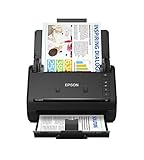
| Epson ES-400 II | High-volume office batches | $352.95 |
| ScanSnap iX2500 | Overall home office | $379.99 |
| Canon Lide 300 | Budget flatbed tasks | $69.99 |
| ScanSnap iX1300 | Wireless scanning on a budget | $279.99 |
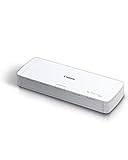
| Canon R30 | Plug-and-play desktop | $259 |
| Canon R10 | USB-powered portability | $183.9 |
How We Picked
We filtered this category on four criteria that owner feedback and spec sheets consistently confirm matter most. First, paper-handling reliability: a scanner that jams on thin receipts or crumples envelopes fails at its core job regardless of resolution. Second, workflow simplicity: the best units get a document from glass to a searchable PDF in as few steps as possible, especially for users who scan weekly rather than daily. Third, form factor fit: a compact unit that lives in a laptop bag solves a different problem than a desktop scanner that anchors a workstation. Fourth, value density: how many useful features a buyer gets per dollar relative to the price tier, not raw feature count alone.
The 8 Best Paper Scanner in 2026
Brother DS-640
This compact unit targets people who scan receipts, tickets, or contracts while away from a desk. Its clamshell design collapses small enough for a laptop sleeve, and it runs on a single USB cable with no wall adapter required. Owners praise its ability to handle a full two-page spread of a passport in one pass, which is uncommon at this size. The trade-off is a relatively small paper capacity, so it is not suited to batch jobs. Skip it if you regularly scan more than a few sheets at a time or need to feed thick cardstock, since the mechanism is optimized for thin, flat media rather than mixed-weight documents.
- Passport and two-page spread scanning in one pass
- Runs bus-powered from a single USB connection
- Low paper capacity limits batch throughput
Epson ES-50
Epson’s ES-50 occupies a similar niche to the Brother DS-640 but adds Wi-Fi connectivity, letting you scan from a tablet or phone without a cable tether. At a few dollars above the Brother, it makes sense for anyone who already lives in the Epson ecosystem and wants wireless convenience in a portable form. Owners note the software is more capable than competitors at this price, though the interface can feel dense for casual users. Skip it if you prefer a strictly wired setup or need duplex scanning, since this model handles one side at a time.
- Wi-Fi scanning without a computer tether
- More software features than typical budget portables
- Single-pass scanning only, no duplex
Epson ES-400 II
This is the scanner for someone who processes dozens of pages in a sitting: invoices, student papers, or archival documents. It supports color duplex with automatic document feeding and delivers noticeably higher throughput than any portable model here. The build quality and paper path are designed for volume, which owners confirm over long sessions without misfeeds. The price reflects that capacity, and the desktop footprint means it is not something you toss in a bag. Skip it if you only scan occasionally, as you would be paying for speed and capacity you rarely use.
- High-speed duplex feeding for large batches
- Robust paper path that resists misfeeds over long runs
- Bulkier desktop design and higher price for casual users
ScanSnap iX2500
The iX2500 is the strongest all-around choice for a home office that handles mixed tasks: receipts, photos, contracts, and occasional bound pages. Fujitsu’s ScanSnap line has long dominated this segment, and the iX2500 adds faster wireless transfer and a touchscreen that simplifies destination selection without opening a PC app. Owners consistently rate its software as the easiest in the category for one-click-to-email or cloud-folder workflows. The main drawback is price, the highest on this list. Skip it if your scanning is strictly portable or if you already own a desktop scanner that handles your volume.
- Best-in-class software workflow with touchscreen targeting
- Handles mixed document types and weights reliably
- Highest price in this roundup
Canon Lide 300
At just under $70, the Lide 300 is the only flatbed here, which makes it the right pick for scanning photos, fragile documents, books, or anything that cannot go through a sheet-feeder. USB-powered and genuinely simple to set up, it earns praise from users who need a scanner twice a month for non-standard items. The obvious limitation is speed; it cannot batch-feed pages, so digitizing a stack of receipts takes patience. Skip it if your primary need is multipage documents, since a sheet-feed model will save you time and frustration.
- Flatbed handles photos, books, and fragile originals
- Lowest entry price in the group
- No automatic document feeder for multipage jobs
ScanSnap iX1300
The iX1300 delivers most of the iX2500 experience at a meaningfully lower price by dropping the touchscreen and dialing back wireless speed. For a home office that scans weekly but does not need cloud-to-cloud automation or destination previews on the unit itself, it remains an excellent duplex feeder with the same reliable paper path. Owners report it handles receipts, ID cards, and thin envelopes without fuss. Skip it if you scan high volumes daily or want the convenience of selecting output folders directly on the scanner without opening a laptop.
- Reliable duplex feeding at a mid-range price
- Same software ecosystem as the premium ScanSnap models
- No touchscreen, requiring a computer for destination control
Canon R30
The R30 solves a specific pain point: office environments or shared workstations where installing software is impractical or prohibited. It connects via USB and presents as a standard scanner with plug-and-scan capability, so any operating system recognizes it immediately. The duplex feeder handles moderate batches, and owners appreciate that there is no account creation or cloud subscription attached. Skip it if you want wireless convenience or a slick mobile app experience, since its simplicity comes with fewer software niceties than the ScanSnap alternatives.
- True plug-and-play with no software installation required
- Compact duplex feeding suitable for shared desks
- Wired only, no Wi-Fi option
Canon R10
The R10 is the most travel-friendly duplex scanner here, drawing all its power from USB and folding to a footprint barely larger than a paperback. It suits consultants, field workers, or anyone scanning in hotel rooms and coffee shops who still needs double-sided output. Owners highlight its reliability with receipts and thin contracts. The feeder capacity is modest, and there is no battery option, so it requires a laptop or power bank with USB output. Skip it if you scan bound material or need more than a handful of pages per session.
- Bus-powered duplex scanning in a highly portable form
- Simple setup with no driver conflicts for most systems
- Very small feeder capacity for batch work
Buying Guide
Feeder Type and Paper Handling
Sheet-feed scanners grab documents from a stack and pull them through a roller system; flatbeds require you to place each page under glass. For anything beyond occasional scanning, a sheet-feed model with duplex capability saves substantial time. Check the paper weight range, ideally supporting 27 to 209 gsm, so receipts and cardstock both pass through without manual intervention. If you scan bound books or photographs frequently, pair a feed scanner with a budget flatbed or choose a model with both options.
Connectivity and Workflow Software
USB gives you the most stable, highest-throughput connection, while Wi-Fi or wireless adds convenience at the cost of occasional dropouts during large transfers. The software layer matters as much as hardware. Look for one-click destinations such as scan-to-folder, scan-to-email, or scan-to-cloud without opening a separate application. ScanSnap’s ecosystem leads in this area, while Canon’s plug-and-scan approach suits environments where software installation is restricted.
Resolution and File Output
Most document scanners now offer 600 to 1200 dpi optical resolution, which is more than sufficient for text, receipts, and contracts. Higher resolution matters mainly for photographs or archival-quality reproductions. Prioritize scanners that include OCR (optical character recognition) in the included software, converting scans into searchable, editable PDFs rather than image-only files. Without OCR, a scanned contract is a picture of text you cannot search or copy.
Our Verdict
For most home-office users in 2026, the ScanSnap iX2500 is the top pick: its paper handling, software workflow, and mixed-task reliability justify the premium over alternatives. The budget pick is the Canon Lide 300, which for under $70 handles photos, books, and fragile originals that no feed scanner can touch. However, if your work environment forbids software installations or you need a scanner at a shared desk that just works, the Canon R30 wins outright on its plug-and-scan design despite lacking wireless options.
FAQ
Can a portable scanner replace a desktop model?
For light, intermittent use, yes. Portable units handle a few pages well but struggle with batch jobs, thick media, or documents that need consistent alignment over dozens of sheets. If you scan more than about twenty pages per session regularly, a desktop model with a larger feeder and faster duty cycle will save you time and reduce misfeed frustration.
Do I need a scanner with Wi-Fi?
Wi-Fi is convenient if you want to scan from a tablet or phone without a computer nearby, or if your desk is far from your workstation. USB remains faster and more stable for large batches. For many users, a wired connection eliminates an entire category of intermittent connectivity complaints that appear repeatedly in owner reviews of wireless scanners.
What resolution do I actually need for documents?
Text documents, receipts, and contracts scan cleanly at 300 dpi, which is the standard for most OCR software. You only need 600 dpi or higher for photographs, line art, or archival reproductions. Paying extra for a spec-sheet number above what you can use is rarely worthwhile for office scanning.
How long does a paper scanner last?
Most manufacturers publish a duty cycle in pages per day. Portable models typically handle a few hundred daily, while desktop units rated for thousands are built for shared-office loads. Owner reports suggest that roller replacement, usually inexpensive and user-serviceable, is the main maintenance point rather than electronic failure.