Key takeaways
- Type-C native, no adapter needed on modern devices
- 128GB capacity handles large photo sets or video files comfortably
- Higher price than comparable Type-A drives
If you have ever needed to carry a presentation, a batch of client photos, or a set of tax documents between computers without relying on an internet connection or cloud storage, you already understand the practical value of a flash drive. The category is simple on the surface—small sticks that plug into a USB port and store data—but the differences between products matter more than most buyers expect. Speed, durability, connector type, and capacity all shift the experience from “quick transfer” to “frustrating bottleneck.”
What separates a good flash drive from a mediocre one in 2026 comes down to a few measurable factors: whether the drive uses a USB 2.0 or USB 3.x interface, whether the connector is Type-A or Type-C, how the housing protects the drive in a pocket or bag, and whether the advertised capacity actually delivers usable space for your files. Price is the least interesting variable here because the range is narrow—most of the drives we compared sit under $30—so the real question is which design choices align with how you actually move files.
Our top picks





As an Amazon Associate we earn from qualifying purchases at no extra cost to you.
Quick Picks
| Product | Best for | Price |
|---|---|---|
| Lexar D40E 128GB Type-C | Modern laptops with USB-C only | $29.99 |
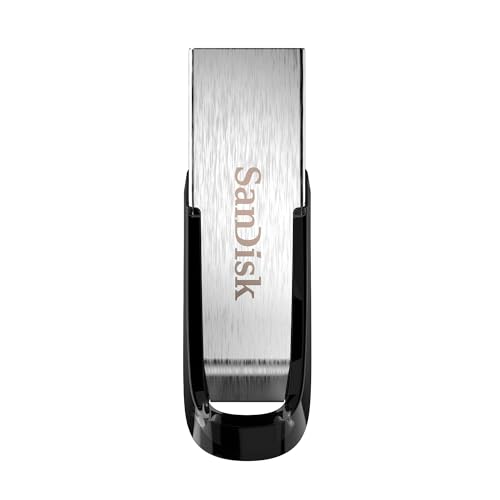
| SANDISK 128GB Ultra Flair | Reliable everyday transfers on USB-A ports | $24.94 |
| 2 Pack 64GB USB 2.0 Swivel | Budget bulk storage with no dongle needed | $18.99 |
| PNY 128GB Turbo Attaché 3 2-Pack | Keeping a backup drive in a second location | $27.99 |
| SIMMAX 32GB USB 2.0 Swivel | One-off file handoffs at the lowest cost | $9.99 |
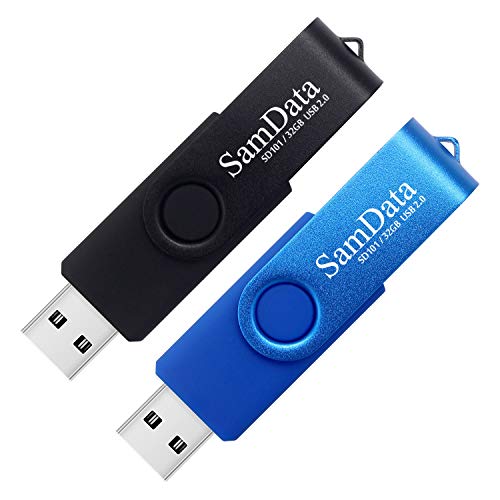
| SamData 32GB 2 Pack with LED | Confirming active transfers at a glance | $16.99 |
| IMEASON 16GB with Keychain | Carrying small files on a keyring | $8.99 |
| MAKACTUA 5 Pack 8GB | Distributing tiny files to multiple people | $20.99 |
How We Picked
We compared published specifications, listed prices, and aggregated owner feedback across the eight drives above. Three criteria carried the most weight. First, interface generation: USB 3.x drives deliver transfer speeds that make large file moves practical, while USB 2.0 drives are fine for small documents but sluggish for anything over a few hundred megabytes. Second, connector compatibility: a Type-C drive eliminates the need for an adapter on newer laptops, but Type-A remains the standard for older desktops and projectors. Third, physical form factor: swivel designs protect the connector better than exposed caps that get lost, and compact drives reduce the risk of snapping when left plugged into a laptop bag.
The 8 Best What Is A Flash Drive in 2026
Lexar D40E 128GB Dual USB 3.2 Gen 1 Type-C Jump Drive
This drive is built for people whose daily machines only have USB-C ports—current MacBooks, many Windows ultrabooks, and most Android tablets. The dual-sided Type-C connector means you never worry about orientation, and the USB 3.2 Gen 1 interface provides the bandwidth to move 128GB of data in a reasonable number of minutes.
- Type-C native, no adapter needed on modern devices
- 128GB capacity handles large photo sets or video files comfortably
- Higher price than comparable Type-A drives
Skip it if every computer you touch still uses traditional rectangular USB-A ports; the Type-C connector will be useless without a dongle, and you can get equivalent capacity for less.
SANDISK 128GB Ultra Flair USB 3.0 Flash Drive
SanDisk has a long reputation for consumer flash storage, and the Ultra Flair continues that tradition. The metal housing is compact enough to stay plugged into a desktop without protruding awkwardly, and USB 3.0 throughput makes it a solid daily driver for office workers who swap files between a work PC and a home machine.
- Proven brand reliability with wide owner satisfaction reports
- Compact metal body resists bending in a pocket
- No bundled cap or lanyard hole
Skip it if you need Type-C connectivity or plan to leave the drive plugged into a laptop that gets moved around; the exposed connector can catch on fabric.
2 Pack 64GB USB 2.0 Thumb Drives Swivel Design
At under $19 for two drives totaling 128GB of capacity, this is the most cost-efficient option per gigabyte in the group. The swivel mechanism protects the USB-A connector without a cap to lose, and the fold-out design makes them genuinely pocketable. USB 2.0 is the trade-off—transfers will be slow for large files—but for documents, spreadsheets, and small folders it is perfectly adequate.
- Two drives for less than many single 128GB drives cost
- Swivel design eliminates lost-cap anxiety
- USB 2.0 interface limits transfer speed on large files
Skip it if your workflow involves moving video files, large archives, or anything over a gigabyte regularly; the bandwidth ceiling will test your patience.
PNY 128GB Turbo Attaché 3 USB 3.0 Flash Drive 2-Pack
PNY’s two-pack gives you a primary and a backup, which is the smartest use of a 128GB drive if you treat flash storage as a safety layer rather than a primary archive. The USB 3.0 interface ensures transfers are quick, and the compact plastic housing slides into a keyring loop easily.
- Two 128GB USB 3.0 drives at a competitive per-gigabyte price
- Lightweight enough to carry on a keychain without bulk
- Plastic body feels less durable than metal alternatives
Skip it if you only ever need one drive; buying a single unit elsewhere saves you carrying dead weight.
SIMMAX 32GB USB 2.0 Flash Drives Swivel Thumb Drive
At just under $10, this is the cheapest single drive in the lineup. The 32GB capacity is enough for a few hundred PDFs, a semester of lecture notes, or a set of tax files for one year. The swivel housing keeps the connector safe, and the purple color makes it easy to identify among a drawer full of black drives.
- Lowest absolute price with a protective swivel body
- 32GB covers everyday document storage without waste
- USB 2.0 and modest capacity make it unsuitable for media files
Skip it if you regularly move photos from a camera, large databases, or software installers; you will outgrow both the speed and the space within a week.
SamData 32GB USB Flash Drives 2 Pack with LED Light
The built-in LED indicator is a small feature that solves a real problem: knowing whether a transfer is still active or the drive is safe to eject. Two 32GB drives for $17 means you get a redundant copy of the same folder in two separate locations. The two-color set (black and blue) helps you keep them straight.
- LED light prevents accidental data loss from premature removal
- Two-pack pricing offers redundancy at a low total cost
- USB 2.0 interface and 32GB limit each drive to document-scale work
Skip it if you want a single high-capacity drive rather than two small ones; consolidation is simpler than managing multiple sticks.
IMEASON Swivel Design 16GB USB Flash Drive with Keychain
This is the smallest-capacity drive we reviewed, but it wins on portability. The integrated keychain loop means it travels on your keys rather than loose in a bag. Fifteen to sixteen gigabytes is enough for a resume folder, a handful of contracts, or a music collection for a commute. The swivel body is slim and FAT32-formatted out of the box for broad compatibility.
- Keychain attachment ensures you always have it when you need it
- FAT32 format works with car stereos, projectors, and older machines
- 16GB fills up fast with modern file sizes
Skip it if your files exceed a few hundred megabytes per batch; you will be deleting and reformatting constantly.
MAKACTUA 5 Pack 8GB USB Flash Drive
Five drives for $21 is the right answer when you need to hand small files to five different people—a class of students, a client meeting, an internal team sharing a template. Each 8GB drive handles a few dozen documents or a short video. The multiple-color set means everyone can identify their own stick.
- Five units at a low per-drive cost for group distribution
- Color variety prevents mix-ups among identical-looking drives
- 8GB per drive is the smallest capacity in this roundup
Skip it if you are the only one using the drive; a single larger-capacity stick is more practical for personal workflows.
Buying Guide
USB Interface Generation Is the Primary Speed Lever
USB 2.0 tops out around 60 MB/s theoretical throughput, with real-world speeds often below 25 MB/s. USB 3.0 and USB 3.2 Gen 1 push that ceiling to roughly 150–400 MB/s depending on the NAND inside. If you ever copy a file larger than 500 MB, the generation difference converts minutes of waiting into seconds. For document-only use, USB 2.0 remains perfectly functional and saves several dollars.
Connector Type Determines Whether You Need an Adapter
Type-C is now standard on laptops released in the last three years and nearly all new desktops. Type-A persists on older PCs, printers, projectors, car infotainment systems, and many office machines. If your target devices are mixed, a dual-sided Type-C drive like the Lexar D40E or a traditional Type-A drive with a short adapter cable are the two valid strategies. Buying a Type-C-only drive for a Type-A office is a guaranteed frustration.
Capacity Should Match Your Largest Single Transfer
A 16GB drive handles text-heavy workloads indefinitely. A 64GB drive accommodates a semester of course materials or a year of business receipts. A 128GB drive is the sweet spot for raw photos, short video clips, or software ISOs. Buying capacity you never fill wastes money; buying capacity you exceed every session creates a deletion bottleneck. Estimate your largest recurring file set and add a 20 percent buffer.
Our Verdict
The top pick is the SANDISK 128GB Ultra Flair. It balances price, proven reliability, USB 3.0 speed, and a compact metal housing that survives pocket life better than plastic alternatives. For most home-office buyers with standard USB-A ports, it is the most dependable single drive you can buy right now.
The budget pick is the 2 Pack 64GB USB 2.0 Swivel set. Two drives, a protective swivel mechanism, and 128GB of total storage for $19 is unbeatable value for document-scale transfers where speed is secondary to convenience.
The Lexar D40E becomes the best choice the moment your primary computer has only USB-C ports. No adapter, no compromise on speed, and the dual-sided connector eliminates orientation guessing entirely.
FAQ
What is a flash drive exactly?
A flash drive is a small, portable storage device that connects to a computer through a USB port and stores data on NAND flash memory. Unlike a hard drive, it has no moving parts, which makes it resistant to drops, vibration, and magnetic fields. The term “thumb drive” is a common nickname that refers to the same category of product.
Is USB 3.0 meaningfully faster than USB 2.0 for everyday use?
For files under 100 MB, the difference is barely perceptible—both finish in a few seconds. Once you start moving folders of photos, video clips, or large databases, a USB 3.0 drive can complete the transfer in a quarter of the time a USB 2.0 drive needs. The gap widens proportionally with file size.
Why do drives often show less storage than advertised?
Manufacturers label capacity in decimal gigabytes (1,000,000,000 bytes per GB), while operating systems calculate in binary gibibytes (1,073,741,824 bytes per GiB). A 128GB drive typically shows around 119GB of usable space in Windows. This is a labeling standard difference, not a defect, and it applies to every flash storage product regardless of brand or price.
Can a flash drive fail permanently?
Yes. Flash memory cells have a finite write cycle count, and the controller or connector can fail from physical stress. Drives stored in hot environments, such as a car in summer, degrade faster. For critical files, treat any single flash drive as a temporary carrier rather than a permanent archive, and keep a second copy in cloud storage or on a different physical device.