Key takeaways
- Match the bed shape to the dog’s sleeping posture, not just the “calming” label.
- Check interior dimensions, bolster height, and entry height.
- Choose a stable foam core for joint support; choose loose fill only if softness and nesting are the priority.
- Confirm whether the cover, liner, or entire bed is washable, and follow the care instructions.
- Favor breathable materials for hot sleepers and a non-slip base for smooth floors.
- Look for a replacement cover option if the dog sheds heavily or the bed will be used every day.
Best Calming Dog Beds for Anxious Sleepers: What to Choose
The best calming dog beds for anxious sleepers combine a stable, supportive base with a rim or bolsters if the dog likes to curl up, plus a washable cover and enough room to change positions. For a dog that runs hot, prioritize breathable fabric over deep faux fur; for a dog with joint stiffness, prioritize a substantial foam mattress over a plush nest.
Choose by how your dog actually sleeps
| Your dog’s situation | Best bed style | What to look for | Potential drawback |
|---|---|---|---|
| Curls tightly and leans against furniture or people | Round or oval nest with a raised rim | Soft, resilient fill; rim that stays upright when leaned on; removable cover | A deep, fluffy center may be hard to enter for dogs with sore joints |
| Stretches out, changes position, or sleeps lightly | Flat rectangular mattress, optionally with a low bolster on one side | Open sleeping area and a foam core that does not bunch or slide | Less of a tucked-in feeling than a round nest |
| Wakes panting or seeks cool floors | Low-profile mattress in a breathable woven fabric | Air-permeable cover and a removable layer that can be washed | Cooling fabrics do not make a warm room cool, and thick plush can trap heat |
| Has stiff joints or trouble getting up | Supportive foam mattress with a low entry edge | Even support, a non-slip underside, and a cover that fits snugly | High bolsters can become a step to climb over |
| Is a restless chewer or digs before lying down | Simple, tightly fitted mattress with a durable cover | Reinforced seams and a cover zipper that is not easy to reach | No fabric bed is chew-proof; supervise a dog that tears or eats bedding |
Fills and rims: comfort versus support
“Calming” describes a design intention, not a proven treatment for anxiety. A raised rim can give a dog a place to rest its head and a boundary to lean against. That may suit dogs that already seek corners, cushions, or contact with a person. It will not reliably calm every dog, and some prefer an unobstructed surface.
Our top picks

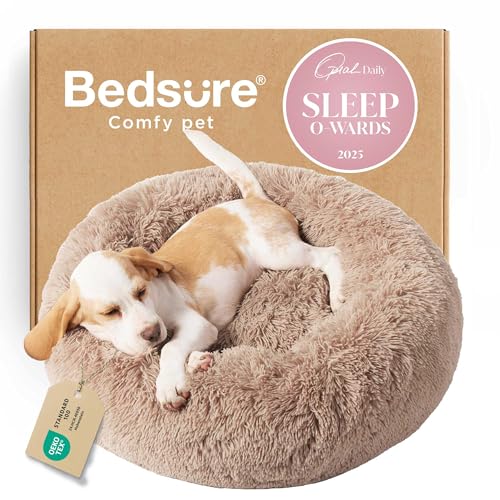


As an Amazon Associate we earn from qualifying purchases at no extra cost to you. Ratings are shown as listed on Amazon.
Polyester fiber and loose-fill nests
Fiber-filled beds feel soft and can make a cozy nest, often at a lower cost than a thick foam mattress. The trade-off is that loose fill can compress, migrate, or clump after repeated use and washing. Check whether the bed has separate compartments to limit shifting, and whether the whole bed or only its cover can be cleaned.
Solid foam and layered foam
A foam core offers a more consistent surface for dogs that need support or move around during sleep. A denser, thicker core is generally less likely to bottom out under a heavier dog, but “memory foam” on the label alone does not tell you how supportive the bed will feel. Look for the core’s thickness, construction, and a full-size product specification; replace a bed if it stays deeply indented or exposes crumbling foam.
Raised rims and bolsters
Soft bolsters suit curlers and head-resters. They also take up sleeping area, so compare the usable interior dimensions—not just the outside measurements. A firm, tall rim may feel secure to one dog and restrictive to another. For puppies, seniors, or dogs with limited mobility, favor a low entry point or a flat mattress.
| Construction detail | Useful starting point | Why it matters |
|---|---|---|
| Sleeping surface length | Measure nose to tail base while the dog is stretched out; add about 6–12 in (15–30 cm) | Allows room to extend without pushing against the edge |
| Sleeping surface width | Measure the dog’s widest relaxed position; add about 4–8 in (10–20 cm) | Reduces crowding for side sleepers and position changers |
| Foam thickness for a small dog | About 2–3 in (5–8 cm), depending on weight and firmness | Enough depth may suit a lighter dog, but thickness alone does not guarantee support |
| Foam thickness for a medium or large dog | About 3–5 in (8–13 cm), with a stable core | Heavier dogs need a bed that does not quickly bottom out |
| Room around the bed | Leave roughly 12–18 in (30–46 cm) on at least one approach side | Gives the dog room to enter and lets people pass without stepping over it |
These are starting points, not medical specifications. Measure the dog in its usual sleeping posture and compare those measurements with the bed’s interior dimensions. For a raised-edge nest, the listed outer diameter can substantially overstate the usable space.
Washability, cooling, and day-to-day durability
An anxious or restless dog may drool, shed, track in dirt, or have occasional accidents. A removable cover is easier to keep clean than a bed that must be washed whole. Before buying, check the care label: a cover that is machine-washable is helpful only if it fits your washer and can be dried as directed. A waterproof liner can protect the foam, but it may add noise or reduce airflow; choose a quiet, breathable design if your dog reacts to rustling.
For warm sleepers, look for woven canvas, cotton blends, or mesh panels rather than thick long-pile faux fur. A cool-touch textile may feel pleasant initially, but airflow, room temperature, coat type, and where the bed sits usually matter more for lasting comfort. Keep the bed out of direct sun and away from heating vents, and let the dog choose between the bed and a cooler surface.
Check the underside as well. A non-slip base helps keep a bed from shifting on hardwood or tile when a dog circles before lying down. Zippers and seams are common wear points, especially for dogs that dig at bedding. If your dog chews fabric or swallows stuffing, remove the bed when unsupervised and ask a veterinarian about safer alternatives.
Size the bed to the dog and the room
Measure a relaxed sleeping dog from nose to tail base and across the widest part of its body. If the dog often sprawls, measure while fully stretched. Add the allowances in the table, then compare the result with the bed’s interior sleeping area. When a dog is between sizes, choose the larger one if the room permits—unless the dog actively prefers a snug nest.
Also measure the spot where the bed will live, including space needed for doors, walkways, and nearby furniture. In a small apartment, a rectangular bed often uses floor space more efficiently than a wide round nest. Leave a clear route to the bed; placing it in a quiet corner can help some dogs settle, but do not block the dog’s access to water or an exit. If you use a crate, measure its interior floor rather than assuming a bed sold in the same size category will fit.
Quick buying checklist
- Match the bed shape to the dog’s sleeping posture, not just the “calming” label.
- Check interior dimensions, bolster height, and entry height.
- Choose a stable foam core for joint support; choose loose fill only if softness and nesting are the priority.
- Confirm whether the cover, liner, or entire bed is washable, and follow the care instructions.
- Favor breathable materials for hot sleepers and a non-slip base for smooth floors.
- Look for a replacement cover option if the dog sheds heavily or the bed will be used every day.
When a bed is not enough
A comfortable bed can support a calming routine, but persistent pacing, panting, destructive behavior, sudden sleep changes, or distress when left alone may have causes a bed cannot address. A veterinarian can check for pain or other health problems and discuss anxiety support. To help a dog learn the bed is a safe place, offer treats or quiet praise there and let the dog leave freely; forcing a dog to stay can make the spot feel less secure.