Key takeaways
- 48 inches: workable for two 24-inch monitors on arms, but cramped with monitor stands or large speakers.
- 55 inches: a practical minimum for two 27-inch displays if the monitors use arms and the computer is placed on the floor.
- 60–63 inches: the best general-purpose range for two 27-inch monitors, speakers and a full-size keyboard.
- 72 inches: worthwhile for two 32-inch monitors, an ultrawide plus a second screen, or a PC tower that must sit on the desktop.
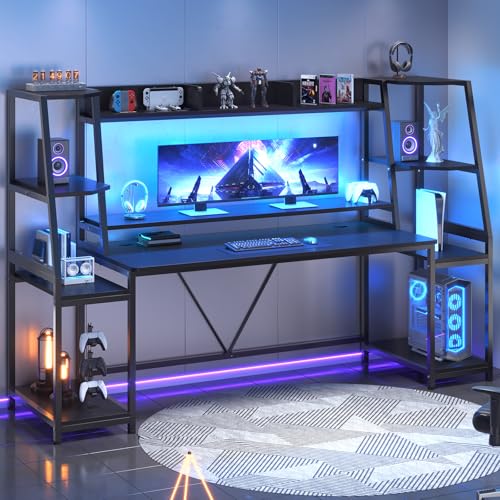
The best gaming desks for dual monitors are usually 55–63 inches wide, at least 28 inches deep, rated for 150 pounds or more, and designed to route two display cables without sacrificing legroom.
A two-screen setup needs more than enough surface area for two monitors. You also need room for monitor-arm clamps, a keyboard and mouse, speakers or a laptop, and enough distance from the screens to avoid sitting too close. The right choice depends on your room, whether you want a fixed or standing desk, and how much equipment will remain on the desktop.
Our top picks


As an Amazon Associate we earn from qualifying purchases at no extra cost to you. Ratings are shown as listed on Amazon.
Quick picks by situation
| Situation | Best desk type | Recommended size | What to prioritize |
|---|---|---|---|
| Small apartment or bedroom | Compact fixed desk | 48–55 in. wide × 24–28 in. deep | Rear cable channel, shallow frame, modest depth |
| Two 27-inch monitors and a desktop PC | Large fixed or electric standing desk | 60–63 in. wide × 30 in. deep | Dual monitor-arm support and 150–220 lb capacity |
| Heavy PC, speakers and accessories | Reinforced solid or engineered-wood top | 60–72 in. wide × 30–32 in. deep | Low frame flex, central cross support, high weight rating |
| Back or neck discomfort | Electric height-adjustable desk | 55–63 in. wide × 28–30 in. deep | Wide height range, stable legs, curved or rounded edge |
| Renter who moves often | Lightweight modular desk | 48–60 in. wide × 24–28 in. deep | Knock-down frame, manageable components, no wall mounting |
How wide should a dual-monitor gaming desk be?
Width determines whether your monitors can sit side by side without pushing your speakers, controller dock or desk accessories off the edge.
- 48 inches: workable for two 24-inch monitors on arms, but cramped with monitor stands or large speakers.
- 55 inches: a practical minimum for two 27-inch displays if the monitors use arms and the computer is placed on the floor.
- 60–63 inches: the best general-purpose range for two 27-inch monitors, speakers and a full-size keyboard.
- 72 inches: worthwhile for two 32-inch monitors, an ultrawide plus a second screen, or a PC tower that must sit on the desktop.
Measure the wall, not just the empty floor. Leave at least 2–3 inches at each side so the desktop does not rub against adjacent walls, trim or shelving. In a 10×12-foot room, a 60-inch desk usually leaves comfortable walking space, while a 72-inch desk can make the chair zone feel crowded if the desk faces a bed or wardrobe.
Depth matters more than many listings suggest
A 24-inch-deep desk can technically hold two screens, but it places the keyboard close to the front edge and may leave the monitors only about 20–24 inches from your eyes. That is often too close for comfortable use, especially with 27-inch displays.
Choose 28 inches deep as a practical minimum and 30–32 inches if you use monitor stands, large speakers or a deep keyboard tray. A 30-inch desktop gives you space to position the screens roughly 25–30 inches away while keeping the keyboard and mouse in front of them. Remember that a rear cable trough or monitor-arm clamp can consume 2–4 inches of usable depth.
Monitor-arm support: the hidden deciding factor
Monitor arms free valuable desktop space, but they put concentrated force on a small section of the rear edge. A desk can have a high overall weight rating and still be unsuitable if its back edge is thin, hollow or poorly supported.
For two monitors, look for:
- A rear edge at least 1 inch thick, or a dedicated reinforcement plate beneath the clamp area.
- A solid section behind the desktop rather than a large cable cutout exactly where the arm must attach.
- At least 3 inches of clearance behind the desk for the clamp and cable bend.
- A stated clamp compatibility range that matches the desktop thickness.
- A total load rating of at least 150 pounds; 200 pounds or more is preferable for a standing desk.
Two 27-inch monitors often weigh 25–40 pounds together before adding the arm. A large dual-monitor arm may add another 10–20 pounds, and a desktop PC can add 25–45 pounds. Do not treat the advertised capacity as a target; leave a safety margin of approximately 20 percent.
Fixed desks versus electric standing desks
A fixed desk generally provides better value and can feel more rigid because it has fewer moving parts. A strong 60-inch fixed desk commonly costs about $150–$400, depending on its top and frame. It is a good choice when you already have a comfortable chair and want maximum stability for the money.
Electric standing desks are more adaptable for posture changes. Models such as the UPLIFT V2, FlexiSpot E7 and Secretlab MAGNUS Pro represent different approaches: traditional height-adjustable frames, value-focused adjustable frames and a gaming-oriented cable-management design. Specifications vary by configuration, so check the exact top size, frame rating and minimum height before buying.
Expect to spend roughly $400–$900 for a dependable dual-monitor electric desk, with premium configurations costing more. A desk that lowers to about 25–26 inches suits many seated users, while a maximum height around 48–50 inches accommodates most standing positions. The correct height is personal: your elbows should remain near 90 degrees when your forearms rest comfortably on the desk, and your shoulders should not rise toward your ears.
Materials and construction trade-offs
| Construction | Advantages | Drawbacks | Best use |
|---|---|---|---|
| Solid wood | Strong clamp support, repairable surface, natural appearance | Heavy, expensive, can move with humidity | Permanent setup with heavy monitors |
| Engineered wood with laminate | Affordable, consistent, easy to clean | Edges can swell if water reaches damaged laminate | Most gaming and home-office setups |
| Steel frame with thin top | Lightweight and often inexpensive | More vibration and weaker clamp area | Light monitors on stands or a temporary setup |
| Steel frame with thick top | Good load capacity and stability | Heavier and harder to move | Dual arms, desktop PCs and standing use |
For most buyers, a 1-inch-thick engineered-wood top on a steel frame is the sensible middle ground. Solid wood is attractive and durable, but a 60-inch top can be difficult for one person to carry. A thin top may be adequate with monitor stands but can flex when a dual arm is extended or bumped.
Cable management should work from the front and back
Good cable management is more than a circular grommet. Look for a rear trough or full-width cable tray, a vertical route down one leg, and enough space for a power strip. A two-monitor setup commonly needs power and video cables for both displays, a computer power cable, keyboard and mouse cables, speakers, and possibly a USB hub.
Keep the power strip attached beneath the desk rather than lying on the floor. Leave a service loop of about 6–8 inches for each height-adjustable cable so the wires are not pulled tight at maximum height. Desks with a rear modesty panel may hide cables well but can reduce legroom and make monitor-arm clamps difficult to install.
Ergonomics and clearance checks
Before choosing a desk, measure the chair and your leg space. A typical comfortable seated arrangement needs approximately 24–27 inches from the floor to the underside of the desktop, with at least 25 inches of unobstructed knee width. Avoid drawers or central support bars that occupy the area where your knees and chair arms need to move.
Place the top of the primary monitor roughly at eye level, with the screen about an arm’s length away. If one screen is used mainly for reference, angle it slightly inward rather than twisting your neck repeatedly. A shallow desk can encourage hunching because there is no room to move the monitors backward.
Assembly, moving and durability realities
Many 60-inch desks arrive in boxes weighing 60–110 pounds, while solid-wood or motorized versions can be heavier. Check your stair turns and doorway width; a standard 30–32-inch interior doorway may require carrying the top vertically. Assemble large desks near their final location, especially standing desks with two motors and a long tabletop.
The parts most likely to wear first are height-adjustment motors, cable-tray fasteners, laminate edges and threaded inserts that are repeatedly over-tightened. Recheck frame bolts after several weeks, use coasters under drinks, and avoid leaning your full body weight on a monitor arm. For a fixed desk, a stable four-leg or reinforced T-frame design generally has fewer failure points than a decorative frame with long unsupported spans.
Bottom line
For most two-screen gaming setups, choose a 60–63-inch-wide, 30-inch-deep desk with a reinforced rear edge, at least 150 pounds of capacity and a full cable tray. Choose 48–55 inches only when space is tight and you will use monitor arms. Move up to 72 inches for two 32-inch displays or substantial desktop equipment. If posture flexibility matters, an electric standing desk is worth the additional cost—but only if its lowest height, frame stability and clamp support match your chair and monitor setup.