
Our Top Picks


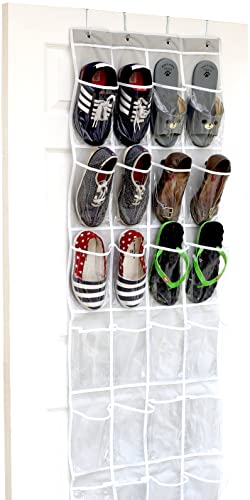
The short answer: the best hanging shoe organizer is the one that matches your door or closet, your household’s shoe sizes and the way you actually take shoes on and off. An over-the-door unit with sturdy hooks suits most renters and bedrooms. A closet-rod organizer suits walk-in and reach-in closets with spare hanging space. Fabric pocket styles are light and flexible, while clear plastic or mesh pockets help you spot a pair at a glance. Check door thickness, pocket size and weight limits first, because nearly every disappointment comes from a poor fit rather than a poor design.
This guide does not rank products or recommend particular makers. It explains how each style works, what to measure, which materials last, and how to avoid damage to doors and shoes. Use it to narrow the field, then read current listings and instructions for the exact dimensions and limits.
What this guide covers
- Why hanging storage works
- Main styles of hanging shoe organizers
- Materials and construction
- Matching the organizer to your shoes
- Comparison table
- Measuring doors and closets
- Buyer checklist
- Mistakes to avoid
- Safety and damage prevention
- FAQ
- Bottom line
Why hanging storage works
Shoes are awkward. They are bulky, they come in pairs, and they are usually dirty on the bottom. Left on the floor, they spread across the entryway or the bottom of a closet in a tangle, and finding the matching one takes time. Hanging storage lifts them off the floor and gives each pair a defined slot.
The biggest advantage is that it uses vertical space that is otherwise wasted. The back of a bedroom door, the inside of a closet and the length of a hanging rod are all places where air is doing nothing. In a small apartment, where a standing shoe cabinet would block the way, that matters a great deal.
Hanging organizers also cost little in comparison to built-in storage, need no tools in most cases, and can be taken down when you move. The trade-off is that they have limits. They are not ideal for very heavy boots, they can swing or bump if overfilled, and they depend on a door or rod that can carry the load. Understanding those limits is what separates a tidy system from a sagging one.
Main styles of hanging shoe organizers
Over-the-door pocket organizers
This is the classic style: a panel of pockets that hangs from hooks over the top edge of a door. Each pocket holds one pair, usually toe down or sideways. These are easy to install and remove, and they suit bedrooms, laundry rooms and closets with a solid door. Check that the hooks are metal or thick reinforced plastic, and that their depth fits your door. Browse over-the-door shoe organizers and compare the hook design in each listing.
Over-the-door rack styles with shelves or bars
Some products use rigid metal frames with rows of bars or small shelves rather than fabric pockets. These tend to be sturdier and hold heavier shoes, and they allow more airflow. They are often thicker, so check that the door still closes with the shoes in place. They can also stand out visually, so consider where the door sits.
Closet-rod hanging organizers
These loop over a closet rod and hang like a long garment. Shelves or pockets run down the length. They are excellent when you have unused rod space, and they keep shoes near the clothes you wear with them. Because the weight sits on the rod, make sure the rod is firmly fixed and rated to carry the load. A hanging closet shoe organizer with reinforced top loops usually copes better with a full load.
Hanging shelf towers
A fabric tower with a few shelves hangs from the rod and is open to the air. Each shelf holds several pairs, which suits larger or bulkier footwear better than a narrow pocket does. Look for stiffened shelves that do not sag, and for strong stitching at the stress points.
Mesh and clear pocket versions
Clear or mesh pockets let you see each pair and allow air to circulate, which can help shoes dry out and reduce odors. Solid fabric pockets look neater and hide the contents. If your household wears many different pairs, visibility saves time. If the organizer is in a shared hallway, solid fabric may look tidier.
Wall-hung and entryway options
Some hanging systems attach to the wall rather than a door, with rails, hooks or pegs holding shoes by the heel or in a row. These are less common but useful in entryways, mudrooms and garages. Check the wall type and the fixings before relying on them, and follow the instructions for load limits.
Materials and construction
The same product category can be made very differently, so look at the details in the listing rather than relying on the picture.
Fabric. Non-woven and polyester fabrics are common. They are light, flexible and often washable by hand. Thin fabric stretches and sags under heavy shoes, so look for descriptions of reinforced stitching, thicker material and stiffened pocket bottoms.
Plastic and PVC. Clear pockets are easy to wipe, but cheap plastic can crack in cold or yellow with age. Check how the pockets are attached to the panel.
Metal frames. Steel or coated metal frames are strong and rigid. They suit heavy footwear but can scratch a door if the hooks are bare. Look for padded or coated contact points.
Hooks and straps. The hanging hardware often fails first. Metal hooks with a rubber or foam cushion are generally gentler on a door. Straps with hook-and-loop closures or snaps suit closet rods, but make sure they are strong enough for the full load.
Stitching and seams. Seams carry the weight. Double stitching or bar-tacked corners signal better durability. A listing that mentions nothing about construction may mean there is little to say.
Matching the organizer to your shoes
Pocket organizers are often sized for common adult shoes, but that does not mean they suit every shoe. Think through your own collection.
Flats, sandals and sneakers usually fit pockets well. Slimmer shapes slide in easily and the organizer stays flat against the door.
Heels can poke through thin pockets or stretch the fabric. Choose deeper, stiffer pockets and check how the pocket handles a pointed toe or a tall heel.
Boots and wide shoes usually need rigid shelves or hanging towers instead of narrow pockets. Pushing a tall boot into a small pocket warps it, so store boots upright on a shelf or use boot shapers.
Children’s shoes suit smaller pockets. Some people place a child’s organizer low on a door so kids can manage their own pairs, which builds good habits. Check that the lower hook does not create a hazard on a heavily used door.
Large sizes may need extra-wide or oversized pockets. Check the measurements given for pocket width, depth and height, and compare them to your biggest pair.
If you have a mix, consider using two products, such as pockets for everyday shoes and a shelf tower for bulkier ones. Mixing systems often works better than forcing one organizer to cover everything.
Comparison table
This table gives general guidance. Always confirm the dimensions and limits stated for the specific product you are considering.
| Style | Best for | Strength | Watch out for |
|---|---|---|---|
| Over-door fabric pockets | Bedrooms, renters, everyday pairs | Cheap, flat and removable | Sagging, door thickness, weight |
| Over-door metal rack | Heavier shoes and larger collections | Rigid and airy | Bulk, door closing clearance, scratches |
| Closet-rod pockets | Closets with spare rod space | Uses empty hanging area | Rod strength, swinging |
| Hanging shelf tower | Boots and bulky shoes | Room for larger pairs | Sagging shelves, seam strength |
| Clear or mesh pockets | Seeing every pair quickly | Visibility and airflow | Cheap plastic cracking |
| Wall-hung rails and pegs | Entryways and mudrooms | Keeps the floor clear | Wall type, fixing strength |
Measuring doors and closets
Measuring takes five minutes and prevents most returns.
For doors
Measure door thickness at the top edge, because over-door hooks are made for a limited range. Check the gap between the door and the frame, since some frames are tight and a thick hook will stop the door from closing properly. Measure the door height and width to confirm the organizer will not touch the floor or hit door hardware such as a lock, a handle or a peephole.
Also look at the swing. A door that opens against a wall or another door may have little room for a bulky organizer. Test by holding a stack of books against the door and checking clearance as you open and close it.
For closets
Measure the rod diameter and the available hanging space below it. Check the gap between the rod and the shelf above it, as some organizers have a stiff top that needs more space. Measure the distance from the rod to the floor so the bottom shelf does not drag. Allow room for adjacent clothes too, because the organizer will push against nearby garments.
For the shoes themselves
Measure your longest and widest shoes with the tape measure, and compare to the pocket width, depth and height in the listing. A pocket that fits an average shoe may not fit your tallest boots. Measuring first beats guessing.
Buyer checklist
- I have measured door thickness, door-to-frame gap and available height.
- I know my rod diameter and the clear space around it, if buying for a closet.
- The listing gives pocket or shelf dimensions, and my biggest pair fits.
- A weight limit per pocket and overall is stated, and my pairs stay under it.
- Hooks are metal or thick reinforced material with cushioning where they touch the door.
- Stitching or joints look reinforced, and pocket bottoms are stiffened.
- The organizer will not block hardware, a mirror or a door that needs to close fully.
- Pockets suit my shoe types, such as heels, sneakers or boots.
- Materials allow airflow if shoes might be damp.
- Cleaning instructions are clear and realistic for the fabric or plastic.
- The return policy covers a bad fit, and I can reinstall the packaging.
- I have read the current manufacturer instructions for the final specifications.
Mistakes to avoid
Overloading the pockets. A pocket that holds a pair of light flats may fail with heavy boots. Spread the weight, keep the heaviest pairs lowest, and remember that a full organizer on a door can pull on the hinges.
Putting wet or muddy shoes straight in. Damp shoes breed odor and can stain fabric. Let them dry first, wipe the soles, and consider a separate tray or boot mat for dirty pairs.
Ignoring the door gap. Hooks that are too thick scrape paint, damage the frame or stop the latch from catching. If the door stops closing properly, take the organizer off and choose a slimmer design.
Choosing too small a pocket. Squeezing shoes into a snug pocket deforms them and strains seams. If shoes need to be forced, the organizer is the wrong size.
Hanging it where it is hard to use. A door that is in constant use, a closet in a dark corner or a spot you cannot reach will go unused. Place it where you actually take shoes off.
Mixing everything into one system. Boots, heels and slippers have different needs. Separate them into zones or products.
Skipping routine care. Dust and grit collect in pockets. Shake out and wipe the organizer from time to time, and check hooks and seams for wear.
Safety and damage prevention
A hanging organizer may seem harmless, but a loaded one can weigh a lot, and it hangs in places people walk through. A few precautions go a long way.
Door and hinge strain. A heavily loaded over-door organizer adds weight to the top edge of the door, which can strain hinges and cause the door to sag over time. Keep the load moderate, and follow the manufacturer’s stated limits. If the door drags or stops closing smoothly, remove weight.
Fire exits and escape routes. Never hang an organizer on a door that serves as an emergency exit in a way that could slow a quick escape or block the door from opening fully. Keep hallways and doorways clear, and make sure nothing hangs where it could snag clothing as people hurry through.
Closet rod load. Closet rods and their brackets have limits, and a long organizer packed with shoes can bring a rod down. Spread the weight, do not exceed what the rod supports, and check the brackets are fixed into solid material.
Trip and snag hazards. Shoes spilling out of a pocket onto the floor create a trip risk, especially in a dark room or on a stair landing. Do not hang an organizer where it narrows a walkway, and keep the floor beneath it clear.
Children and pets. Heavy organizers can be pulled down if a child climbs or tugs on them. Keep them out of reach of toddlers where possible, and avoid hanging organizers over a child’s bed or crib area.
Hygiene and odor. Shoes carry bacteria, dirt and sometimes chemicals from outdoors. Avoid storing shoes next to clean clothing without a barrier, and wash hands after handling very dirty pairs. Allow wet shoes to dry before storage to reduce mold.
Surface protection. Hooks can scratch or dent wood and painted doors. Use cushioning where recommended, and check the surface after a few weeks.
FAQ
1. How many pairs does a hanging shoe organizer usually hold?
It varies by design, and listings state the pocket count. Remember that bulky shoes may take more than one pocket’s worth of space, so count pairs you own rather than relying on the number alone.
2. Will an over-the-door organizer damage my door?
It can if it is overloaded, if the hooks are bare metal or if the door is thin. Choose cushioned hooks, keep the load moderate and check the door regularly for rubbing or sagging.
3. Can I use a hanging organizer in a rental?
Usually yes, since most hang without drilling. Check your lease, protect the door surface with the recommended padding and take it down gently when you move out.
4. What is the best organizer for boots?
Boots generally fit better on rigid shelves, hanging towers with stiff shelves or a floor rack. Narrow pockets can bend the shaft and crease the leather.
5. How do I stop the organizer from swinging or banging?
Use hooks designed for your door thickness, add small cushioning pads at contact points and avoid overloading one side. On closet rods, a snug fit and balanced load reduce swinging.
6. Can hanging organizers hold heels?
Many can, but heels can poke through thin material. Choose deeper pockets with stiffer material, or store heels on shelves where the heel is supported.
7. How do I clean a fabric shoe organizer?
Follow the care label or listing guidance. Many can be shaken out, wiped with a damp cloth and air dried. Avoid heat unless the instructions allow it, and let it dry fully before reloading.
8. Should I choose clear or solid pockets?
Clear or mesh pockets help you find a pair quickly and let air flow. Solid fabric hides clutter and looks neater in shared spaces. Choose based on whether visibility or appearance matters more to you.
Bottom line
The best hanging shoe organizers fit the door or rod you have and the shoes you own. Measure thickness, clearance and pocket size, choose sturdy hooks and stitching, and keep the load moderate so doors and rods stay healthy. Keep emergency exits clear, and let shoes dry before storing them. Features and sizes change from product to product, so check the current specifications and instructions before buying. For more ideas, browse hanging shoe shelves and clear pocket shoe organizers and check each against the list above.
Disclosure: As an Amazon Associate, we earn from qualifying purchases. Links marked as sponsored may earn us a commission at no extra cost to you.
More from Amazon
Programs that pair well with the guide above. Offers and eligibility are set by Amazon and may change.
A free business account with business pricing and bulk-buying tools for work, shop or home office.
Create a business accountFree shipping on eligible items, Prime Video and more. Eligible new members can start with a free trial.
Start a Prime free trialAudiobooks and podcasts to listen to on the go. Eligible new members can start with a free trial.
Try Audible freeAd-free music streaming. Eligible new subscribers can start with a free trial.
Try Music Unlimited freeAs an Amazon Associate we earn from qualifying purchases.
