
Our Top Picks
 NEWBULIG Shoe Bench with Storage for Entryway39.4"W X 13.8"D X 17.7"H13.8 x 39.4 x 17.7 inches35 poundsCheck on Amazon


The short answer: the best mudroom bench is a sturdy seat at a comfortable height, with storage that suits how your household actually arrives home, in a material that can handle wet boots, grit and daily abuse. Families with several kids usually do best with a bench that has open cubbies or baskets plus wall hooks above. Smaller homes often need a slim bench with a shoe shelf underneath. Solid wood and sealed plywood are tough, metal frames resist wet conditions, and fabric or upholstered seats are comfortable but need a wipe-clean cover. Measure your space, plan for the heaviest user sitting down, and anchor any tall piece to the wall.
Contents
- What a mudroom bench actually has to do
- Bench styles and when they work
- Materials compared
- Choosing the right storage
- Sizing and measuring
- Features worth paying for
- Installation and anchoring
- Care and maintenance
- Safety for kids and pets
- Common mistakes
- Who should choose what
- Checklist
- FAQ
- Conclusion
What a mudroom bench actually has to do
A mudroom bench is a working piece of furniture. It has to give someone a place to sit while pulling off boots, hold the shoes and bags that arrive with them, and survive snow, mud, wet dogs and the occasional dropped hockey bag. It sits in a spot where the whole household passes several times a day, so it takes more punishment than a living room chair ever will.
That daily abuse changes how you shop. Decorative features matter less than whether the seat is stable, whether the surface wipes clean, and whether the storage is easy enough that children will actually use it. A beautiful bench with fiddly lids will be ignored, and shoes will pile up beside it. The most successful mudroom setups make the right action the easiest action: sit, drop shoes in the cubby, hang the coat above, and go.
Bench styles and when they work
Open cubby benches
These have a seat on top and open compartments beneath, sometimes with a shelf above. They are the fastest to use because nothing needs to be opened. Open cubbies suit households with several people because each person can claim a slot. The trade-off is that clutter is visible, and damp items in open slots need airflow to dry, which is a benefit rather than a drawback.
Lift-lid storage benches
A hinged seat opens onto a chest. This hides clutter and holds bulky items like spare hats or pet gear. The downsides are that you cannot drop shoes in quickly, wet items trap moisture, and fingers can be pinched if the lid is not supported. Look for a soft-close or safety hinge, and avoid storing wet footwear inside.
Shoe rack benches
A slatted or open shelf under the seat holds pairs of shoes at an angle. These are slim, usually inexpensive and good for narrow halls. They hold fewer bulky items, so they pair well with hooks and a basket for accessories.
Benches with a hutch or locker unit
A tall unit with hooks, shelves and sometimes a mirror provides the most storage in the smallest footprint. These are the best option for large families, and the most important to anchor to the wall because of their height.
Built-in benches
A built-in bench is custom fitted to an alcove or wall and can include drawers, cubbies and a full wall of hooks. It makes the best use of an awkward space and can be very strong, but it is permanent, takes planning, and is a larger project. Even simple built-ins can be made from cabinet carcasses or purpose-built frames covered with a seat board.
Open bench seats and benches with backs
A plain bench with no storage is the simplest, most flexible option and leaves room for baskets and boot trays underneath. A bench with a back is more comfortable for older adults but takes more depth.
Materials compared
| Material | Durability | Wet-boot tolerance | Upkeep | Best for |
|---|---|---|---|---|
| Solid hardwood | High; can be refinished | Good with a sealed finish | Occasional refinishing | Long-term family use |
| Softwood, painted or sealed | Moderate; dents more easily | Good if finish is intact | Touch up paint | Budget builds |
| Plywood, sealed | High if edges are sealed | Good | Seal edges | Built-ins |
| Laminated particleboard or MDF | Moderate; chips at corners | Poor if surface is breached | Wipe dry quickly | Dry, light-use entries |
| Metal frame with wood or composite seat | High | Good | Check joints | Wet climates |
| Upholstered seat cushion | Depends on fabric | Varies; needs wipeable cover | Spot clean | Comfort, if protected |
This table describes general tendencies. When you shop, look at joinery and hardware as well as the material name. A well-built particleboard piece with good edge banding can outlast a poorly made solid-wood one, but once the surface chips, particleboard drinks water.
Choosing the right storage
Match the storage to your actual habits. Count the people who use the entry, the number of pairs of shoes in daily rotation, and the bulky extras: sports bags, school packs, dog leashes, umbrellas. A household with four children and a dog needs more cubbies than a couple. If shoes are the main issue, shelves or open slots win. If bags and sports gear dominate, deep bins or baskets under the seat work better.
Think about air. Wet footwear dries faster in an open cubby than in a closed chest, and damp storage can smell or support mold. A bench with ventilation, or one over a boot tray, gives wet items somewhere to drip. Tall hooks at two heights, adult and child, let everyone hang a coat without help.
Sizing and measuring
A typical seat height is a little under the height of a standard chair, which is comfortable for most adults, and a seat that is much lower is hard to rise from. Depth matters too. A seat about 14 to 18 inches deep is common for a comfortable perch, while a narrow shoe bench may be shallower. Allow a clear walkway so that people can pass someone sitting, and make sure the door swing is free.
Measure the wall width, the depth you can give, and the height to any window sill or light. If you are adding hooks or a shelf above, leave enough clearance so that a person sitting does not hit their head on a shelf. Check the floor for level and for baseboards that may stop a bench sitting flush. Mark where studs are, because hooks and tall units must be anchored into framing. For a built-in, also check outlets, vents and radiators, and leave breathing room around heat sources.
Features worth paying for
- Stable construction: a bench that rocks or racks sideways will loosen quickly. Look for braced frames, solid back panels and decent fasteners.
- Wipeable finish: a sealed or painted surface handles slush and spills.
- Safe lid hardware: if there is a lid, it should stay open on its own or close slowly.
- Feet or a raised base: lifting the bench slightly off the floor keeps it from wicking up puddles and makes floor cleaning easier.
- Cushion with a removable, washable cover: comfort without the stains.
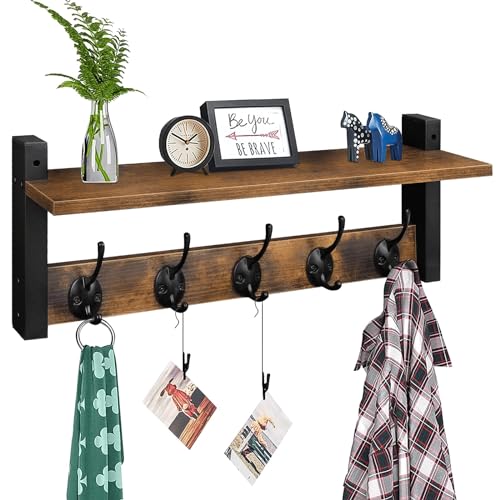
- Hooks and a shelf above: it turns a bench into a complete drop zone.
- Boot tray beside it: a waterproof tray captures meltwater and grit so that they do not reach the floor.
A mudroom storage bench with cubbies is a sensible all-round starting point, and a waterproof boot tray is a cheap addition that protects both bench and floor.
Installation and anchoring
Most freestanding benches need only assembly, but check that the floor is level, and shim any rocking. Tall hutch or locker units should be fastened to wall studs using the brackets or straps supplied, or others rated for the wall type. Wall hooks and shelves above a bench need stud fastening too, since coats, wet jackets and loaded bags pull down harder than people expect. When studs do not align with the unit, use heavy-duty anchors made for the wall material and rated well above the expected load.
For a built-in, build the frame level, fasten it to studs, and choose a seat board thick enough to span between supports without sagging. Seal cut plywood edges and the underside of the seat, because meltwater runs to the edges. Pre-finish all parts before assembling when you can, as it is easier than painting inside cubbies. If your project involves cutting into walls or moving wiring, bring in a qualified electrician or contractor.
Care and maintenance
Wipe the seat and cubby floors with a damp cloth when they get dirty, and dry them afterward. Let wet shoes dry on a tray rather than inside a closed chest. Vacuum grit from corners, since sand and salt scratch finishes and can corrode metal hardware. In winter, wipe road salt residues promptly, because they can mark wood and leave white stains.
Check hinges, screws and anchors every few months, and tighten as needed. Touch up chips in paint or sealant so that moisture does not creep in. Upholstered cushions benefit from a spray protector if the maker allows it, and washable covers should be laundered according to their label. If you smell dampness, empty the storage, dry it out, and look for a leak or a source of condensation near a wall or door.
Safety for kids and pets
Children climb, so assume any bench or hutch will be used as a ladder. Anchor tall units to the wall so they cannot tip, and place heavier items low. Avoid lift-lid benches with unsupported lids if small children are around, because a falling lid can injure fingers, and children can become trapped in deep chests, so do not allow them to play in or on closed storage. Check that sharp corners are rounded or protected and that hardware is smooth.
Respect weight ratings for the seat, and do not use a bench as a step stool unless it is made for that. Keep cords, laundry products and small items that may be swallowed out of reach, and keep pet medications and chemicals stored above the bench. Make sure the boot tray or floor stays dry enough to avoid slips, particularly for older adults, and keep a clear path to the door.
Common mistakes
- Choosing a bench that is too deep for a narrow hall, blocking traffic.
- Buying lidded storage for wet gear that needs airflow.
- Putting hooks too high for children to reach.
- Skipping wall anchoring on a tall unit.
- Using unsealed particleboard in a door-adjacent spot where slush arrives daily.
- Choosing a pale fabric cushion that cannot be cleaned.
- Underestimating how many pairs of shoes live by the door.
Who should choose what
Large families do best with a cubby unit or a hutch with a bench and plenty of hooks. Small apartments and narrow halls suit a slim shoe rack bench and a row of hooks. Homeowners with an alcove or a long wall may enjoy a built-in with drawers. Pet owners should favor wipeable materials and open storage for leashes and towels. Households in snowy or rainy climates should choose sealed hardwood, plywood or metal-framed benches with a boot tray. People who need to sit for stability, including older adults, should choose a bench with firm seat support, a suitable height and a back or armrests, plus space to stand up safely.
Checklist before you buy
- Count the people and pairs of shoes that use the entry daily.
- Measure the wall, depth, door swing and walkway.
- Mark studs for hooks and tall units.
- Pick a wipeable, moisture-tolerant material.
- Choose open or ventilated storage for wet gear.
- Check the weight rating on the seat.
- Install anti-tip hardware on tall pieces.
- Set hooks at adult and child heights.
Frequently asked questions
How tall should a mudroom bench be?
Most are close to standard chair height, which suits adults. Choose slightly lower only if the main users are young children.
How deep should a mudroom bench be?
Around 14 to 18 inches is common for a comfortable seat. Use a shallower bench where the passage is tight.
Is a storage bench with a lid a good idea?
It works for dry, bulky items. Avoid it for wet shoes and choose a safe, supported lid if children are in the house.
What material is best for wet climates?
Sealed solid wood, well-sealed plywood and metal-framed designs hold up better than unprotected particleboard.
Do I need to anchor a mudroom bench?
Low benches do not, but tall hutches and anything with a high shelf or loaded hooks should be fastened to studs.
How many hooks do I need?
Plan about one hook per person plus a few spare, and add a lower row for children.
Can I make my own mudroom bench?
Yes. A simple frame with a plywood seat and shelf is a manageable project if you seal the wood and fasten it securely.
How do I keep the bench from smelling?
Let shoes dry on an open tray, wipe the surfaces, and keep storage ventilated.
Conclusion
The best mudroom bench is the one your household will use without thinking, built from materials that can take wet boots and daily bumps. Choose storage that fits real habits, size the bench to the space, anchor tall pieces and hooks into studs, and plan for airflow so that wet gear dries. Add a washable bench seat cushion for comfort if you like, and finish the setup with a sturdy row of heavy-duty wall hooks.
Disclosure: As an Amazon Associate, this site may earn from qualifying purchases at no extra cost to you.
More from Amazon
Programs that pair well with the guide above. Offers and eligibility are set by Amazon and may change.
A free business account with business pricing and bulk-buying tools for work, shop or home office.
Create a business accountFree shipping on eligible items, Prime Video and more. Eligible new members can start with a free trial.
Start a Prime free trialAudiobooks and podcasts to listen to on the go. Eligible new members can start with a free trial.
Try Audible freeAd-free music streaming. Eligible new subscribers can start with a free trial.
Try Music Unlimited freeAs an Amazon Associate we earn from qualifying purchases.
