Key takeaways
- Buying a first sewing machine comes down to one tension: a cheap mini model that arrives with a pile of accessories.
Buying a first sewing machine comes down to one tension: a cheap mini model that arrives with a pile of accessories, or a fuller-sized machine from an established brand that costs more but gives you room to grow. The wrong choice shows up fast. A machine that is too light skitters across the table, one with too few stitches leaves hems looking plain, and one with a confusing setup ends up in a closet by March.
This guide is written for people who have never threaded a bobbin and want a machine for hemming curtains, mending jeans, making tote bags or trying a first quilt block in 2026. Every pick below is judged only on what its listing title states, so use the comparison as a shortlist and confirm the remaining details on the listing before you buy. Think about where the machine will live, how often it will come out of its box and whether anyone else in the house will use it, because those habits matter more than any single feature.
Quick Picks
Our top picks



As an Amazon Associate we earn from qualifying purchases at no extra cost to you.
| Product | Best for | Key spec from the title |
|---|---|---|
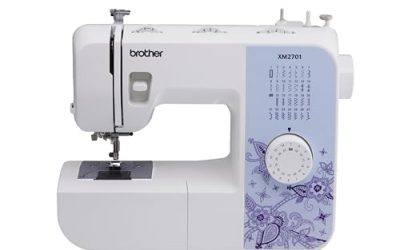
| Brother XM2701 | All-round first machine | 27 stitches, 6 sewing feet, auto needle threader, free arm |
| Brother CS5055 | Learners who like a screen | Computerized with LCD display |
| Vaspow 16-stitch model | Small apartments | 16 built-in stitches, free arm, LED, storage drawer |
| Brother XM3700 | Variety of decorative work | 37 built-in stitches |
| Brother CS7000X | Quilting ambitions | 70 built-in stitches, LCD, wide table, 10 included feet |
| CraftBud mini | Gift for a young sewer | 122-piece kit, dual speed, extension table |
How to Choose
Stitch count versus stitches you will use
New sewers rarely use more than a straight stitch, a zigzag, a stretch stitch and a buttonhole. A machine with 12 built-in stitches covers all of those, while 27, 37 or 70 stitches add decorative patterns and heirloom options. Pay for the extra stitches only if you can name a project that needs them. Otherwise spend the difference on better feet and a sturdier body. A useful test is to list the last three things you wanted to sew; if none of them need a decorative stitch, a mid-sized stitch library is already generous.
Weight, base and stability
A very light machine is easy to carry but can walk across the table at higher speed, especially on thick denim. Look for a fixed base, rubber feet and a foot pedal rather than relying on a hand-guided mini. If you plan to sew every weekend, a full-sized machine from a known brand usually feels steadier than a toy-sized one, and its parts are easier to replace. Check whether the listing mentions a hard cover or carrying case, since storage affects how often a machine actually gets used.
Threading aids and free arm
An auto needle threader saves the most frustration in the first month, because poking thread through a needle eye is where many beginners give up. A free arm lets sleeves, cuffs and trouser hems slide around the sewing surface. Both features are named in several titles below, so filter for them before comparing anything else. A drop-in or easy-load bobbin is another small convenience worth looking for, though the titles here rarely say which style is used, so read the listing carefully.
Accessories, speed control and what to ignore
Kits with 42 or 122 pieces sound generous, but most of the count is thread spools, pins and bobbins you can buy cheaply later. Dual speed control is useful because a slow setting is forgiving. Ignore marketing language about being suitable for every fabric: the title will not tell you needle sizes or thickness limits, so check the listing and manual. Budget models usually cut corners on metal internal parts and manual quality, not on stitch count. Also look at the cord and pedal: a short cord forces awkward table placement, and a flimsy pedal makes speed control harder than it should be.
The 6 Best Options
Brother XM2701
This portable machine lists 27 stitches, six sewing feet, an auto needle threader and a free arm, which is a well-rounded set for someone who wants to start with hems and bags and move toward clothing. It suits a buyer who prefers a recognized brand over an anonymous mini.
- The auto needle threader removes a common first-week hurdle.
- Six included feet cover more tasks without extra purchases.
- Trade-off: it is a basic mechanical-style design, so there is no screen to guide stitch selection.
Skip it if you already know you want to quilt large projects, since the listing does not mention a wide table. Buyers who mostly want to shorten pants and sew simple pillow covers will likely find the feature set more than adequate.
Brother CS5055
The title calls this a computerized sewing machine with an LCD display. That suits learners who like seeing the selected stitch rather than reading a dial, and it is a natural step up for someone who has borrowed a relative’s machine before.
- The LCD display makes stitch choice visible at a glance.
- Computerized controls generally make adjusting settings simpler than turning several dials.
- Trade-off: the title gives little detail on stitch count or accessories, so confirm what is in the box.
Skip it if you want a bundled accessory kit; the listing title does not advertise one. It also makes less sense if you only sew a couple of times a year and would rather not learn a menu-driven interface.
Vaspow 16-Stitch Sewing Machine
Vaspow lists 16 built-in stitches, a free arm, a fixed cylinder bed, a foot pedal, an LED light and a storage drawer. It is aimed at buyers with limited space who still want a pedal-driven machine and a bit of built-in storage.
- The LED light helps when sewing dark fabric in a dim corner.
- The title describes it as portable and lightweight, which helps for small spaces.
- Trade-off: lighter machines can shift on the table, so use a non-slip mat.
Skip it if you expect to sew thick layers regularly; check the listing for fabric guidance first. It is a better match for lightweight cotton, simple repairs and craft projects than for heavy upholstery work.
Brother XM3700
With 37 built-in stitches, this model sits between the basic and the feature-heavy end of the range. It fits someone who has outgrown a straight stitch and wants decorative edges, stretch stitches and more finishing options without paying for a quilting machine.
- A bigger stitch library gives room to experiment with trims and edging.
- It comes from the same brand family as other entries here, so accessories and manuals are easy to find.
- Trade-off: the title does not mention a screen or wide table, so check the listing for extras.
Skip it if you only plan simple hemming; a cheaper model with fewer stitches would do the same job. It is also a sensible stopping point for buyers who want growing room but do not need a quilting-specific design.
Brother CS7000X
This is a sewing and quilting machine with an LCD display, 70 built-in stitches, a wide table and 10 included feet. It is the most capable option here and suits a beginner who is serious about quilts and larger projects from day one.
- The wide table gives more support for bulky projects.
- Ten included feet cover many specialty tasks right away.
- Trade-off: it carries a higher price tier and more features than a first-time hemmer needs.
Skip it if your budget is tight or your projects stay small, since the extra stitches may go unused. Buyers with limited table space should also check the footprint on the listing, because a wide table makes the whole machine larger.
CraftBud Mini Sewing Machine
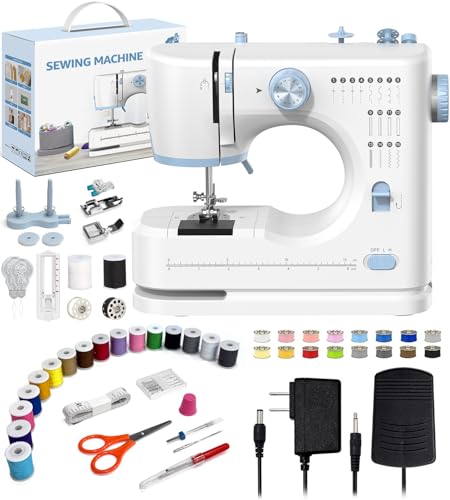
CraftBud markets this for beginners, adults and kids, with a 122-piece sewing kit, dual speed and an extension table. It fits a household that wants a compact starter machine with a large accessory bundle for a teen or child learning the basics.
- The 122-piece kit means thread, needles and tools are ready on day one.
- Dual speed lets a nervous learner slow down.
- Trade-off: mini machines usually have smaller working areas, so large projects can feel cramped.
Skip it if you plan long sewing sessions on heavier fabric; a full-sized machine is a safer fit. Parents should also confirm the age guidance on the listing and keep an adult nearby during first sessions.
Which One Fits Your Situation
You want one machine for years of mending and bags
The Brother XM2701 is the balanced pick: a recognized brand, an auto needle threader, a free arm and six feet. It handles the everyday jobs most beginners have.
You live in a small apartment
The Vaspow with its storage drawer and portable, lightweight build is the most space-conscious choice here. Pair it with a sturdy table and a non-slip mat.
You already dream about quilts
Go straight to the Brother CS7000X. The wide table and 70 stitches mean you will not outgrow it in a season, and the LCD display keeps stitch selection easy. Add a dedicated sewing table or a roomy desk so the wide surface has somewhere to sit.
You are buying for a young learner
The CraftBud mini combines a large accessory kit with dual speed. Adults should supervise any sewing by children, follow the manufacturer’s age guidance on the listing and keep fingers clear of the needle.
Common Mistakes
- Choosing by stitch count alone instead of by the projects you actually plan to make.
- Buying the smallest mini model, then trying to sew thick layers on it.
- Ignoring the foot pedal, needle threader and free arm, which affect daily comfort more than extra patterns.
- Counting accessory pieces as value when most are basic spools and pins.
- Skipping the manual and test scraps, then blaming the machine for tension problems.
- Sewing without changing needles often enough, which causes skipped stitches that look like a machine fault.
Related guides
- Battery Powered Floodlight Camera With Local Storage
- Cordless Drill Brush Attachment For Bathroom Grout
- Rechargeable Emergency Lantern For Power Outages
Frequently Asked Questions
How many stitches does a beginner really need?
Most early projects use straight, zigzag, stretch and buttonhole stitches. Twelve to 27 stitches is plenty for a first year, and more only matters for decorative work.
Is a mini machine good enough to learn on?
It can be for light fabric and small projects, and kit bundles make it affordable. Expect a smaller workspace and consider a full-sized machine if you want to sew regularly. Ask whether the machine will be used for lessons, quick repairs or ongoing projects before settling on a size.
Does a computerized model help beginners?
The screen on a model like the Brother CS5055 shows the selected stitch and can reduce guesswork. It is a convenience, not a requirement, so weigh it against price.
What else is worth buying besides the machine?
Plan on extra needles, a seam ripper, good scissors and a small cutting mat. Check the listing to see what is already included before ordering duplicates.
More from Amazon
Programs that pair well with the guide above. Offers and eligibility are set by Amazon and may change.
A free business account with business pricing and bulk-buying tools for work, shop or home office.
Create a business accountFree shipping on eligible items, Prime Video and more. Eligible new members can start with a free trial.
Start a Prime free trialAudiobooks and podcasts to listen to on the go. Eligible new members can start with a free trial.
Try Audible freeAd-free music streaming. Eligible new subscribers can start with a free trial.
Try Music Unlimited freeAs an Amazon Associate we earn from qualifying purchases.