Key takeaways
- The wheelbarrow looks like the simplest tool in the shed, yet the choice splits into two camps.
The wheelbarrow looks like the simplest tool in the shed, yet the choice splits into two camps. A traditional one-wheel barrow with a steel or poly tray is nimble, dumps cleanly and fits narrow garden paths. A dual-wheel garden cart is steadier under a heavy load and tips far less, but it needs wider paths and more room to turn. Tire type, tray size and handle design decide whether hauling mulch feels like a minor chore or a daily argument with gravity.
This guide is for homeowners moving soil, mulch, bricks and yard waste, and for gardeners who want a reliable cart for the 2026 season. Each pick is evaluated only on what the listing title states, including cubic-foot size, capacity and tire design. Load ratings are the maker’s figures, so never exceed them, and check the full dimensions, assembly steps and warranty on the listing before you buy. Walk the route you will use most, measure the narrowest gate or path, and picture how you will unload, because a cart that fits the work but not the gate is the most common regret. A few minutes of planning now matters more than any feature list.
Quick Picks
Our top picks



As an Amazon Associate we earn from qualifying purchases at no extra cost to you.
| Product | Best for | Key spec from the title |
|---|---|---|
| True Temper 6 Cu. Ft. Steel | Traditional single-wheel hauling | 6 cu. ft., steel handles, never flat or pneumatic tire |
| Corona Wheelbarrow in a Box | Compact storage and shipping | 5 cubic foot, 15-inch flat-free tire |
| Best Choice Products Dual-Wheel | Stable heavy loads | Dual wheel, 500 lb capacity, built-in stand |
| Basics Garden Cart Wheelbarrow | Mid-size yard jobs | 330 pounds capacity, 3.7 cubic feet |
| CAMMOO Garden Dump Cart | Quick dumping | 10-inch no-flat tires, 600 lb, 4 cu. ft. |
| Heavy-duty dual-wheel cart with stand | Dense loads | 600 lbs load capacity, rust-resistant poly bed, 4 cubic feet |
| WORX Aerocart WG050 | Multi-use cart and dolly | 8-in-1, two-wheel design |
How to Choose
One wheel or two
A single front wheel concentrates the load and lets you pivot between beds, but you must balance the weight with your arms. Two wheels share the load and stand on their own, which is a relief when a load is heavy or the ground is soft. If you routinely carry wet soil, concrete debris or heavy stone, a dual-wheel cart is usually the steadier choice. If your garden has narrow gates, a single wheel can squeeze through spaces a wider cart cannot. Dual-wheel carts also tend to be easier on people with weaker wrists, since the cart supports its own weight and you steer rather than balance. Check the track width on the listing to see whether it fits your paths.
Capacity, volume and tray size
Two numbers matter: volume in cubic feet and the weight rating in pounds. A 3.7 to 4 cubic foot tray suits most garden chores, while 5 to 6 cubic feet moves more mulch per trip. Do not confuse volume with the weight you can safely haul, because wet soil weighs far more than mulch. Never exceed the rated load stated by the maker, and remember that a full tray is hard to push uphill. As a rough guide, fill the tray only part way when the load is dense, and split heavy jobs into several trips. A cart that is easy to dump matters too, since lifting the handles with a heavy load shifts weight to your back.
Tires and frame materials
Flat-free or never-flat tires, mentioned for the True Temper, Corona and CAMMOO listings, remove the usual puncture worry but can ride firmer than air-filled tires. Pneumatic tires cushion bumps and roll easily on soft ground but need pumping and can puncture. Steel trays are tough but can rust if scratched and left wet, while polypropylene trays resist rust and are lighter. Steel handles are a durable pairing for the heaviest jobs. Wheel size matters as well: larger wheels roll over roots and ruts more easily, while small wheels catch on every bump. If you work on soft lawn, wide tires spread the load and leave shallower tracks.
Handles, balance and what to ignore
Comfortable grips and a handle height that keeps your wrists neutral make a bigger difference than a fancy name. Lift and push with your legs and back straight, and avoid overloading the front. Ignore claims that make a cart sound magical, such as lifting a heavy load like a much lighter one; the listing may describe a leverage design, but your body still guides the cart. Budget carts usually cut corners on fasteners, bearings and tray thickness, so tighten hardware after the first few loads. Check the grease or bearing situation on the wheel as well, because a dry axle makes every trip harder. Store the cart out of the rain, and rinse it after hauling salt, fertilizer or wet clay.
The 7 Best Options
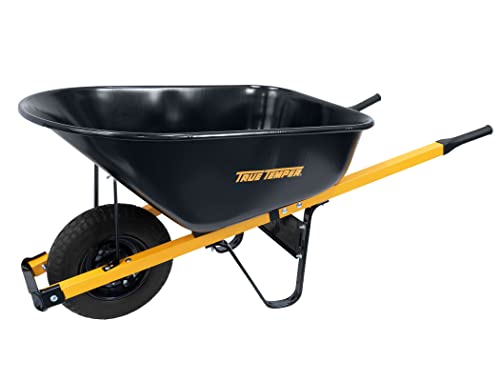
True Temper 6 Cu. Ft. Steel Wheelbarrow
This classic single-wheel barrow has a steel tray, steel handles and a 6 cubic foot capacity. It appears with a never-flat tire and with a pneumatic tire, so you can choose between maintenance-free and cushioned rolling. It suits homeowners who want a traditional tool for mulch, gravel and soil. It is the familiar shape that most gardeners picture, and replacement parts for this style are usually easy to find.
- Six cubic feet moves a lot of material per trip.
- Steel handles and tray point to a sturdy build.
- Trade-off: a single wheel takes balance, and steel can rust if left wet.
Skip it if you struggle to balance heavy loads or have wide paths and prefer a dual-wheel cart.
Corona Wheelbarrow in a Box
A 5 cubic foot heavy-duty garden cart that ships in a box, with a 15-inch flat-free tire. It suits buyers with limited storage space or those who want a straightforward home assembly.
- A large 15-inch wheel rolls over bumps easily.
- The flat-free tire needs no air.
- Trade-off: assembly is required, so allow time to follow the instructions.
Skip it if you want a ready-to-use, fully assembled tool. Check the listing for the tray material and for any weight rating, since the title gives the volume and tire details only.
Best Choice Products Dual-Wheel Wheelbarrow Garden Cart
A dual-wheel cart with a built-in stand for easy loading, listed with extra-large wheels and a 500 lb capacity in one version. It is for yard cleanup, landscaping and heavy loads where stability matters more than tight turns. A second listing from the same brand shows a green version, so choose the color and capacity that match your needs.
- Two wheels keep a heavy load steady.
- The built-in stand makes loading easier.
- Trade-off: wider than a single-wheel barrow, so check the gate width.
Skip it if your garden has narrow paths or tight corners, and be cautious on slopes, since a loaded cart can run away from you on a hill.
Basics Garden Cart Wheelbarrow
A heavy-duty yard cart rated at 330 pounds, with a 3.7 cubic foot tray, and listed at 26.8 inches wide, 53.9 inches deep and 27.2 inches high. It fits mid-size yards and routine landscaping tasks. Its published dimensions let you check storage space in a shed or garage before ordering, which many buyers overlook.
- Dimensions are clearly stated for planning.
- A moderate capacity suits everyday garden chores.
- Trade-off: capacity is lower than the 500 and 600 lb options.
Skip it if you plan to haul stone, wet soil or other dense materials. Tray volume and weight rating are different things, so match the load to the pounds stated, not just the cubic feet.
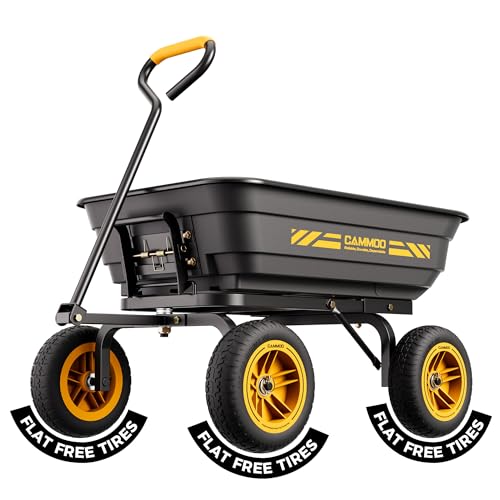
CAMMOO 10-Inch No-Flat Tire Garden Dump Cart
This cart has 10-inch no-flat tires, a 600 lb rating, a 4 cu. ft. tray, a quick-release dumping design and a virgin polypropylene bed. It is for gardeners who want fast, clean unloading.
- Quick-release dumping saves effort at the compost pile.
- The polypropylene bed resists rust.
- Trade-off: the 4 cu. ft. tray is smaller than the 6 cu. ft. barrows.
Skip it if you want the biggest possible tray. The ten-inch wheels are also smaller than the large single wheel on some barrows, so rough ground may feel bumpier.
Heavy-Duty Dual-Wheel Cart with Built-In Stand
This unbranded dual-wheel garden cart lists a built-in stand, a 600 lbs load capacity, a rust-resistant poly bed and 4 cubic feet of space. It targets yard and utility hauling where rust resistance and stability both matter, and the poly bed is easy to hose clean after a messy job.
- The poly bed is described as rust-resistant.
- Dual wheels and a stand help with loading and stability.
- Trade-off: a lesser-known seller may provide less clear parts and warranty support.
Skip it if you prefer a recognizable brand with easy-to-find replacement parts.
WORX Aerocart WG050
A heavy-duty dolly and garden cart with 8-in-1 versatility and a smart two-wheel design. The listing says it lets you lift 200 lbs like lifting 17 lbs, which is a leverage claim from the maker.
- Eight configurations cover cart, dolly and more.
- The two-wheel design aids maneuvering.
- Trade-off: it works differently from a classic barrow, so there is a learning curve.
Skip it if you only need a simple dump tray. Always follow the maker’s guidance on the maximum load, and do not rely on the leverage claim to lift more than is safe for your body.
Which One Fits Your Situation
Mulch and soil in a mid-size garden
The True Temper 6 cubic foot barrow moves the most material per trip. Choose the never-flat version for low maintenance or the pneumatic version for a softer ride.
Heavy stone and landscaping
The Best Choice Products dual-wheel cart steadies heavy loads. Stay under the rated capacity. The built-in stand keeps the tray steady while you shovel.
Small storage space
The Corona Wheelbarrow in a Box is easy to ship and store. Set aside an hour for assembly and tighten hardware again after the first few uses.
Frequent dumping at a compost bin
The CAMMOO dump cart makes unloading quick. The poly bed also rinses clean, which suits compost and wet mulch.
Common Mistakes
- Exceeding the stated load rating.
- Buying a wide cart for a narrow gate.
- Ignoring tire type and maintenance needs.
- Leaving a steel tray wet and uncovered.
- Skipping tightening of hardware after assembly.
- Filling the tray unevenly so the load shifts toward the handles or the front.
Related guides
- Battery Powered Floodlight Camera With Local Storage
- Cordless Drill Brush Attachment For Bathroom Grout
- Rechargeable Emergency Lantern For Power Outages
Frequently Asked Questions
Are two wheels better than one?
Two wheels are steadier, one wheel is more nimble. Choose by load and path width, and consider your own strength and balance.
Are flat-free tires worth it?
They avoid punctures but may ride firmer. Air tires cushion better but need pressure checks and can puncture.
How much can a wheelbarrow hold?
Check the listing for rated capacity and never exceed it. Remember that volume and weight are not the same, and wet soil or stone can reach the weight limit well before the tray is full.
Steel or poly tray?
Steel is tough but can rust, poly resists rust and is lighter. Both need rinsing after use, and steel benefits from a dry storage spot.
More from Amazon
Programs that pair well with the guide above. Offers and eligibility are set by Amazon and may change.
A free business account with business pricing and bulk-buying tools for work, shop or home office.
Create a business accountFree shipping on eligible items, Prime Video and more. Eligible new members can start with a free trial.
Start a Prime free trialAudiobooks and podcasts to listen to on the go. Eligible new members can start with a free trial.
Try Audible freeAd-free music streaming. Eligible new subscribers can start with a free trial.
Try Music Unlimited freeAs an Amazon Associate we earn from qualifying purchases.