Key takeaways
- The first sewing machine you buy has one job: get you from a pile of fabric to a straight, even seam without making you want to quit.
The first sewing machine you buy has one job: get you from a pile of fabric to a straight, even seam without making you want to quit. With a ceiling of 200 dollars, the shelf splits into two camps. Most listings are compact mini machines bundled with a pile of accessories, while a few are small full-featured machines from established makers. Knowing which camp suits your projects matters more than counting stitches.
This guide is for new sewists hemming trousers, patching jeans, making cushion covers or simple costumes, and for parents buying a first machine for a teenager or child. It compares seven listings on stitch count, speed control, foot pedal, accessory kits, and build, using only what each title states, so you can decide whether a lightweight starter or a sturdier machine fits your plans for 2026.
Quick Picks
Our top picks


As an Amazon Associate we earn from qualifying purchases at no extra cost to you.
| Product | Best for | Key spec from title |
|---|---|---|
| KPCB Tech Mini | Safe first lessons | Finger guard, 42PCS kit, mini size |
| 42-Piece Kit Dual-Speed Mini | Basic home repairs | Dual speed, 12 stitches, foot pedal |
| CraftBud Mini | Accessory-rich start | 122-piece kit, extension table |
| Easy-Thread 12-Stitch Mini | Quick threading | 12 stitches, dual speed, foot pedal |
| Kids and Beginners Mini | Teaching young sewists | 12 stitch patterns, 2-speed pedal |
| Extension Table Mini | Wider projects | Extension table, upgrade sewing kit |
| Janome Arctic Crystal | Garment sewing | Interior metal frame, tutorial videos |
How to Choose
Mini Machine or Full-Size Frame
Mini machines weigh little and store in a drawer, which suits small spaces, dorm rooms, and lessons at the kitchen table. Their drawback is a smaller work area and lighter motors. A machine with an interior metal frame, like the Janome listing, holds its alignment better on thicker fabric.
Stitches and Speed
Twelve built-in stitches cover straight, zigzag, and a few decorative options, which is plenty for a starter. Two speed settings let a beginner sew slowly while learning. Do not pay extra for a hundred stitches you will not touch in the first year; a clean straight seam matters more than a catalog of patterns.
Foot Pedal and Safety
A foot pedal frees both hands to guide the fabric, which gives smoother seams than button-only operation. A finger guard, mentioned on one listing, helps younger users. Check that the pedal cord reaches your table and that the needle area is lit well enough for evening sessions.
Accessory Kits and Where Budgets Cut Corners
Large kits of 42 or 122 pieces include scissors, threads, and needles, but the machine itself decides your results. Budget models often cut corners on tension control and the quality of the bobbin case, so look for threading guides, a bobbin diagram, and clear instructions before extra buttons.
The 7 Best Options
KPCB Tech Mini
KPCB Tech sells this mini machine as a beginner bundle with fabrics, a finger guard, and a 42-piece kit, in a small, portable body. It suits a parent setting up a child for their first stitching sessions, or an adult who wants a gentle, low-commitment start. Because everything arrives in one bundle, a new sewist can practice on the included fabrics before risking a favorite shirt or a length of curtain material.
- A finger guard adds a safety layer for young or nervous users.
- The bundle of fabrics and a 42-piece kit means you can start sewing the day it arrives.
- Trade-off: a mini frame limits how thick a fabric it can handle comfortably.
Skip it if you plan to sew denim hems or heavy canvas regularly, because compact motors struggle with layered cloth. Anyone already comfortable at a machine will also find the beginner-focused bundle more padding than substance.
42-Piece Kit Dual-Speed Mini
This electric mini machine lists dual speed, twelve built-in stitches, a foot pedal, and a 42-piece sewing kit for home DIY projects. It is a straightforward pick for someone who mostly wants to fix hems, take in a seam, or sew simple pillow covers. Nothing about it is fancy, which is exactly why it appeals to people who sew a few times a month and want the machine out of sight the rest of the time.
- Dual speed lets you slow down for corners and curves.
- A foot pedal leaves both hands free to guide the fabric.
- Trade-off: the title offers few details about the build, so expect a light plastic body.
Skip it if you want a named brand or a metal frame for long-term use. The listing does not say who stands behind the machine, so anyone who values a manufacturer's support should look elsewhere.
CraftBud Mini
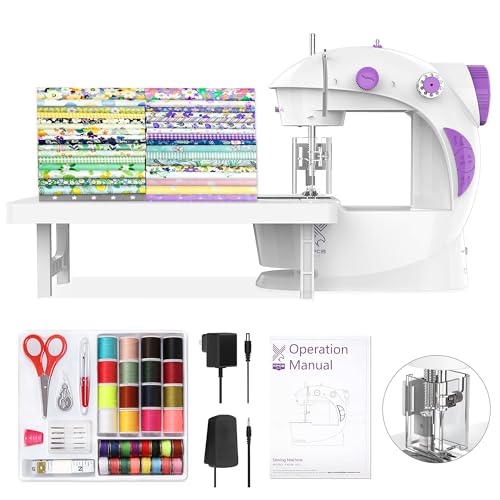
CraftBud packs a 122-piece accessory kit with a dual-speed mini machine and an extension table, aimed at beginners, adults, and kids alike. It suits someone who wants every needle, thread, and tool included so they can start a project without extra shopping, such as a gift buyer assembling a complete starter set for a friend or relative.
- A 122-piece kit is the largest accessory set in this group.
- The extension table widens the work surface for bigger pieces.
- Trade-off: a huge kit can distract from the machine's actual capability.
Skip it if you already own scissors, pins, and thread and only need the machine. A smaller kit would give the same stitching ability without the clutter of tools you will never open.
Easy-Thread 12-Stitch Mini
The selling point here is simple operation: a portable mini with twelve stitches, dual speed, a foot pedal, and a listed easy-to-thread design with an accessories kit. It targets quick home fixes, like hemming school uniforms or repairing a torn pocket. Threading a needle and bobbin is where many first-time users stall, so this emphasis on ease is a real selling point for people who dread setup.
- An easy-to-thread design reduces one of the biggest beginner frustrations.
- Portable size means it can come out for a quick repair and go back in a cabinet.
- Trade-off: the title does not mention an extension table or a safety guard.
Skip it if you need a bigger work area for quilting or larger projects. The listing says nothing about extra table space, and a small bed means bulky fabric must be supported by hand.
Kids and Beginners Mini
Marketed for beginners and kids, this mini portable machine lists twelve built-in stitch patterns and a two-speed foot pedal, with a title pitched at a parent teaching a daughter to sew. It fits a family project, such as doll clothes or simple craft bags, and the slow setting gives a parent more control over how fast the needle moves while little hands guide the cloth.
- Twelve stitch patterns give a young learner room to explore.
- A two-speed pedal lets a parent keep the pace gentle.
- Trade-off: the listing is aimed at kids, so adults doing real garment work may outgrow it.
Skip it if you are an adult planning to sew clothes or home decor often. The kid-oriented framing signals a lighter machine, and a serious hobbyist will want something sturdier within a year.
Extension Table Mini
This mini machine adds an extension table to the usual twelve stitch patterns and two-speed foot pedal, along with an upgraded sewing kit and a portable body. The larger table is helpful for beginners handling curtain panels or tote bag fabric, since the weight of the cloth no longer drags the seam off line as you feed it through.
- The extension table supports bigger pieces of fabric.
- An upgraded kit and a pedal are included in the package.
- Trade-off: the machine is still a mini, so power and stitch quality have limits.
Skip it if you want the stability of a metal-framed machine. The extra table helps with space, but it cannot make a lightweight body hold steady through thick layers.
Janome Arctic Crystal
The only established sewing brand here, Janome positions this machine as easy to use, with an interior metal frame, a bobbin diagram, and tutorial videos made with beginners in mind. It is designed for garment sewing and fits someone ready to commit to the hobby for years, whether that means altering clothes, making simple dresses, or learning to follow a pattern step by step.
- An interior metal frame supports steadier stitching on thicker fabric.
- A bobbin diagram and tutorial videos shorten the learning curve.
- Trade-off: it is a step up in budget tier from the mini machines, and it ships with a smaller accessory pack.
Skip it if you want a tiny machine for occasional repairs. A full-featured frame takes more shelf space and is overkill for sewing a button back on twice a year.
Which One Fits Your Situation
Your First Month of Sewing
Janome Arctic Crystal gives the clearest guidance with a bobbin diagram and tutorial videos, which helps when nothing works the first time. If your goal is to make wearable garments by the end of the year, it is the listing that points most directly at that.
A Child Learning Beside You
KPCB Tech Mini adds a finger guard, and the Kids and Beginners Mini offers a two-speed pedal for a slower pace. Either one lets an adult stay in control of the pace while the child practices straight lines on scrap fabric.
Making Bags and Curtains
The Extension Table Mini and CraftBud Mini both offer extra table space for larger pieces of fabric. That matters when you are hemming a curtain panel, because the cloth needs somewhere to rest instead of hanging off the edge.
Quick Hems and Repairs in a Small Space
The Easy-Thread 12-Stitch Mini and the 42-Piece Kit Dual-Speed Mini are the light, store-away options. They fit on a shelf in a studio apartment and come out for a ten-minute repair.
Common Mistakes
- Choosing a machine by accessory count instead of the quality of the machine.
- Buying a mini for heavy fabrics such as denim or canvas.
- Paying for dozens of decorative stitches a beginner will not use.
- Ignoring threading and bobbin ease, which cause most early frustration and lead many beginners to abandon the machine in a closet.
- Skipping a spare set of needles for the first projects, then bending the only one on a thick seam.
Related guides
- Battery Powered Floodlight Camera With Local Storage
- Cordless Drill Brush Attachment For Bathroom Grout
- Rechargeable Emergency Lantern For Power Outages
Frequently Asked Questions
Is a mini machine good enough for a beginner?
For hems, repairs, and light crafts, yes. For regular garment sewing, a sturdier machine with a metal frame is a better long-term choice, because it keeps stitches even as projects get bigger.
How many stitches does a beginner need?
Straight and zigzag stitches handle most early projects. Twelve built-in stitches already cover the basic and decorative needs of early projects.
Do I need a foot pedal?
It is strongly preferred. A pedal frees your hands to guide the fabric, which gives straighter seams than buttons, and it lets you stop instantly by lifting your foot.
What fabrics should I start with?
Begin with cotton, which feeds evenly and forgives mistakes. Add thicker fabric once you are comfortable controlling speed and tension, and always test a scrap before sewing the real piece.
More from Amazon
Programs that pair well with the guide above. Offers and eligibility are set by Amazon and may change.
A free business account with business pricing and bulk-buying tools for work, shop or home office.
Create a business accountFree shipping on eligible items, Prime Video and more. Eligible new members can start with a free trial.
Start a Prime free trialAudiobooks and podcasts to listen to on the go. Eligible new members can start with a free trial.
Try Audible freeAd-free music streaming. Eligible new subscribers can start with a free trial.
Try Music Unlimited freeAs an Amazon Associate we earn from qualifying purchases.