Key takeaways
- Factory door speakers are where automakers save money. Paper cones, tiny magnets.
Factory door speakers are where automakers save money. Paper cones, tiny magnets, and thin tweeters make even a good stereo sound muffled once the road noise rises. Swapping them is the most affordable audio upgrade a car can get, and with a cap of 200 dollars you can replace a full set of doors and still have room for sound-deadening tape. The trick is matching sizes: a 6.5 inch speaker will not drop into a 5.25 inch opening.
This guide is for owners of cars and trucks running a stock or modest aftermarket head unit, which is the majority of buyers at this level. Nine distinct models are compared based on size, speaker configuration, wattage ratings, and the materials named in their titles. One listing was a repeat of another BOSS model, so it was folded into the original. Wattage numbers below are maximum ratings, so pay more attention to size and sensitivity than to big watt claims.
Quick Picks
Our top picks




As an Amazon Associate we earn from qualifying purchases at no extra cost to you.
| Product | Best for | Key spec from the title |
|---|---|---|
| Pioneer TS-F1634R | Factory-replacement sound | 6.5 inch, 2-way coaxial, 200W max |
| BOSS CH6530 | Tight budgets | 6.5 inch, 3-way, 300 watts per pair |
| Pioneer TS-F6935R | Rear decks and 6×9 openings | 6×9 inch, 3-way coaxial, 230W max |
| JVC CS-J620 | Easy upgrades | 6.5 inch, 2-way, mica cone woofer, 1 inch PEI tweeter |
| Pioneer TS-F1035R | Small 4 inch openings | 4 inch, 2-way, 150W max |
| Pioneer TS-501M | 5.25 inch doors | 5.25 inch, 4-way coaxial, 300W max |
| Kenwood KFC-1666R | Matching a quality head unit | 6.5 inch, 300W, 4-ohm, cloth woofer |
| Kenwood KFC-1666S | Simple door swaps | 6-1/2 inch, 2-way |
| DS18 PRO-GM6B | Midrange in a component setup | 6.5 inch midrange, 480W max, 140W RMS, 8 ohms |
How to Choose
Start with the size of the opening
Most cars use 6.5 inch front doors, but small cars and older models may take 5.25 or 4 inch drivers, and rear decks often use 6×9 ovals. Look up your vehicle’s fitment before shopping, because a speaker that does not seat flush will rattle. The title size is your first filter.
Watch RMS, not just max power
Max wattage is a peak figure. The DS18 model gives both numbers, 480W max and 140W RMS, which is the more honest way to describe it. For a factory head unit putting out modest power, speakers with higher sensitivity will sound louder than speakers with high peak ratings.
Coaxial versus component and midrange
Coaxial speakers combine woofer and tweeter in one unit and are the easy swap for stock locations. Midrange drivers like the DS18 are not full-range replacements; they cover the middle of the music and typically pair with a separate tweeter and sub, so they suit people building a multi-way system rather than doing a simple swap.
Impedance and materials
Most car speakers are 4 ohms, which suits factory and aftermarket head units alike. An 8 ohm midrange needs an amp that handles that load. Cone materials like mica, cloth, or polypropylene change the tone, and a hybrid surround helps the cone move cleanly. Budget speakers cut corners on tweeter quality and crossover parts, so expect pleasant but not studio-grade sound.
The 9 Best Options
Pioneer TS-F1634R
A 6.5 inch two-way coaxial speaker rated at 200W max, pitched as a great factory replacement with balanced sound and smooth treble. It leans on high efficiency, meaning it can play with decent volume from a modest head unit without an amp.
- Strength: high-efficiency design suits stock stereos.
- Strength: two-way coaxial layout installs easily.
- Trade-off: 200W max is the lowest of the 6.5 inch models.
Skip it if you plan to add a powerful amplifier. It suits drivers who want clearer vocals and tighter bass from the stock radio, with nothing more complicated than a quick door-panel swap on a Saturday morning. Because the listing leans on efficiency, it is a sound match for older radios that put out only a few watts per channel and would struggle to drive a hungrier speaker.
BOSS CH6530
A 6.5 inch, three-way speaker rated at 300 watts per pair. The extra element in a three-way design is a dedicated super-tweeter, adding sparkle at the top end, and the low entry price attracts people who need basic improvement fast.
- Strength: three-way design with a tweeter element.
- Strength: the listing gives a clear 6.5 inch size and pair rating.
- Trade-off: the title offers no cone material or sensitivity detail.
Skip it if a refined, warm sound matters more to you than extra tweeter sparkle. It suits owners prioritizing a quick, inexpensive improvement over a warm, careful sound, such as for a second car or a work vehicle. Mounting depth and magnet size are not in the title, so check clearance behind the door panel before ordering.
Pioneer TS-F6935R
A 6×9 inch three-way coaxial speaker rated at 230W max. Oval speakers like this often sit on the rear deck or in the lower door of larger sedans and trucks, where they supply bass the smaller drivers cannot.
- Strength: 6×9 size moves more air for fuller low end.
- Strength: three-way coaxial arrangement is simple to install.
- Trade-off: you must have a 6×9 opening; it will not fit round holes.
Skip it if your car has no oval mounts. It suits full-size sedan and truck owners who want deeper bass from a rear-deck pair without installing a subwoofer, and who prefer a familiar brand name. Check the rear deck’s cutout and clearance below the grille, since ovals vary in mounting depth and a tall magnet can collide with a tray or seat belt hardware.
JVC CS-J620
A 6.5 inch two-way coaxial set of two, rated at 300W, with a mica cone woofer, a 1 inch PEI tweeter, and a hybrid surround. The material list is unusually specific, which helps you judge what you are buying.
- Strength: mica cone and PEI tweeter named in the title.
- Strength: hybrid surround and easy-installation design.
- Trade-off: no sensitivity number appears in the title.
Skip it if you need a 4 inch or 5.25 inch size. It suits anyone replacing both front doors and wanting clear detail about the materials before buying. A mica cone is usually chosen for stiffness and a lively midrange, while a hybrid surround lets the woofer travel smoothly, so vocals and guitars should come through with clean edges from a modest radio.
Pioneer TS-F1035R
A 4 inch two-way coaxial speaker rated at 150W max. Four-inch openings show up in small cars, dash locations, and some older vehicles, and this is the specialist for those spots.
- Strength: fits smaller openings that many speakers cannot.
- Strength: efficient design for stock radios.
- Trade-off: a 4 inch driver cannot match the bass of a 6.5 inch one.
Skip it if your car uses 6.5 inch doors. It suits owners of compact cars and dash speaker locations who want a name-brand refresh for the smallest openings. Expect better clarity for voices, navigation prompts, and podcasts rather than room-filling bass, and pair it with a subwoofer if low end matters to you on long highway drives.
Pioneer TS-501M
A 5.25 inch four-way coaxial speaker rated at 300W max, with a round black and red finish. It is intended for 5.25 inch openings found in many compact and older vehicles.
- Strength: four-way layout adds more tweeter elements.
- Strength: a rare 5.25 inch size among the options here.
- Trade-off: the visible title gives no cone or tweeter material details.
Skip it if your doors are 6.5 inch. It suits owners with 5.25 inch openings who want a bolder-looking grille and a higher-wattage rating. The four-way label sounds impressive, but treat it as a layout detail, not proof of better sound, and compare the size and mounting depth to your door before trusting any peak wattage figure.
Kenwood KFC-1666R
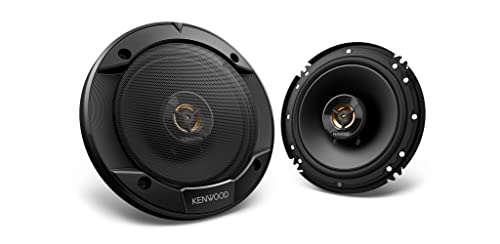
A pair of 6.5 inch two-way coaxial speakers from the Road Series, rated at 300W with a 4-ohm impedance, a cloth woofer, and a balanced dome tweeter. The spec sheet is detailed, which makes it easy to match to a head unit.
- Strength: 4-ohm impedance suits most radios.
- Strength: cloth woofer and dome tweeter are named.
- Trade-off: the 300W figure is a peak claim.
Skip it if you need a smaller size. It suits drivers who want a clear, balanced upgrade over stock without spending much more than the cheapest sets, while keeping the installation simple. The 4-ohm rating keeps it compatible with typical factory and aftermarket radios, and the cloth woofer suggests a smoother, less harsh character than a stiff paper cone.
Kenwood KFC-1666S
A 6-1/2 inch two-way speaker from Kenwood that markets powerful sound and easy installation. It is the plainer sibling of the Road Series model, and the title gives fewer specs, so verify power handling on the product page.
- Strength: two-way design suited to front doors.
- Strength: easy installation wording in the title.
- Trade-off: wattage and material details are not shown in the visible title.
Skip it if you want detailed specs before buying. It suits a driver who wants a name-brand door swap with no research. Compare it with the KFC-1666R above, which spells out impedance and materials, and choose this one only if the lower spec detail does not bother you or if it is the version your vehicle guide lists.
DS18 PRO-GM6B
A 6.5 inch midrange loudspeaker with a red aluminum bullet, rated 480W max, 140W RMS, and 8 ohms. This is a component part for door builds, not a plug-in coaxial replacement, so it fits people assembling a more advanced system.
- Strength: 140W RMS rating is stated plainly.
- Strength: aluminum bullet design suits midrange duty.
- Trade-off: it needs an amp and separate tweeter and woofer to sound complete.
Skip it if you want a simple swap. It suits enthusiasts building a multi-way system who need midrange output with serious power handling. Since it is an 8 ohm part sold as a loudspeaker, plan the amplifier and crossover first, and treat it as one piece of a larger door build instead of a stand-alone upgrade.
Which One Fits Your Situation
Stock radio, standard front doors
The Pioneer TS-F1634R is tuned for efficient, balanced sound from low-power head units.
Rear deck with oval openings
The Pioneer TS-F6935R adds low-end fullness to a sedan or truck.
Small or older car with 5.25 inch or 4 inch holes
Choose the Pioneer TS-501M for 5.25 inch openings or the Pioneer TS-F1035R for 4 inch ones.
Building a multi-way system
The DS18 PRO-GM6B handles midrange duty with a stated 140W RMS rating.
Common Mistakes
- Buying without confirming the opening size and mounting depth.
- Chasing peak wattage instead of sensitivity and RMS.
- Ignoring impedance when pairing with an amplifier.
- Skipping sound-deadening material, which lets door panels rattle.
- Mixing a midrange driver into a coaxial swap without a plan.
Related guides
- Battery Powered Floodlight Camera With Local Storage
- Cordless Drill Brush Attachment For Bathroom Grout
- Rechargeable Emergency Lantern For Power Outages
Frequently Asked Questions
Do I need an amplifier?
Not for most coaxial speakers, especially efficient ones. An amp helps if you want more volume and clarity at higher levels.
Are two-way or three-way speakers better?
Not necessarily. Extra elements add some top-end detail, but driver quality matters more than the count.
Will new speakers fit without cutting?
Many fit factory openings directly, but some need adapter brackets. Check your vehicle’s fitment guide in 2026 before ordering.
What does RMS mean?
RMS is continuous power the speaker can handle, which is closer to real use than the peak figure.
More from Amazon
Programs that pair well with the guide above. Offers and eligibility are set by Amazon and may change.
A free business account with business pricing and bulk-buying tools for work, shop or home office.
Create a business accountFree shipping on eligible items, Prime Video and more. Eligible new members can start with a free trial.
Start a Prime free trialAudiobooks and podcasts to listen to on the go. Eligible new members can start with a free trial.
Try Audible freeAd-free music streaming. Eligible new subscribers can start with a free trial.
Try Music Unlimited freeAs an Amazon Associate we earn from qualifying purchases.