Key takeaways
- Runtime versus real surface area: Manufacturers quote coverage under ideal conditions. Take the listed square footage and knock off roughly 30% if your pool holds fine sand or pollen, since the bot slows down as the filter loads. A 100-minute unit rated for 960 sq ft handles a 15-foot round comfortably; anything 24 feet or larger wants 150 minutes or more.
- Floor-only or wall climbing: Above-ground walls are usually smooth vinyl over steel, and plenty of owners simply brush them by hand in five minutes. If you’d rather not, look for track-drive models with dedicated waterline modes. Wheeled floor units cost less and put all their power where the debris actually settles.
- Filter basket access: This is the daily chore, not charging. Top-loading baskets you can pop out lakeside beat bottom-hatch designs that dump water down your leg. Dual-layer or mesh-plus-fine cartridge setups catch pollen without clogging in one cycle.
- Obstacle tolerance: Read the fine print about steps, raised main drains, and skimmer lips. Several excellent bots explicitly warn against sharp step edges. If you have an A-frame ladder with feet inside the pool, favor a model with barrier-crossing or bump-and-redirect logic.
- Self-parking and retrieval: Fishing a dead robot off the bottom with a telescoping pole is genuinely irritating. Self-parking units drive to the wall when the battery drops, and a hook attachment or retrieval line saves you the swim.
What's inside
Anyone who has spent a Saturday afternoon dragging a manual vac head around a 24-foot round pool knows the drill: you finish, you look back, and there’s a fresh dusting of silt right where you started. Above-ground pools make it worse. The soft liner flexes under a brush, the sidewalls are thin, and the ladder area collects debris like a storm drain. Most robotic cleaners on the market were engineered for gunite inground pools with hard walls and deep ends, so they either scrape the liner, bury themselves in the corner radius, or chew through battery before the floor is done.
I’ve spent the last two seasons running cordless bots in a 15×30 oval with a vinyl liner, plus a smaller 18-foot round at my brother’s place, and the differences between models are bigger than the spec sheets suggest. Below I’ve pulled together the units worth your money in 2026, with notes on what actually matters when your pool has a flexible bottom and no plumbing to hook into. Skip the marketing runtime numbers and read the sizing guidance first — that’s where most buyers go wrong.
As an Amazon Associate we earn from qualifying purchases.
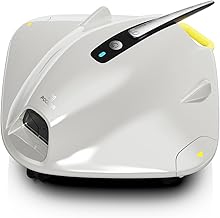


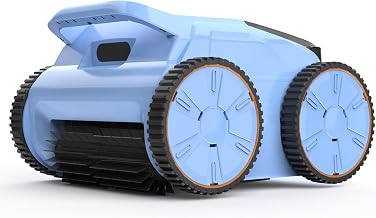


How to Choose a/an Above-Ground Pool Robot Vacuum (2026)
- Runtime versus real surface area: Manufacturers quote coverage under ideal conditions. Take the listed square footage and knock off roughly 30% if your pool holds fine sand or pollen, since the bot slows down as the filter loads. A 100-minute unit rated for 960 sq ft handles a 15-foot round comfortably; anything 24 feet or larger wants 150 minutes or more.
- Floor-only or wall climbing: Above-ground walls are usually smooth vinyl over steel, and plenty of owners simply brush them by hand in five minutes. If you’d rather not, look for track-drive models with dedicated waterline modes. Wheeled floor units cost less and put all their power where the debris actually settles.
- Filter basket access: This is the daily chore, not charging. Top-loading baskets you can pop out lakeside beat bottom-hatch designs that dump water down your leg. Dual-layer or mesh-plus-fine cartridge setups catch pollen without clogging in one cycle.
- Obstacle tolerance: Read the fine print about steps, raised main drains, and skimmer lips. Several excellent bots explicitly warn against sharp step edges. If you have an A-frame ladder with feet inside the pool, favor a model with barrier-crossing or bump-and-redirect logic.
- Self-parking and retrieval: Fishing a dead robot off the bottom with a telescoping pole is genuinely irritating. Self-parking units drive to the wall when the battery drops, and a hook attachment or retrieval line saves you the swim.
The Best Above-Ground Pool Robot Vacuum (2026)s Reviewed
Smarter Navigation Track Drive with Dual 180W Motors
The rubber-tracked chassis is the meaningful upgrade here — it grips flexible liner without the wheel spin that plagues lighter bots, and the dual brushless motors have enough draw to lift wet leaves rather than push them into a pile. At 2,150 sq ft rated coverage with 150 minutes of runtime, it’s the one I’d pick for a full-size oval or a hybrid household running both an above-ground and inground pool.
2026 Upgrade Robotic Pool Cleaner, 250-Minute Runtime
Four-plus hours per charge is the longest runtime in this group, which matters if your pool sits under trees and needs a slow, repeated sweep rather than one fast pass. Self-parking works reliably, and the 2,200 sq ft rating gives you real headroom on a 24-foot round without the bot quitting halfway through.
SAT20 Cordless Robotic Pool Cleaner
A straightforward, well-built floor-and-wall unit with an IPX8 rating and a clear LED status indicator, so you always know whether it’s charging, running, or full. Take the warning about sharp steps and raised drains seriously — in a clean-bottomed above-ground pool it runs its 180 minutes without complaint.
40W Dual Cleaning System with Barrier Crossing
The barrier-crossing feature earns its keep around ladder feet and return fittings where cheaper bots stall out and beach themselves. Coverage up to 1,614 sq ft and a two-hour cycle make it a sensible middle option for 18 to 21-foot rounds.
Cordless Robotic Pool Vacuum for Flat Pools up to 960 Sq Ft
Purpose-built for flat-bottom above-ground pools, which is exactly what most Intex and Bestway owners have. The twin motors pull hard for the price point, and 100 minutes is plenty for a 15-foot round — just don’t stretch it to a larger pool and expect full coverage.
Frequently Asked Questions
Will a robotic vacuum damage my vinyl liner?
Not if you choose correctly. Track-drive and soft-wheel models are designed for liner contact, and none of these units use stiff bristles. Avoid anything marketed for concrete pools with aggressive PVA scrubbing brushes, and inspect the underside for grit before each run.
Do I still need to run my filter pump?
Yes. A robot handles settled debris; your pump and filter handle suspended particles, chemical circulation, and surface skimming. They’re complementary systems, not substitutes.
How long do the batteries last before replacement?
Expect three to five seasons from a lithium pack if you store it indoors over winter at roughly half charge. Leaving a bot in a freezing shed at zero percent is the fastest way to kill it.
Can these clean the waterline scum ring?
Only the wall-climbing models reach the waterline, and even then a light manual wipe with an enzyme block gets the oily band that any vacuum leaves behind. Treat waterline mode as maintenance, not a full replacement for scrubbing.
Final Thoughts
For most above-ground owners, the Smarter Navigation track-drive model is the one I’d buy without hesitation — the tracks and dual 180W motors solve the liner-traction problem that limits everything else in this category. If your pool sits under heavy tree cover, the 2026 Upgrade unit’s 250-minute runtime is worth the tradeoff, and budget-minded buyers with a flat-bottom 15-footer will be perfectly served by the 960 sq ft model.