Key takeaways
- Recline clearance: non-wall-hugger designs need 18–24 inches behind them. Wall-hugger frames slide forward as they tilt and can live 3–5 inches off the baseboard.
- Footrest sweep: the ottoman extends and often lifts. Tape the full extended footprint on the floor and walk around it.
- Delivery path: measure your narrowest doorway and any stair turn. Most of these ship in one or two crates well over 150 pounds.
- Power: a standard 15A household outlet is fine, but give it its own outlet rather than sharing with a space heater.
What's inside
A massage chair is one of the few pieces of furniture that has moving parts, a circuit board, and an opinion about your spine. That changes how you shop for it. If you approach one like a recliner, you end up with a 200-pound box in the hallway and a chair that hammers the wrong vertebrae. If you approach it like a piece of equipment — measure the envelope, check the mechanism, plan the install — you end up with something you actually use five nights a week.
Below is how I evaluate these chairs from a builder’s mindset: track geometry first, roller depth second, then the physical fit in your room, then the extras. You’ll also get a realistic picture of unboxing and setup, plus maintenance that keeps the upholstery and the gearbox alive past year three. Our shortlist sits right underneath.
Our Recommended Picks
As an Amazon Associate we earn from qualifying purchases.


Read The Track Before Anything Else
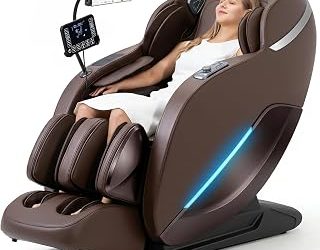
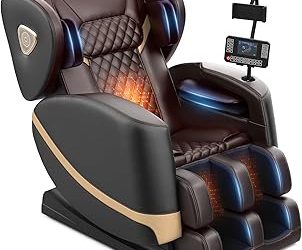
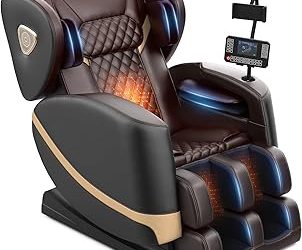
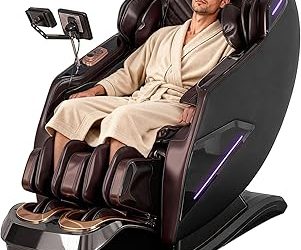
The track is the rail the rollers ride on, and it dictates where you get pressure. A classic S-track curves with the spine from neck to lower back and stops near the tailbone — the Real Relax Dual-Core S Track is a good example, and its twin-motor setup gives crisper neck work than older single-motor designs. An SL-track extends that rail under the seat and down the hamstrings, so glutes and upper thigh get covered too. The 4D 55″ SL-Track model has one of the longer rails you’ll find at consumer prices, while the Real Relax 2026 SL-Track keeps the same idea in a simpler package. Longer isn’t automatically better: if your complaints are neck and shoulders, a well-tuned S-track can feel more precise.
Roller Dimension Is Where Your Money Goes
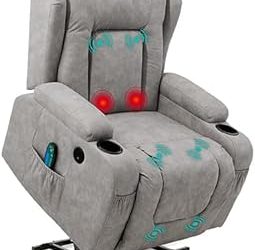
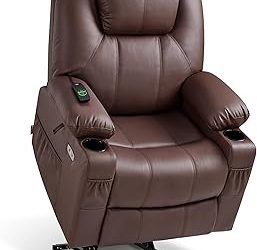
Rollers are described in dimensions, and it’s the clearest spec on the sheet. 2D moves up-down and in-out. 3D adds forward protrusion, so the chair can press deeper into the erector muscles. 4D varies the speed and rhythm of that protrusion, which is why a 4D kneading stroke feels more like hands and less like a cam. The 4D SL-Track chair with 11 techniques and body scan is the pick if you want that nuance; the FURNIMAT Zero Gravity Recliner takes a different route with 14 shiatsu rollers spread across back, neck, and feet, which suits people who prefer broad coverage over deep single-point pressure.
Measure The Envelope, Not Just The Chair
This is the step people skip and regret. Do it with cardboard and painter’s tape before you order:
- Recline clearance: non-wall-hugger designs need 18–24 inches behind them. Wall-hugger frames slide forward as they tilt and can live 3–5 inches off the baseboard.
- Footrest sweep: the ottoman extends and often lifts. Tape the full extended footprint on the floor and walk around it.
- Delivery path: measure your narrowest doorway and any stair turn. Most of these ship in one or two crates well over 150 pounds.
- Power: a standard 15A household outlet is fine, but give it its own outlet rather than sharing with a space heater.
Airbags, Heat, And Stretch: What Earns Its Keep
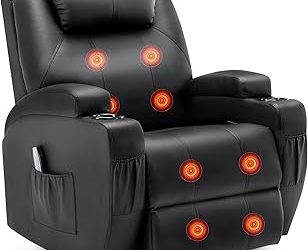
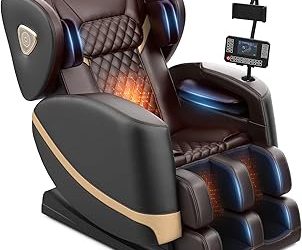
Airbag count is marketing more than measurement — 40 airbags spread thin can feel weaker than 10 well-placed ones. What matters is placement: shoulders, hips, calves, and feet. Heat is worth having, and targeted heat is worth more than a single lumbar pad; the Real Relax Shiatsu chair heats waist and calves, which helps if you’re on your feet all day. Yoga stretch programs, found on the 4D model, clamp your shoulders and decompress the lower back — genuinely useful, but start gentle. Bluetooth speakers and app control are nice-to-haves; the Real Relax Favor-06 goes further with heart-rate and blood measurement plus a phone-style controller, which some people find easier than a wall of icons.
Controls, Assembly, And Safety Bits
Interfaces split into three camps: full touchscreens (FURNIMAT), LCD remotes with voice prompts (Real Relax 2026 SL-Track), and phone-app control. Pick whichever your household will actually operate without a manual. Two small features matter more than they sound: a child lock and a hard pause button, both present on the Favor-06 and the 2026 SL-Track. Assembly on most models is two backrest bolts and a cable connector — 20 minutes with a second pair of hands. The pre-assembled Real Relax Shiatsu recliner skips even that, which is worth considering if you’re working alone.
Tips
- Tape a cardboard template of the fully reclined footprint on your floor and live with it for a day before buying.
- Run your first three sessions at the lowest intensity for 10–15 minutes. Deep tissue work has a soreness curve, and jumping straight to maximum earns you a bruised back.
- Sit all the way back, shoulders touching the pad, before starting a body scan. A lazy posture calibrates the rollers to the wrong spine.
- Every month: vacuum the seat crevices with a brush head, wipe synthetic leather with a damp cloth, and check that the footrest hinge isn’t collecting grit.
Frequently Asked Questions
How long should a session be?
Most auto programs run 15–30 minutes, and that’s a sensible ceiling. Longer sessions don’t add benefit and can leave muscles inflamed. Once or twice a day is plenty.
Is 4D worth the premium over 3D?
If you want varied, hands-like rhythm or you have stubborn upper-back tension, yes. If you mainly want warmth, compression, and a decent kneading pass, a good 3D SL-track delivers most of the value for noticeably less.
Will one chair fit everyone in the house?
Check the stated height and weight range before buying — most units target roughly 5’0″ to 6’2″. Shorter users can add a headrest cushion; taller users should prioritize a longer SL-track so the neck rollers land correctly.
Can I install it by myself?
Getting the crate into position is the hard part, not the assembly. Plan for a helper or a furniture dolly, and unbox in the room where the chair will live rather than dragging the finished unit across floors.
Conclusion
Choose the track that matches where you hurt, pick the roller dimension your budget genuinely supports, and verify the recline envelope with tape before you click buy — get those three right and almost any chair on this list will serve you well. If you want maximum nuance, the 4D SL-track leads; for broad coverage with a simple touchscreen, FURNIMAT is the practical middle; and the Real Relax range covers everything from pre-assembled simplicity to app-driven feature depth. If you have an existing injury, implanted device, or are pregnant, clear it with your clinician first.