Key takeaways
- Frame material: Powder-coated aluminum won’t rust and stays light enough to reposition solo, which matters if you rearrange for parties. Steel-framed wicker is stiffer and cheaper but demands you inspect welds and touch up any chipped coating before the first rain. Resin wicker over a steel core is the middle path — just confirm the strands are PE, not PVC, or they’ll turn brittle in UV.
- Cushion depth and core: A 10-inch cushion feels great in the showroom photo, but the real question is what’s inside. Look for reticulated or quick-dry foam and covers you can unzip; solid slab foam holds water like a sponge and grows mildew from the inside out.
- Module connection method: Some sets use metal clips, others rely on gravity and hope. Clips or bolted brackets are worth hunting for. If a set only interlocks by friction, plan on adding your own L-brackets or furniture connectors — a ten-minute mod that fixes the most common complaint.
- Seat height and arm width: Low-profile sets look sharp but are harder to get out of, which matters for older guests. Wide arms in the 4- to 5-inch range double as drink surfaces, saving you from crowding a side table into a tight deck footprint.
- Footprint math before you click buy: Measure your slab or deck, then subtract 30 inches on the traffic side for walking room. Sketch the L-shape on the ground with painter’s tape. Oversized sets swallow a small balcony fast, and no cushion is comfortable when you have to sidestep past it.
What's inside
Anyone who has spent a weekend leveling pavers or building a deck knows the frustration that comes next: you finish the hard part, then discover that most outdoor sectionals are built like disposable props. Frames flex when you sit down, cushion covers fade to chalk by August, and the “modular” pieces slide apart every time someone shifts their weight. Add in shipping damage, mystery hardware bags, and assembly diagrams drawn by someone who has never held an Allen key, and the payoff for all that groundwork starts to feel thin.
This guide takes a builder’s view of outdoor seating. I look at frame material and joinery, how cushions are constructed and whether the foam drains, how the modules connect, and which sets actually survive a full season of weather and traffic. Below are six sectionals worth your money in 2026, plus the specs that separate a set you’ll still be using in five years from one you’ll be dragging to the curb next spring.
As an Amazon Associate we earn from qualifying purchases.



How to Choose a/an Sectional Patio Furniture (2026)
- Frame material: Powder-coated aluminum won’t rust and stays light enough to reposition solo, which matters if you rearrange for parties. Steel-framed wicker is stiffer and cheaper but demands you inspect welds and touch up any chipped coating before the first rain. Resin wicker over a steel core is the middle path — just confirm the strands are PE, not PVC, or they’ll turn brittle in UV.
- Cushion depth and core: A 10-inch cushion feels great in the showroom photo, but the real question is what’s inside. Look for reticulated or quick-dry foam and covers you can unzip; solid slab foam holds water like a sponge and grows mildew from the inside out.
- Module connection method: Some sets use metal clips, others rely on gravity and hope. Clips or bolted brackets are worth hunting for. If a set only interlocks by friction, plan on adding your own L-brackets or furniture connectors — a ten-minute mod that fixes the most common complaint.
- Seat height and arm width: Low-profile sets look sharp but are harder to get out of, which matters for older guests. Wide arms in the 4- to 5-inch range double as drink surfaces, saving you from crowding a side table into a tight deck footprint.
- Footprint math before you click buy: Measure your slab or deck, then subtract 30 inches on the traffic side for walking room. Sketch the L-shape on the ground with painter’s tape. Oversized sets swallow a small balcony fast, and no cushion is comfortable when you have to sidestep past it.
The Best Sectional Patio Furniture (2026)s Reviewed
9-Piece Yellow Rattan Modular Sectional (Beige)
Nine pieces gives you real layout freedom — run it as a long L along a fence line or split it into two facing benches for conversation. The 10-inch cushions and wide arms make this the most lounge-forward set here, though the low profile means you’re settling in rather than perching.
Oversized Aluminum 5-Piece Sectional (Graphite)
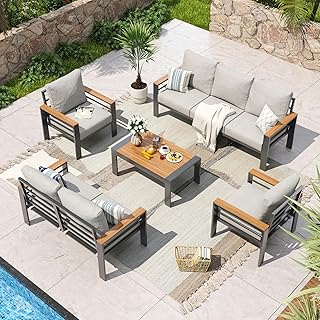
This is the set I’d pick for longevity: aluminum framing shrugs off coastal air and freeze-thaw cycles that eat steel from the inside. The 4.8-inch armrests are genuinely useful as tabletops, and the graphite finish hides pollen and dust far better than lighter powder coats.
LazySunsets 8-Piece Wicker Sectional with Ottomans
The ottomans are what make this one work — use them as footrests, pull them out as extra seating when the crowd grows, or tuck them under as a coffee table base. Ultra-thick cushions and all-weather PE rattan handle poolside splash-out better than most fabric-heavy sets.
LazySunsets 7-Piece Rattan Sectional (Grey)
Including a fitted cover in the box is a small thing that saves you $60 and a lot of guessing about dimensions. Waterproof cushions plus ottomans in a tighter seven-piece footprint make this a sensible pick for mid-size patios where the nine-piece sets would overwhelm.
Aoxun Aluminum 7-Seat Sectional with Coffee Table
Washable cushion covers are the standout feature here, and anyone who has scrubbed sunscreen out of outdoor fabric will understand why that matters. The aluminum frame keeps total weight manageable for a seven-seat configuration, so seasonal storage doesn’t require a second person.
Frequently Asked Questions
How long does assembly actually take?
Budget two to three hours for a seven- to nine-piece set with a helper. Most of that is unboxing and cushion fitting rather than fastening. Lay out and count all hardware first, and use a hand driver for final tightening so you don’t strip the threaded inserts.
Can I leave a sectional outside all winter?
Frames yes, cushions no. Aluminum and PE rattan tolerate cold fine, but cushions should move to a garage, shed, or sealed deck box. If storage space is tight, stand cushions on edge under a breathable cover so moisture can escape.
Do the cushions fade?
Some fading is inevitable on any olefin or polyester cover in direct sun. Rotating cushions every few weeks evens out the wear, and a UV protectant spray applied twice a season measurably slows the process.
Is aluminum worth the price premium over steel?
If you live near salt air, in a humid climate, or somewhere with hard winters, yes. Steel only resists rust as long as its coating stays intact, and one deep scratch starts a problem you’ll be sanding and painting every spring.
Final Thoughts
For most patios, the Oversized Aluminum 5-Piece in graphite is the smartest long-term buy — corrosion-proof framing, thick cushions, and armrests that pull double duty. If you want maximum flexibility and lounging space, the 9-Piece Rattan Modular Set gives you the most configurations for the money, while the LazySunsets 8-Piece with ottomans strikes the best balance between comfort, versatility, and a footprint that fits a typical deck.