Key takeaways
- Kit versus brackets: Boxed cedar kits arrive pre-cut and pre-drilled, so you’re following a manual rather than making cuts. Bracket kits cost far less and let you build any size you want, but you’re sourcing your own 4x4s and running a miter saw. Pick based on whether your bottleneck is money or time.
- Real footprint, not the listed size: A “10×12” pergola describes the beam span, not the shaded area or the post-to-post spacing. Chalk the actual outline on your patio before ordering, and add three feet of clearance on every side for the ladder work during assembly.
- Anchoring method: Ground stakes work for lawn installs but do nothing on concrete or composite decking. If you’re mounting to a hard surface, confirm the kit includes post bases or plan to buy wedge anchors separately — this is the single most common mid-build trip to the hardware store.
- Wood grade and finish plan: Cedar resists rot naturally, but untreated cedar silvers out within a season or two. Decide now whether you want that weathered gray or plan to seal it, and stain the pieces flat on sawhorses before assembly. Reaching a rafter tail at eight feet with a brush is miserable.
- Wind and snow ratings: Look for a stated load rating rather than vague “heavy duty” language. Open-slat trellis roofs shed wind well; if you later add a canopy or vines, you’ve dramatically increased the load the structure carries.
What's inside
Standing in the backyard with a tape measure and a browser tab full of pergola listings, most people hit the same wall: the photos all look identical, the dimensions are listed in ways that don’t match how you actually plan a patio, and nobody tells you how many hours of your weekend you’re signing up for. Then there’s the deeper question nobody answers up front — do you want a boxed kit with pre-cut cedar and numbered hardware, or do you want to buy lumber locally and let a bracket system do the joinery for you? Those two paths lead to wildly different budgets, timelines, and results.
I’ve assembled both styles, and the honest answer is that each wins in different situations. This guide breaks down the pergola kits worth your money in 2026, covering full cedar packages from Backyard Discovery, MUPATER, Jocisland, and BlueWish, plus the bracket-only hardware kits that let you build to your own footprint. You’ll find what to check before you order, straight reviews of each option, and answers to the questions that come up once the boxes are actually sitting in your driveway.
As an Amazon Associate we earn from qualifying purchases.


How to Choose a Pergola Kit (2026)
- Kit versus brackets: Boxed cedar kits arrive pre-cut and pre-drilled, so you’re following a manual rather than making cuts. Bracket kits cost far less and let you build any size you want, but you’re sourcing your own 4x4s and running a miter saw. Pick based on whether your bottleneck is money or time.
- Real footprint, not the listed size: A “10×12” pergola describes the beam span, not the shaded area or the post-to-post spacing. Chalk the actual outline on your patio before ordering, and add three feet of clearance on every side for the ladder work during assembly.
- Anchoring method: Ground stakes work for lawn installs but do nothing on concrete or composite decking. If you’re mounting to a hard surface, confirm the kit includes post bases or plan to buy wedge anchors separately — this is the single most common mid-build trip to the hardware store.
- Wood grade and finish plan: Cedar resists rot naturally, but untreated cedar silvers out within a season or two. Decide now whether you want that weathered gray or plan to seal it, and stain the pieces flat on sawhorses before assembly. Reaching a rafter tail at eight feet with a brush is miserable.
- Wind and snow ratings: Look for a stated load rating rather than vague “heavy duty” language. Open-slat trellis roofs shed wind well; if you later add a canopy or vines, you’ve dramatically increased the load the structure carries.
The Best Pergola Kit (2026)s Reviewed
Backyard Discovery Beaumont 12′ x 10′ Cedar Pergola Kit
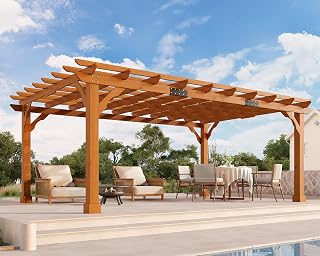
This is the one I’d hand to a first-time builder — the cedar comes pre-stained and pre-drilled, the manual is genuinely well illustrated, and the high-wind rating plus built-in PowerPort for outdoor outlets shows real engineering rather than a repackaged lumber bundle. Plan on two people and a full Saturday.
Heavy Duty Pergola Brackets for 4″x4″ Lumber
A rust-proof set of 3-way and 4-way corner brackets that turns standard 4x4s into a pergola for a fraction of a boxed kit’s price. The joinery is dead simple and forgiving of imperfect cuts, which makes this the smart route if you need a non-standard size or an attached run along a fence line.
Jocisland 12×16 FT Premium Cedar Pergola
At 12 by 16 feet, this is the pick for genuinely covering a dining table and a seating area at once, and the reddish-brown finish arrives looking finished rather than raw. The trade-off is weight and part count — recruit a third set of hands for the beam lift.
MUPATER 10×12 FT All Cedar Wooden Pergola
Solid all-cedar construction with included stakes and a snow-rated frame, positioned a step below the premium kits on price without feeling flimsy. Check your hardware count against the parts list before you start, since occasional shortages are the main complaint.
BlueWish 10′ x 12′ Cedar Patio Pergola
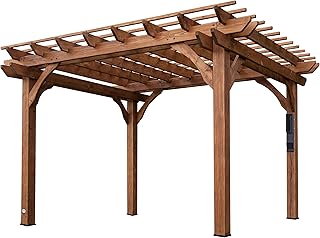
A clean slatted trellis roof over a stout post-and-beam frame, sized well for a grill station or a deck corner. The lumber is straight and the pre-drilled holes line up, though I’d seal it the same week it goes up to lock in the color.
Frequently Asked Questions
How long does a pergola kit take to build?
Budget six to ten hours with two people for a boxed cedar kit, spread over two days if you’re staining first. Bracket-based builds take longer because you’re cutting lumber, but the assembly itself moves quickly once the pieces are ready.
Do I need a permit?
It varies by municipality. Freestanding structures under a certain square footage often don’t require one, but anything attached to your house usually does. A five-minute call to your local building department saves a lot of grief later.
Can I mount a pergola on an existing deck?
Yes, provided the deck framing can carry the load. Anchor posts directly over joists or beams using post bases, never into decking boards alone, and check that your joist spacing lines up with the kit’s post positions before ordering.
Will cedar need sealing?
Only if you want to keep the original color. Untreated cedar weathers to a soft gray without losing structural integrity, so sealing is cosmetic and a matter of preference. If you do seal, expect to reapply every two to three years.
Final Thoughts
For most backyards, the Backyard Discovery Beaumont hits the best balance of build quality, clear instructions, and thoughtful extras like the integrated PowerPort. If you need serious coverage, the Jocisland 12×16 is the size upgrade worth stretching for, and if you’d rather spend your money on lumber than packaging, the Heavy Duty Pergola Brackets give you a custom footprint for a fraction of the cost.