Key takeaways
- Span before square footage: A 12′ x 20′ unit isn’t just bigger than a 12′ x 16′ — the louver blades are longer, which means more flex at the center and often an extra support beam splitting the roof into sections. Measure your usable patio depth first, then work outward.
- Drainage routing: Integrated drainage means water travels through the louvers into hollow posts, but check whether the downspout exits at the base or dumps at the top of the footing. Hidden gutters keep the look clean; you still want to know where the water lands.
- Anchoring surface: Concrete slabs take wedge anchors and go fast. Wood decks need blocking under the joists. Pavers or bare soil require poured footings — budget an extra weekend and a bag mixer if that’s your situation.
- Zoned louver control: Larger pergolas sometimes split the roof into independently cranked sections. That’s genuinely useful when half the space is a dining table and half is a grill that needs venting.
- Wind rating and freestanding vs. wall-mount: Wall-mounted kits borrow rigidity from your house and use half the posts, but they demand solid ledger attachment into rim joist or masonry. Freestanding units need all four posts anchored properly to hit their rated numbers.
What's inside
Anyone who has spent a Saturday wrestling a canopy gazebo back onto its frame knows the problem: fabric shade is a consumable. It fades, it pools water, it shreds in a gust, and every spring you’re pricing replacement tops instead of enjoying the patio. Louvered aluminum pergolas solve that by making the roof itself structural — pivoting slats you crank open for dappled light or close into a sealed rain shell. The catch is that specs vary wildly between kits, and the difference between a weekend build and a three-day ordeal usually comes down to details nobody lists on the box: gutter design, post anchoring, how many people it takes to lift a beam.
I’ve assembled enough of these to know where the hidden work lives. Below are six louvered pergolas worth considering in 2026, sorted by footprint and build complexity, plus the sizing and hardware factors I’d check before clicking buy. Everything here uses an adjustable-louver roof with integrated drainage, so the comparison comes down to span, frame gauge, and how the manufacturer handles water once it hits the slats.
As an Amazon Associate we earn from qualifying purchases.


How to Choose a Pergola With Louvered Roof (2026)
- Span before square footage: A 12′ x 20′ unit isn’t just bigger than a 12′ x 16′ — the louver blades are longer, which means more flex at the center and often an extra support beam splitting the roof into sections. Measure your usable patio depth first, then work outward.
- Drainage routing: Integrated drainage means water travels through the louvers into hollow posts, but check whether the downspout exits at the base or dumps at the top of the footing. Hidden gutters keep the look clean; you still want to know where the water lands.
- Anchoring surface: Concrete slabs take wedge anchors and go fast. Wood decks need blocking under the joists. Pavers or bare soil require poured footings — budget an extra weekend and a bag mixer if that’s your situation.
- Zoned louver control: Larger pergolas sometimes split the roof into independently cranked sections. That’s genuinely useful when half the space is a dining table and half is a grill that needs venting.
- Wind rating and freestanding vs. wall-mount: Wall-mounted kits borrow rigidity from your house and use half the posts, but they demand solid ledger attachment into rim joist or masonry. Freestanding units need all four posts anchored properly to hit their rated numbers.
The Best Pergola With Louvered Roof (2026)s Reviewed
PURPLE LEAF Aluminum Louvered Pergola 12′ × 24′
At 288 square feet with four independently controlled louver roofs, this is the one I’d pick for a genuine outdoor room rather than a shade patch. The all-aluminum construction and hidden gutter channels mean essentially no seasonal maintenance beyond hosing debris off the slats, though plan on three people and a full day for the roof assembly.
12′ x 20′ Louvered Pergola with Heavy Duty Metal Frame
Solid choice when you need real depth over a poolside lounge or a long dining setup, and the reinforced frame handles the longer louver span without noticeable sag. Get your footing layout dead square before the posts go up — at this length, a quarter-inch of drift at one corner will fight you when the roof frame lands.
12′ x 16′ Louvered Pergola in Grey
This is the sweet spot for most suburban patios: enough coverage for a table and seating, but the beams are still manageable for two people on ladders. The grey powder coat is a smart hedge if your house trim might change color down the road.
Domi Louvered Pergola 10×20 in Espresso Brown
The narrow-and-long proportion works beautifully along the back wall of a house or down one side of a deck where a square footprint would crowd the walkway. Built-in drainage performs well in steady rain, and the espresso finish reads warmer than the usual bronze against wood siding.
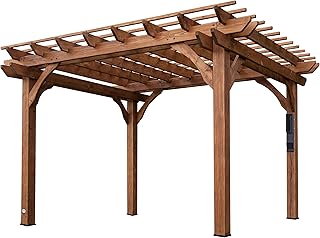
Backyard Discovery Evanston 16’x10′ Wall-Mounted Kit
Galvanized steel and a high-wind rating put this ahead of most kits on durability, and the wall-mount design cuts your post count and anchoring work roughly in half. The integrated PowerPort is a real convenience — running outdoor-rated power to a freestanding pergola after the fact is a genuine hassle.
Frequently Asked Questions
Can I install a louvered pergola by myself?
Not comfortably. Even the smaller kits have beams that need two sets of hands to hold plumb while you drive fasteners, and roof louver frames are awkward overhead. Plan on a helper and a full weekend for anything over 120 square feet.
Are the louvers truly waterproof when closed?
Closed louvers shed rain effectively and channel it into the drainage system, so you’ll stay dry underneath in normal weather. Wind-driven rain can still push a little mist through the seams, and none of these are rated as sealed roofs.
Do I need a building permit?
Often yes, especially for freestanding structures over a certain footprint or anything attached to your house. Call your local building department with the dimensions and attachment method before you order — retrofitting a permit is far worse than filing one.
How do louvered pergolas handle snow?
Open the louvers before winter storms so snow falls through rather than loading the roof. Aluminum frames handle moderate loads fine, but a fully closed roof under wet snow is asking more of the blades than they’re designed for.
Final Thoughts
If you want the most usable outdoor space and don’t mind a bigger build, the PURPLE LEAF 12′ × 24′ with its four zoned louver roofs is the standout. For a straightforward install on a typical patio, the 12′ x 16′ grey model hits the best balance of coverage and assembly effort, while the Backyard Discovery Evanston is the smart pick if you’re mounting to the house and want steel construction with power already routed in.