Key takeaways
- Frame metal and gauge: Cast aluminum won’t rust at all and shrugs off coastal air, but it’s heavy and pricier. Powder-coated steel is stronger per dollar and stays put in wind, though any chip in the coating is a rust starting point. Tap the tubing — a hollow ring means thin wall stock, and thin stock is where wobble comes from.
- Joint construction: Welded corners beat bolted brackets for long-term rigidity, since bolts loosen through seasonal expansion cycles. If your set is bolt-together, plan on a re-torque after the first month and again each spring. A dab of medium-strength thread locker on the seat frame bolts costs almost nothing and saves the annual wobble.
- Hardware quality: Zinc-plated bolts are the standard include and they will eventually bloom orange at the head. Stainless replacements from the hardware store run a few dollars for a whole set and are the single best upgrade you can make on day one. Also check whether the kit ships with a real Allen key or a stamped-metal one that twists under load.
- Cushion attachment and drainage: Look for cushions that strap or tie down rather than sit loose, and check the underside for mesh vents or drain grommets. Removable, washable covers with a full-length zipper are worth paying for. Closed-cell foam dries in hours; standard poly foam takes days and grows mildew in the meantime.
- Footprint and seat depth: Measure your deck or balcony and then tape the outline on the ground before ordering. Conversation sets need clearance behind the chairs for people to pass, and dining sets need roughly 24 inches per chair plus pull-out room. Rocking-chair designs need extra rear clearance that spec sheets rarely mention.
What's inside
Metal patio sets get sold on looks, but they fail on details you only notice after a season outside. Powder coat that chips at the weld seams and starts weeping rust. Bolt holes that don’t quite line up, so you’re muscling a frame into alignment with a rubber mallet. Cushions that hold water like a sponge because nobody thought about drainage. If you’ve ever flipped a chair over to check the underside before buying, you already know that the frame joinery and fastener quality tell you more than the product photos ever will.
This guide comes from the perspective of someone who assembles this stuff, tightens it up a month later, and touches up scratches with a rattle can before they spread. I’m looking at frame material and wall thickness, how the hardware is packaged and whether it’s stainless, how the cushions attach and dry, and how much of the fit and finish you can actually improve yourself. Below are six metal patio sets worth considering for 2026, with notes on what each one gets right and where you’ll want to spend twenty minutes with a wrench.
As an Amazon Associate we earn from qualifying purchases.


How to Choose a Metal Patio Furniture (2026)
- Frame metal and gauge: Cast aluminum won’t rust at all and shrugs off coastal air, but it’s heavy and pricier. Powder-coated steel is stronger per dollar and stays put in wind, though any chip in the coating is a rust starting point. Tap the tubing — a hollow ring means thin wall stock, and thin stock is where wobble comes from.
- Joint construction: Welded corners beat bolted brackets for long-term rigidity, since bolts loosen through seasonal expansion cycles. If your set is bolt-together, plan on a re-torque after the first month and again each spring. A dab of medium-strength thread locker on the seat frame bolts costs almost nothing and saves the annual wobble.
- Hardware quality: Zinc-plated bolts are the standard include and they will eventually bloom orange at the head. Stainless replacements from the hardware store run a few dollars for a whole set and are the single best upgrade you can make on day one. Also check whether the kit ships with a real Allen key or a stamped-metal one that twists under load.
- Cushion attachment and drainage: Look for cushions that strap or tie down rather than sit loose, and check the underside for mesh vents or drain grommets. Removable, washable covers with a full-length zipper are worth paying for. Closed-cell foam dries in hours; standard poly foam takes days and grows mildew in the meantime.
- Footprint and seat depth: Measure your deck or balcony and then tape the outline on the ground before ordering. Conversation sets need clearance behind the chairs for people to pass, and dining sets need roughly 24 inches per chair plus pull-out room. Rocking-chair designs need extra rear clearance that spec sheets rarely mention.
The Best Metal Patio Furniture (2026)s Reviewed
4-Piece Metal Patio Set with Coffee Table, Beige
The 350 lb rating and 4-inch cushions make this the most substantial-feeling set in its price bracket, and the faux wood arm caps are a smart move since they don’t get scorching in direct sun the way bare metal does. Removable water-resistant covers mean you can pull them, hose them, and have them back on the same afternoon.
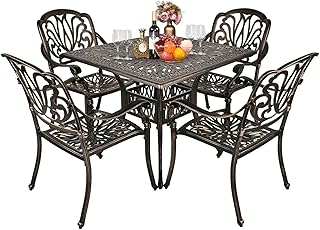
VINGLI 5-Piece Cast Aluminum Dining Set
Cast aluminum is the right call if you’re anywhere near salt air, and the umbrella-ready table means you’re not clamping a shade onto something that wasn’t built for it. It arrives heavy and the chairs need minimal assembly, but check the umbrella hole washer seats properly or the pole will rattle in any breeze.
Flash Furniture 35.5″ Square Patio Table Set
A straightforward black steel bistro setup that fits a small balcony without visual bulk, and the mesh top drains instantly after rain. There are no cushions to manage here, which is either the whole appeal or a dealbreaker depending on how long you sit.
4-Piece Metal Set with Rocking Chairs, Sand
Rocking chairs on a metal frame are surprisingly hard to get right, and this set keeps the motion smooth without the frame flexing at the pivot. Give the rocker base extra rear clearance and check the glide contact points after a few weeks for coating wear.
Gotland Metal Sectional Conversation Set
The washable cushion covers are the standout — full zippers, machine-friendly fabric, and they go back on without a wrestling match. The sectional configuration lets you rearrange for a corner or a straight run, though the modular seams benefit from connector brackets if you have kids treating it as a launchpad.
Frequently Asked Questions
Will powder-coated steel rust outdoors?
Not while the coating stays intact, but any deep scratch or chip lets moisture reach bare steel. Keep a small bottle of matching touch-up enamel and hit chips as soon as you spot them — thirty seconds of prevention beats sanding a rust bloom next spring.
Is cast aluminum worth the extra cost?
If you’re coastal, humid, or planning to leave the set out year-round, yes. It cannot rust, it’s dimensionally stable, and it holds resale value. For a covered porch in a dry climate, powder-coated steel gets you the same service life for less.
How do I stop the wobble in a bolt-together set?
Assemble on a flat surface, snug all bolts loosely first, get the frame square, then torque in a crossing pattern. Re-check after a month. If it still moves, add nylon-insert lock nuts or a drop of thread locker on the seat frame fasteners.
Can I leave cushions outside?
Better not to. Even water-resistant fabric holds moisture in the foam and seams, which is how mildew starts. A deck box or a wall hook inside the shed adds years to the covers and keeps colors from fading unevenly.
Final Thoughts
For a set that will outlast the rest of your patio, the VINGLI cast aluminum dining set is the buy — no rust risk, real umbrella support, and enough mass to stay put. If you want lounge seating you can actually maintain, the Gotland sectional wins on washable covers and modular layout, while the 4-piece beige set with the faux wood arms offers the most comfortable cushions for the money. Whichever you pick, swap the zinc bolts for stainless on day one and re-torque everything at the four-week mark.