Key takeaways
- Match the water depth first: Measure your Baja shelf or tanning ledge before anything else. Most in-pool loungers are engineered for a narrow window, often 6 to 12 inches. Too shallow and the base won’t ballast properly; too deep and you’re floating instead of lounging.
- Look for water-weighted ballast, not sandbags: Chambers that fill with pool water are the cleanest solution. They add real hold-down force, they empty in seconds for storage, and there’s nothing inside to mold or leak grit onto your plaster.
- Check the plastic spec, not just the color: Rotomolded or thick-wall LDPE with UV inhibitors is the standard to look for. Thin injection-molded shells flex at the seat, and untreated polymer chalks and goes brittle after two seasons of direct sun.
- Follow the water out of the cushion: Any cushioned lounger needs open-cell quick-dry foam or an olefin cover with grommeted drainage. Press a wet cushion with your palm; if water pools instead of passing through, you’ve got a mildew project waiting.
- Buy hardware you can service: Stainless or coated fasteners, accessible bolt heads, and a backrest ratchet you can lubricate will add years to any frame. Riveted joints and proprietary clips mean the whole chair is disposable the moment one part fails.
What's inside
Every pool owner hits the same wall by the second summer: the loungers you bought are either sliding around the tanning ledge, warping in the sun, or holding water in a cushion that smells like a basement. I’ve spent enough weekends drilling extra drainage holes into seat pans, re-webbing frames, and swapping out rusted hardware to know that most poolside furniture fails at the same three points, and none of them are the ones the product photos highlight. It’s the fastener quality, the drainage path, and whether the thing actually stays put when a swimmer climbs on it.
This guide takes the maker’s view. I looked at how these chaises are built rather than how they’re staged, and I focused on the details you can inspect yourself in the first ten minutes of unboxing: wall thickness on molded shells, whether ballast chambers actually seal, cushion cores that shed water instead of storing it, and hardware you can replace at a hardware store instead of waiting three weeks on a warranty part. Below are the in-pool and deckside loungers worth your money in 2026, plus the specs to check before you commit.
As an Amazon Associate we earn from qualifying purchases.



How to Choose a Chaise Lounge For Pool (2026)
- Match the water depth first: Measure your Baja shelf or tanning ledge before anything else. Most in-pool loungers are engineered for a narrow window, often 6 to 12 inches. Too shallow and the base won’t ballast properly; too deep and you’re floating instead of lounging.
- Look for water-weighted ballast, not sandbags: Chambers that fill with pool water are the cleanest solution. They add real hold-down force, they empty in seconds for storage, and there’s nothing inside to mold or leak grit onto your plaster.
- Check the plastic spec, not just the color: Rotomolded or thick-wall LDPE with UV inhibitors is the standard to look for. Thin injection-molded shells flex at the seat, and untreated polymer chalks and goes brittle after two seasons of direct sun.
- Follow the water out of the cushion: Any cushioned lounger needs open-cell quick-dry foam or an olefin cover with grommeted drainage. Press a wet cushion with your palm; if water pools instead of passing through, you’ve got a mildew project waiting.
- Buy hardware you can service: Stainless or coated fasteners, accessible bolt heads, and a backrest ratchet you can lubricate will add years to any frame. Riveted joints and proprietary clips mean the whole chair is disposable the moment one part fails.
The Best Chaise Lounge For Pool (2026)s Reviewed
Aqua Outdoors In-Pool Lounge Chair
This one is built like a piece of equipment rather than a piece of furniture: heavy-duty LDPE, a genuine UV package, and a water-weighted base tuned for 9 inches of depth, which is right in the sweet spot for most tanning ledges. If you want something that stays exactly where you set it and can be hosed off and left out all season, start here.
Coast Modern In-Pool Chaise Lounger
Coast Modern gets the geometry right, with a reclined back angle that actually supports your shoulders while your legs stay submerged. It’s fully waterproof and weighted for shelf use, and the contoured shell doubles as a respectable patio chaise when you pull it out of the water.
Coast Modern In-Pool Lounger, Gray
Identical build to the standard model with a gray finish that runs noticeably cooler underfoot than white on a hot deck. Worth the small premium if your ledge sits in full afternoon sun and you’d rather not do the barefoot sprint.
Murago Wicker Chaise Lounge Set of 2
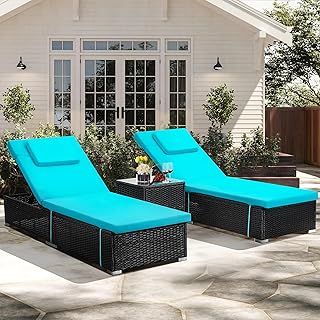
For deckside rather than in-water, this all-weather wicker pair with a shared side table is the most useful configuration for two people who want somewhere to set a drink. The backrests adjust cleanly and the cushion covers come off for machine washing, which is the single feature that most determines how long poolside cushions survive.
EUNHOO Adjustable Sun Loungers, Set of 4
Four loungers with five-position backrests, at a price that makes sense if you’re furnishing a whole deck or a rental property. The frames are lighter than the Murago set, so stake or store them if you get wind, but the value per seat is hard to beat.
Frequently Asked Questions
How deep should the water be for an in-pool lounger?
Check the manufacturer’s range and measure at the deepest point of your shelf. Most designs target 6 to 12 inches. The Aqua Outdoors model is specified at 9 inches, which matches the majority of residential Baja shelves.
Will an in-pool chaise slide or float away?
Not if it’s properly ballasted. Fill the water chambers completely and burp any trapped air before you sit down. Air pockets are the usual culprit behind a lounger that drifts.
Can I use these chairs on my patio too?
Yes. Drain the ballast chambers and the shell becomes a standard chaise. Rinse the interior with fresh water first so you’re not leaving chlorine residue on stone or composite decking.
What maintenance do they actually need?
Rinse with fresh water monthly, drain and dry the ballast before winter storage, and check fasteners once a season. Store cushions dry and indoors, and a set will easily outlast the frame.
Final Thoughts
If you want one lounger that lives on your tanning ledge and asks nothing of you, the Aqua Outdoors in-pool chair is the most solidly built option here. The Coast Modern chaise is the better call if comfort geometry and finish matter as much as durability, and for outfitting a full deck on a budget, the EUNHOO four-pack delivers the most usable seating per dollar.