Key takeaways
- Material chemistry first: Natural rubber and dense felt are safe on urethane wear layers. Avoid anything advertised as PVC, vinyl-coated mesh, or generic “non-slip plastic” — those are the pads that leave discoloration. Silicone and EVA are also reliable performers here.
- Thickness versus door swing: A 3/8″ felt pad transforms how a thin flatweave feels underfoot, but it also raises the rug by a noticeable amount. Measure the clearance under interior doors and against transition strips before committing to anything thicker than 1/4″.
- Grip mechanism: Rubber and silicone hold through friction against the floor. Vacuum-suction designs use micro-cups and grip harder on smooth LVP than they do on textured hardwood. Match the mechanism to your surface, not to the marketing copy.
- Trim tolerance: Buy a size you can cut down. Felt and felt-rubber composites trim cleanly with a sharp utility knife and a straightedge. Aim for the pad to sit about an inch shy of the rug edge on all sides so nothing peeks out or catches a toe.
- Radiant heat and moisture: If you have in-floor heating, stay thin — a thick pad traps heat against the plank. In kitchens and entries, a lower-profile washable pad beats dense felt, which holds moisture longer than you’d like.
What's inside
Luxury vinyl plank looks tough, and structurally it is, but the wear layer on top is a thin skin of clear urethane that reacts badly to the wrong chemistry. I learned this the hard way after pulling up a cheap PVC-mesh gripper in a rental I was flipping and finding a permanent amber-tinted grid burned into the plank finish. Plasticizers migrate. They soften, then stain, and no amount of scrubbing brings that surface back. Meanwhile the opposite failure is just as annoying: a rug that creeps six inches toward the doorway every week because vinyl is slicker than hardwood and most pads were never engineered for it.
This guide is written from the perspective of someone who installs, tears out, and re-does floors for a living. I’ve cut felt with a utility knife on a garage slab, wrestled rubber-backed pads into odd hallway dimensions, and checked underneath a dozen installations after six months to see what actually left marks. Below are the pads worth your money in 2026, sorted by what they’re good at, plus the specific material and thickness logic that determines whether your floor still looks new in three years.
As an Amazon Associate we earn from qualifying purchases.


How to Choose a/an Rug Pad For Lvp Floors (2026)
- Material chemistry first: Natural rubber and dense felt are safe on urethane wear layers. Avoid anything advertised as PVC, vinyl-coated mesh, or generic “non-slip plastic” — those are the pads that leave discoloration. Silicone and EVA are also reliable performers here.
- Thickness versus door swing: A 3/8″ felt pad transforms how a thin flatweave feels underfoot, but it also raises the rug by a noticeable amount. Measure the clearance under interior doors and against transition strips before committing to anything thicker than 1/4″.
- Grip mechanism: Rubber and silicone hold through friction against the floor. Vacuum-suction designs use micro-cups and grip harder on smooth LVP than they do on textured hardwood. Match the mechanism to your surface, not to the marketing copy.
- Trim tolerance: Buy a size you can cut down. Felt and felt-rubber composites trim cleanly with a sharp utility knife and a straightedge. Aim for the pad to sit about an inch shy of the rug edge on all sides so nothing peeks out or catches a toe.
- Radiant heat and moisture: If you have in-floor heating, stay thin — a thick pad traps heat against the plank. In kitchens and entries, a lower-profile washable pad beats dense felt, which holds moisture longer than you’d like.
The Best Rug Pad For Lvp Floors (2026)s Reviewed
RUGPADUSA Vinyl Lock
This is the only pad on the list purpose-built for vinyl and LVP, pairing recycled felt with an EVA gripping layer instead of rubber — a deliberate choice, since even natural rubber can occasionally interact with certain vinyl finishes over long periods. The 2’x8′ runner size is ideal for kitchens and hallways where creep is worst.
RUGPADUSA Basics 3/8″ Felt
Pure needle-punched felt with zero adhesive backing, which makes it the safest possible option for any finish you’re nervous about. It won’t stop a rug from sliding on its own, so pair it with a heavy furniture-anchored rug or a large area rug where weight does the work.
RUGPADUSA Dual Surface 1/4″
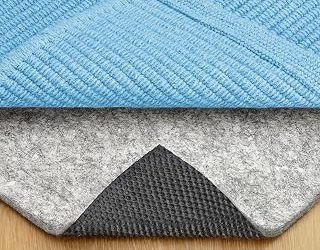
Felt bonded to natural rubber at a quarter inch — the sweet spot if you want genuine grip plus a bit of cushion without raising the rug enough to catch a door. It holds firmly on LVP and trims easily with a fresh blade.
Mayhawk Vacuum Tech Gripper
The silicone micro-suction surface grips remarkably well on smooth LVP and leaves no residue, and unlike felt it goes in the washing machine when it gets grubby. Best under thin rugs where you want zero added height.
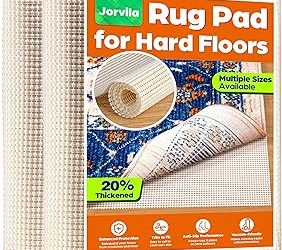
Jorvila Non-Slip Rug Pad
A well-priced cushioned option at 8×10 that delivers real underfoot comfort and reliable hold on hard surfaces. Check your door clearance first, as it sits thicker than a standard gripper.
Frequently Asked Questions
Will a rug pad damage my LVP wear layer?
Not if you choose the right material. Felt, natural rubber, silicone, and EVA are all fine. PVC and vinyl-coated meshes are the ones that cause amber staining and finish softening, sometimes within a single season.
How do I cut a pad to size?
Lay the pad flat, place the rug on top to mark your outline, then trim about an inch inside that line with a sharp utility knife against a metal straightedge. Change blades often — dull blades tear felt instead of slicing it.
Do I need a pad if my rug already has a rubber backing?
Yes, and arguably more urgently. Factory rubber backings are often the cheapest available compound, and putting a pad between it and your floor is the simplest insurance policy you can buy.
How thick should I go?
A quarter inch suits most living spaces. Go to 3/8″ for extra plushness under thin rugs in bedrooms, and stay under 1/8″ in kitchens, entries, and anywhere with radiant heat.
Final Thoughts
For most LVP installations, the RUGPADUSA Vinyl Lock is the straightforward answer — it was designed for exactly this surface. Step up to the Dual Surface 1/4″ if you want more cushion alongside the grip, or reach for the Mayhawk vacuum-tech gripper when you need something washable and genuinely low profile under a thin rug.