Key takeaways
- Material chemistry: Natural rubber and 100% felt are safe bets on vinyl. Avoid anything with PVC, latex adhesives, or a plastic-coated mesh scrim, since those are what cause staining and residue on LVP wear layers.
- Thickness vs. clearance: A 3/8″ felt pad feels great underfoot but adds real height. Measure your door swing and any transition strips first. In tight spots, drop to 1/4″ or a thin gripper.
- Grip method: Floating LVP is slick. Rubber-backed pads grip through friction; newer silicone and micro-suction pads work by surface contact. Either beats a felt-only pad if the rug is in a walkway.
- Rug weight and pile: Heavy wool or jute mostly stays put and just needs cushion. Lightweight flatweaves, cotton, and machine-made polyester need active anti-slip or they’ll bunch within a week.
- Cut-to-fit ability: Buy oversized and trim two inches shorter than your rug on each side. Felt cuts cleanly with a utility knife against a straightedge; check that the product allows it before you slice.
What's inside
Luxury vinyl plank looks bulletproof until you put the wrong thing underneath a rug. The wear layer resists scratches from above just fine, but the top coating and the plasticizers in the vinyl core react badly to certain backings. Cheap PVC and coated woven pads are the usual culprits: they trap heat, break down, and leave a yellow or amber ghost of your rug outline that no cleaner will touch. I learned this the hard way pulling up a runner in a hallway I’d installed myself, and the discoloration was permanent.
The fix isn’t complicated, but it does require reading labels instead of grabbing the cheapest option in the aisle. This guide covers what actually works on LVP, LVT, and click-lock vinyl: which materials stay inert against the wear layer, how thickness affects door clearance and rug feel, and which pads hold a rug still on a slick floating floor without gumming up the surface. Below are the pads I’d install in my own house, along with the specs that matter when you’re matching one to your room.
As an Amazon Associate we earn from qualifying purchases.


How to Choose a Rug Pad For Lvp Flooring (2026)
- Material chemistry: Natural rubber and 100% felt are safe bets on vinyl. Avoid anything with PVC, latex adhesives, or a plastic-coated mesh scrim, since those are what cause staining and residue on LVP wear layers.
- Thickness vs. clearance: A 3/8″ felt pad feels great underfoot but adds real height. Measure your door swing and any transition strips first. In tight spots, drop to 1/4″ or a thin gripper.
- Grip method: Floating LVP is slick. Rubber-backed pads grip through friction; newer silicone and micro-suction pads work by surface contact. Either beats a felt-only pad if the rug is in a walkway.
- Rug weight and pile: Heavy wool or jute mostly stays put and just needs cushion. Lightweight flatweaves, cotton, and machine-made polyester need active anti-slip or they’ll bunch within a week.
- Cut-to-fit ability: Buy oversized and trim two inches shorter than your rug on each side. Felt cuts cleanly with a utility knife against a straightedge; check that the product allows it before you slice.
The Best Rug Pad For Lvp Flooring (2026)s Reviewed
RUGPADUSA Basics 3/8″ Felt
Pure felt with no rubber layer, which makes it the safest choice for LVP where staining is your main worry and the rug is heavy enough not to slide. The 3/8″ loft transforms how a thin rug feels, though you’ll want to confirm door clearance before committing to a 9’x12′.
GATORGRIP Waterproof Non-Slip Pad
The waterproof membrane is the standout feature here, and it’s genuinely useful over vinyl in kitchens, entryways, and anywhere pets are involved, since spills stay on top instead of wicking into the seams. Low-VOC construction also means it airs out fast rather than off-gassing for a week.
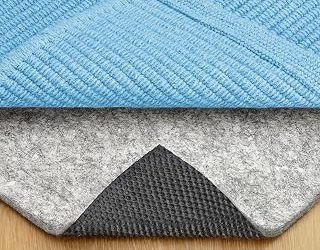
RUGPADUSA Dual Surface Felt + Rubber
My default recommendation for LVP: natural rubber grips the floor, felt gives you cushion, and at 1/4″ it slides under most doors without planing anything. This is the one I’d put under a living room rug that sees daily traffic.
Mayhawk Vacuum Tech Silicone Gripper
A thin adhesive-free silicone pad that holds through micro-suction and washes clean in a machine when it loses tack. The 2×6 format is aimed at runners and rug corners, so treat it as a targeted fix rather than full-coverage cushioning.
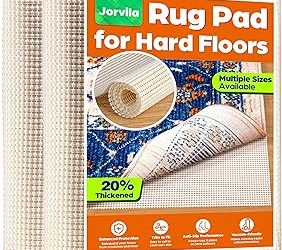
Jorvila Non-Slip Rug Pad Gripper
Solid mid-range option that pairs cushioning with anti-skid backing at a friendlier price than premium felt-and-rubber builds. Give it a day or two of air time out of the box before installing over vinyl.
Frequently Asked Questions
Will a rug pad discolor my LVP?
Only if it’s the wrong material. PVC, coated mesh, and some synthetic latex backings react with vinyl wear layers and leave permanent amber staining. Natural rubber, wool felt, and recycled felt are inert against LVP.
Do I need a pad if my rug already has a rubber backing?
Yes, and arguably more urgently. Integrated rug backings are frequently the plasticized kind that stains vinyl, so a felt pad between the two acts as a barrier layer as well as cushion.
How do I cut a felt pad to size?
Lay it flat, mark two inches inside your rug dimensions on all sides, then score along a metal straightedge with a fresh utility blade. Two passes beats one heavy cut, and a scrap of plywood underneath saves your floor.
Can I use a pad over radiant-heated LVP?
Check the flooring manufacturer’s R-value limit first. A 3/8″ felt pad can insulate enough to reduce heat transfer and, in some systems, cause the floor to overheat. Thinner rubber or 1/4″ builds are the safer route.
Final Thoughts
For most rooms, the RUGPADUSA Dual Surface hits the right balance of grip, cushion, and LVP-safe materials at a thickness that won’t fight your doors. Go with the RUGPADUSA Basics 3/8″ felt if you want maximum comfort under a heavy rug that isn’t going anywhere, or the GATORGRIP if moisture and pets are part of the equation.