Key takeaways
- Footprint vs. furniture: Measure your table and chairs pushed out, not tucked in. A 10×10 covers a bistro set and two loungers; a dining table for eight needs 10×12 minimum, and a full outdoor kitchen wants 12×16.
- Post thickness: This is the single best proxy for structural honesty. Anything under 3 inches on aluminum is marketing. The 3.9″ and 4.7″ posts on the PURPLE LEAF models are what let them carry snow load without deflecting.
- Roof geometry: Double-tier roofs vent hot air out the top gap, which drops the temperature underneath by several degrees on a still August afternoon. Single-slope panels are cheaper but trap heat.
- Drainage and fasteners: Look for integrated gutters or channeled rails rather than roof panels that dump straight onto your patio edge. Check that hardware is stainless or hot-dip galvanized, because zinc-plated screws will bleed rust stains down your posts by year two.
- Anchoring plan: Concrete pads take wedge anchors and are the gold standard. Pavers need through-bolts into a footing below. Bare soil means auger anchors and a realistic acceptance that no gazebo is truly permanent on turf.
What's inside
Anyone who has spent a Saturday wrestling a soft-top canopy back onto its frame after a thunderstorm knows the appeal of a hard top. Fabric canopies sag, mildew, and shred at the seams after two or three seasons, and the cheap ones turn into kites the first time a gust catches them sideways. A galvanized steel or aluminum roof solves that problem permanently, but it introduces new ones: heavier components, real anchoring requirements, and an assembly job that can eat a full weekend if you underestimate it.
This guide is written from the perspective of someone who has actually torqued the bolts. We look at footprint versus usable shade, post thickness and what it means for wind loading, drainage design, netting weight, and how forgiving each kit is when you are working with one helper instead of three. Below are the hard top gazebos worth your money in 2026, plus the practical checks to run before you order.
As an Amazon Associate we earn from qualifying purchases.




How to Choose a/an Hard Top Gazebo (2026)
- Footprint vs. furniture: Measure your table and chairs pushed out, not tucked in. A 10×10 covers a bistro set and two loungers; a dining table for eight needs 10×12 minimum, and a full outdoor kitchen wants 12×16.
- Post thickness: This is the single best proxy for structural honesty. Anything under 3 inches on aluminum is marketing. The 3.9″ and 4.7″ posts on the PURPLE LEAF models are what let them carry snow load without deflecting.
- Roof geometry: Double-tier roofs vent hot air out the top gap, which drops the temperature underneath by several degrees on a still August afternoon. Single-slope panels are cheaper but trap heat.
- Drainage and fasteners: Look for integrated gutters or channeled rails rather than roof panels that dump straight onto your patio edge. Check that hardware is stainless or hot-dip galvanized, because zinc-plated screws will bleed rust stains down your posts by year two.
- Anchoring plan: Concrete pads take wedge anchors and are the gold standard. Pavers need through-bolts into a footing below. Bare soil means auger anchors and a realistic acceptance that no gazebo is truly permanent on turf.
The Best Hard Top Gazebo (2026)s Reviewed
Modern Shade 12×16 Hardtop Gazebo with LED Lights
The largest pick here, and the only one with integrated LEDs wired into the frame rather than clipped on as an afterthought, which saves you running an extension cord across the lawn. Budget two people and most of a day for the double galvanized roof, and pre-sort the hardware bags before you start.
Aoxun 10′ x 12′ Cedar Wood Gazebo
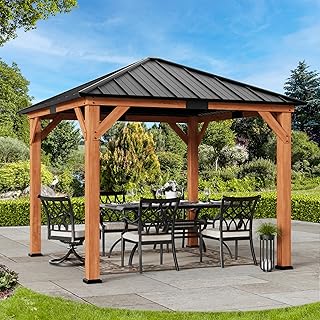
Real cedar posts with a galvanized double roof give you the look of a built-on-site pavilion at a fraction of carpentry cost, and the reinforced beams are notably beefier than the pine-and-staple competition. Plan on re-sealing the wood every second spring if you want the gray to stay even rather than blotchy.
PURPLE LEAF 10′ x 10′ Aluminum Hardtop Gazebo
The tidiest fit for a compact patio or deck corner, with 3.9″ posts that feel genuinely rigid once anchored and fade-resistant curtains that hold their color past the first season. The 110 GSM netting is fine for mosquitoes but not the heaviest option in the lineup.
Modern Shade 10×10 Permanent Wood Gazebo
Built for snow country: the cedar frame and steel roof combination is rated for serious load, and the joinery leaves less flex than the aluminum equivalents at the same size. It is the heaviest 10×10 assembly here, so line up a second set of hands for the roof stage.
PURPLE LEAF 10′ x 12′ Permanent Aluminum Gazebo
The 4.7″ posts and built-in drainage make this the most weather-serious pick in the roundup, and the 260 GSM netting is substantial enough to cut wind as well as bugs. If you get real winters and want to install once and forget about it, this is the one.
Frequently Asked Questions
Do I need a concrete pad?
Not strictly, but it is the best foundation. On pavers or decking, bolt through into solid framing or a footing. On soil, use long auger anchors and accept that you will re-tension them each spring.
Can I assemble one alone?
The frame, mostly yes. The roof panels, no. Steel and aluminum tiers are awkward and wind-sensitive at height, so schedule a helper for that phase specifically.
Will a hard top handle snow?
Quality models with thick posts and steel roofs will, but always clear accumulation over roughly six inches with a roof rake rather than trusting the rating.
Aluminum or wood?
Aluminum needs essentially no maintenance and resists rot outright. Cedar looks warmer and blends into landscaping better, at the cost of periodic sealing.
Final Thoughts
For most buyers, the PURPLE LEAF 10′ x 12′ aluminum gazebo is the smartest all-around investment thanks to its 4.7″ posts and real drainage. If you want the warmth of timber, the Aoxun 10′ x 12′ cedar model delivers pavilion looks without hiring a builder, and anyone covering a large entertaining space should size up to the Modern Shade 12×16 with its built-in LEDs.