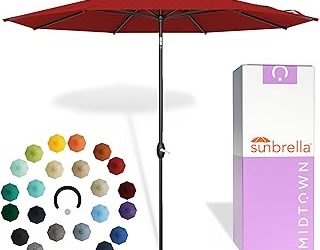
Key takeaways
- Vented canopy: This is the single feature I won’t compromise on. A vent at the crown lets pressurized air escape upward instead of turning your canopy into a sail. Two- and three-tier designs do this best — each tier gap is an exhaust port.
- Rib count and material: Eight ribs is the working minimum; six flexes too much at the hub. Fiberglass ribs bend and snap back, aluminum bends and stays bent. If the listing says “sturdy ribs” without naming the material, assume powder-coated steel and plan on gentler use.
- Base weight, not base size: Free-standing umbrellas need 50 lbs minimum, and I’d push toward 75 lbs on an exposed deck. Threading the pole through a table hole cuts that requirement roughly in half because the tabletop shares the load.
- Fabric weight in GSM: Look for 200 GSM or higher. Solution-dyed polyester at 240 GSM resists both UV bleaching and the stretch-then-tear failure that thin fabric shows after a season of flapping.
- Crank versus pulley: Cranks let you close a canopy in ten seconds when a squall rolls in, which matters more than any wind rating. The fastest umbrella to close is the one that never gets damaged.
What's inside
I’ve replaced more patio umbrellas than I care to admit. The first one folded like a paper crane during a spring gust that barely rattled the windows. The second one survived the wind but the canopy chalked to a sad gray within two summers. If you live somewhere the breeze has opinions — coastal lots, open prairie yards, rooftop decks with nothing to break the airflow — you learn fast that “patio umbrella” and “patio umbrella that lasts” are two different products.
What actually keeps a canopy in one piece comes down to a handful of measurable things: rib count and rib material, whether the top vents, how the pole is joined, and how much weight is sitting on the base. This guide breaks down those specs in plain language, then walks through five umbrellas that hold up when the air gets pushy — from budget market umbrellas to a cantilever rated for genuine gale conditions.
As an Amazon Associate we earn from qualifying purchases.
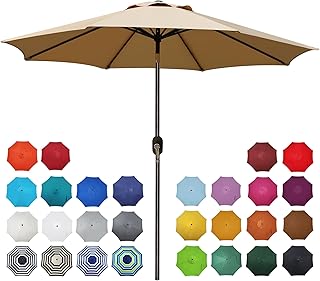


How to Choose a Patio Umbrella For Windy Areas (2026)
- Vented canopy: This is the single feature I won’t compromise on. A vent at the crown lets pressurized air escape upward instead of turning your canopy into a sail. Two- and three-tier designs do this best — each tier gap is an exhaust port.
- Rib count and material: Eight ribs is the working minimum; six flexes too much at the hub. Fiberglass ribs bend and snap back, aluminum bends and stays bent. If the listing says “sturdy ribs” without naming the material, assume powder-coated steel and plan on gentler use.
- Base weight, not base size: Free-standing umbrellas need 50 lbs minimum, and I’d push toward 75 lbs on an exposed deck. Threading the pole through a table hole cuts that requirement roughly in half because the tabletop shares the load.
- Fabric weight in GSM: Look for 200 GSM or higher. Solution-dyed polyester at 240 GSM resists both UV bleaching and the stretch-then-tear failure that thin fabric shows after a season of flapping.
- Crank versus pulley: Cranks let you close a canopy in ten seconds when a squall rolls in, which matters more than any wind rating. The fastest umbrella to close is the one that never gets damaged.
The Best Patio Umbrella For Windy Areas (2026)s Reviewed
EliteShade USA 9ft 3-Tier Market Umbrella
The three-tier canopy is the real engineering here — two full vent gaps mean gusts pass through instead of lifting, and the commercial-grade fabric backs a ten-year non-fading claim that I’ve seen hold up in restaurant patio use. It’s the one I’d install and stop thinking about.
PURPLE LEAF Cantilever 10′ x 10′ Double Top
Rated to 35 MPH with a genuinely beefy cross-brace frame, this offset umbrella clears the table entirely and takes the double-top vent approach to shedding pressure. Budget a full afternoon and a helper for assembly, and anchor the base properly — this one needs weight or bolt-down to earn its rating.
9ft 3-Tier Patio Umbrella with 8 Ribs (Navy)
A solid mid-tier pick that borrows the tiered venting concept at a friendlier price, with eight ribs and push-button tilt for chasing afternoon sun. Good value if you can bring it in during storm season.
JEAREY 9FT Market Umbrella
Clean build quality, smooth crank action, and a water-shedding canopy that dries fast after a squall. Single-tier, so treat it as a fair-weather-to-moderate-breeze umbrella rather than a set-and-forget install.
9′ Outdoor Patio Umbrella with Push Button Tilt
The straightforward budget option — eight ribs, working crank, functional tilt. Pair it with a heavy table and a substantial base and it does honest work on a sheltered patio.
Frequently Asked Questions
How much wind can a patio umbrella actually handle?
Most residential market umbrellas top out around 20 MPH sustained. Vented and reinforced models like the cantilever options push into the 30–35 MPH range, but every manufacturer rating assumes correct base weight and a properly closed umbrella when unattended.
Does a vent really make a difference?
Yes, measurably. I’ve watched a single-tier canopy lift a 40 lb base off the ground while a vented three-tier beside it barely shuddered. The vent relieves the low-pressure zone above the canopy that generates lift.
What base weight do I need?
Through-table use: 30–50 lbs. Free-standing: 50–75 lbs minimum. On a rooftop or beachfront, go heavier or use a mounted plate. Consider filling a hollow base with sand rather than water — sand is roughly 30% denser and won’t freeze.
Should I close it in wind, or take it down?
Close and strap it for everyday gusts. Fully remove and store it for named storms — a closed umbrella still catches wind, and the pole becomes a lever against your base or table.
Final Thoughts
If you want one umbrella that handles real wind without fuss, the EliteShade 3-Tier is the practical winner — the venting works and the fabric outlasts the competition. For larger shade coverage over a seating area, the PURPLE LEAF Cantilever earns its 35 MPH rating provided you anchor it seriously, and the 9ft 3-Tier Navy model delivers most of the tiered-vent benefit at a gentler price point.