Key takeaways
- Vented canopy: A single or double-tier vent lets pressure escape out the top instead of building underneath. This is the single biggest predictor of whether a canopy survives a gust front, and it also drops the temperature under the shade noticeably.
- Rib count and material: Eight ribs distribute load better than six. Fiberglass flexes and springs back where aluminum ribs bend permanently — if you’re in a genuinely gusty spot, flex beats rigidity every time.
- Base weight, done properly: Freestanding 9ft umbrellas want 50 lbs minimum; 11ft and up want 75–100 lbs. If the pole passes through a table, you can go lighter since the table adds lateral bracing. Cantilevers need 150 lbs or more, or bolted-down plates.
- Hub and pole construction: Check where ribs meet the pole. Metal collars with through-bolts hold; molded plastic hubs are the part that fails first. Powder-coated aluminum poles resist corrosion better than steel in coastal or poolside air.
- Fabric weight and UV rating: Look for 200 GSM or higher with UPF 50+. Solution-dyed polyester holds color for years; thin printed fabric chalks out in one season and tears at the rib tips.
What's inside
If you’ve ever come out to the deck after a windy night and found your umbrella folded inside-out like a broken kite, you already know the problem. Most patio umbrellas are engineered for calm afternoons, not the 20 mph gusts that funnel between houses or rip across an open backyard. The failure points are predictable once you’ve replaced a few: cheap fiberglass ribs that snap at the hub, a solid canopy that acts like a sail, and a base that weighs a fraction of what the span actually demands.
I’ve mounted, weighted, and rebuilt enough of these to know which features genuinely earn their keep. This guide breaks down the hardware that survives real wind — vented canopies, rib count and material, hub construction, and base math — then walks through six umbrellas that hold up when the weather turns. Whether you need a table umbrella for a bistro setup or an oversized cantilever for a lounge area, the picks below are sorted by how they actually behave under load.
As an Amazon Associate we earn from qualifying purchases.


How to Choose a Patio Umbrella For Windy Area (2026)
- Vented canopy: A single or double-tier vent lets pressure escape out the top instead of building underneath. This is the single biggest predictor of whether a canopy survives a gust front, and it also drops the temperature under the shade noticeably.
- Rib count and material: Eight ribs distribute load better than six. Fiberglass flexes and springs back where aluminum ribs bend permanently — if you’re in a genuinely gusty spot, flex beats rigidity every time.
- Base weight, done properly: Freestanding 9ft umbrellas want 50 lbs minimum; 11ft and up want 75–100 lbs. If the pole passes through a table, you can go lighter since the table adds lateral bracing. Cantilevers need 150 lbs or more, or bolted-down plates.
- Hub and pole construction: Check where ribs meet the pole. Metal collars with through-bolts hold; molded plastic hubs are the part that fails first. Powder-coated aluminum poles resist corrosion better than steel in coastal or poolside air.
- Fabric weight and UV rating: Look for 200 GSM or higher with UPF 50+. Solution-dyed polyester holds color for years; thin printed fabric chalks out in one season and tears at the rib tips.
The Best Patio Umbrella For Windy Area (2026)s Reviewed
EliteShade 3-Tier Market Umbrella 9ft
The three-tier vented top is the standout here — each layer gives wind another exit path, which is why this one rarely inverts even in sustained breeze. Commercial-grade construction and a 10-year fade warranty put it ahead of anything else at this size.
PURPLE LEAF Cantilever Umbrella 12FT
The double-top canopy plus a genuinely beefy offset frame makes this the most stable cantilever I’ve set up, and the six-position tilt lets you angle it away from prevailing wind. Budget for serious base weight or a bolted anchor plate — this needs it.
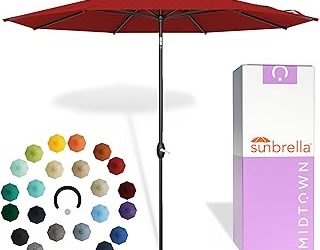
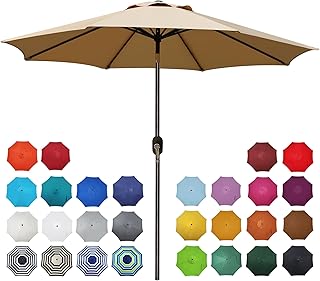
EliteShade 9Ft Market Umbrella, Heather Beige
Same durable bones as its 3-tier sibling in a cleaner single-vent profile, with a crank and tilt that operate smoothly after a full season outdoors. The heather weave hides pollen and water spotting better than flat solid colors.
PURPLE LEAF 12ft Wood-Grain Patio Umbrella
Twelve feet of coverage on a braced aluminum frame with a wood-grain finish that reads like teak without the annual sanding. The 240 GSM fabric is the heaviest here, and the internal bracing keeps the ribs from oscillating in gusts.
10FT Patio Umbrella with Push Button Tilt
A solid mid-size option with eight ribs and a waterproof canopy at a friendly price point. Pair it with a heavier base than the listing suggests and close it during storms — it handles everyday breeze fine but isn’t built for extremes.
Frequently Asked Questions
What wind speed can a patio umbrella actually handle?
Most quality vented umbrellas stay put through 20–25 mph. Beyond that, no consumer umbrella is rated to stay open safely. Treat the crank as a two-second closing chore whenever a front rolls in.
Do vents really make a difference?
Yes, measurably. Vents relieve the upward pressure that turns a canopy inside-out. Side by side, a vented umbrella stays open in conditions where a solid canopy has already flipped.
How much should my base weigh?
Fifty pounds for a 9ft freestanding umbrella, 75–100 for anything 11ft or larger, and 150-plus for cantilevers. Through-table setups can drop about 20 lbs since the table shares the load.
Can I anchor an umbrella base permanently?
Absolutely, and it’s the strongest option. Most bases have pre-drilled holes — use concrete sleeve anchors on a slab or lag bolts into deck framing, not just the decking boards.
Final Thoughts
For most windy backyards, the EliteShade 3-Tier is the smart buy: its multi-vent top does the real work, and the build quality holds up. If you need to cover a lounge zone without a center pole, the PURPLE LEAF 12FT Cantilever with its double-top canopy is the stable choice, while the PURPLE LEAF 12ft Wood-Grain model delivers the widest shade on a braced frame that won’t rattle apart.