Key takeaways
- Match the frame to your climate: Aluminum shrugs off humidity and coastal salt; cedar and redwood handle dry heat well but need a UV-blocking finish; pressure-treated pine works anywhere if you accept annual checks for checking and warp.
- Check the load rating, not the look: Snow country needs sloped roofing and beams sized for it. A flat slat top collects drifts. Look for stated wind and snow ratings on kits, and 2×8 or larger beams on custom builds.
- Decide your shade percentage first: HDPE shade cloth at 90% UV block feels genuinely cool underneath. Open slats give dappled light and almost no rain protection. Polycarbonate panels give full weather cover but trap heat unless you have side airflow.
- Plan for the fasteners: Stainless or hot-dipped galvanized hardware only. Standard zinc screws in treated lumber corrode fast and stain the wood black around every hole.
- Budget for the second layer: The frame is half the project. Canopy covers, shade cloth, and side curtains are consumable — most fabric lives three to six seasons — so pick sizes you can reorder easily.
What's inside
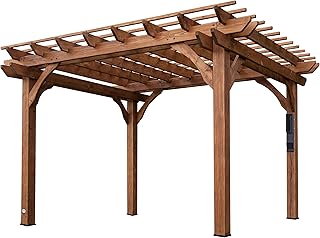
Stand in the lumber aisle long enough and the pergola question stops being about looks. Cedar smells great and weathers beautifully, but it wants sealing every couple of seasons. Pressure-treated pine is cheap until it twists. Vinyl won’t rot but it also won’t carry much span. Powder-coated aluminum solves the maintenance problem and costs more up front. Meanwhile the roof material — slats, fabric, polycarbonate — changes everything about how the structure actually feels to sit under, and most buyers don’t figure that out until the first hot afternoon.
This guide breaks down pergola materials from a builder’s perspective: what holds up in wind and snow load, what needs refinishing, and what you can install over a weekend with a drill and a level. I’ve included complete aluminum kits for anyone skipping the from-scratch build, plus the shade fabrics and canopy covers that turn an existing frame into usable shade. If you already have posts and beams in the ground, the top-cover picks here are the cheapest upgrade you’ll make.
As an Amazon Associate we earn from qualifying purchases.


How to Choose a Material For Pergola (2026)
- Match the frame to your climate: Aluminum shrugs off humidity and coastal salt; cedar and redwood handle dry heat well but need a UV-blocking finish; pressure-treated pine works anywhere if you accept annual checks for checking and warp.
- Check the load rating, not the look: Snow country needs sloped roofing and beams sized for it. A flat slat top collects drifts. Look for stated wind and snow ratings on kits, and 2×8 or larger beams on custom builds.
- Decide your shade percentage first: HDPE shade cloth at 90% UV block feels genuinely cool underneath. Open slats give dappled light and almost no rain protection. Polycarbonate panels give full weather cover but trap heat unless you have side airflow.
- Plan for the fasteners: Stainless or hot-dipped galvanized hardware only. Standard zinc screws in treated lumber corrode fast and stain the wood black around every hole.
- Budget for the second layer: The frame is half the project. Canopy covers, shade cloth, and side curtains are consumable — most fabric lives three to six seasons — so pick sizes you can reorder easily.
The Best Material For Pergola (2026)s Reviewed
Aoxun 8’x10′ Wall-Mounted Aluminum Gazebo
This is the shortcut for anyone who doesn’t want to dig post holes: the ledger mounts to your house wall, so you’re only setting two outer posts. The powder-coated aluminum frame needs no sealing ever, and the sloped roof sheds water away from the siding instead of pooling at the connection — the detail most DIY lean-to builds get wrong.
Aoxun 8’x5′ Gazebo with Polycarbonate Panels
The polycarbonate roof makes this a genuine rain shelter rather than a sun filter, which is why it works so well over a back door or grill station. At 8’x5′ it’s a small footprint, so plan on it covering a doorway and a step, not a dining set.
Universal Pergola Replacement Canopy (10×10)
Breathable HDPE beats solid vinyl canopies because it lets hot air escape upward instead of forming an oven under the top. The rod-pocket design slides onto existing crossbars in about ten minutes, and the walnut tone hides pollen and dust far better than pale fabrics.
Sun Shade Cloth with Grommets (8×10)
Grommeted shade cloth is the most flexible material in this roundup — lace it between beams with bungees or paracord and you can tension it, angle it, or take it down before a storm. The 90% UV rating is the sweet spot: real shade with enough breathability that wind passes through rather than tearing at the corners.
RYB HOME Extra Wide Outdoor Curtains
Overhead shade only helps when the sun is high; low afternoon light comes in sideways. These 100-inch-wide waterproof panels handle that, and the thermal layer makes a measurable difference in how long the space stays comfortable. Run a stainless cable between posts rather than a rod — less sag on wide spans.
Frequently Asked Questions
Is aluminum or wood better for a pergola?
Aluminum wins on maintenance and consistency — no rot, no warping, no refinishing. Wood wins on appearance, cost per square foot on larger structures, and the ability to modify it later with a saw. Choose based on how much upkeep you actually want to do.
How long does pergola shade fabric last?
Quality HDPE shade cloth typically runs five to eight years in moderate climates and three to five in intense sun. Taking it down over winter roughly doubles its life.
Do I need to anchor a pergola to concrete?
Any freestanding pergola needs real anchoring — concrete footings below frost line, or wedge anchors into an existing slab. An unanchored 8×10 frame becomes a sail in a 40 mph gust.
Can I put a solid roof on an existing wood pergola?
Only if the beams were sized for it. Adding polycarbonate or metal roofing creates wind uplift and snow load the original slat design never accounted for; have the span checked before you commit.
Final Thoughts
For a zero-maintenance frame against the house, the Aoxun 8’x10′ aluminum lean-to is the most practical build in this group, and the 8’x5′ polycarbonate version is the pick when you need actual rain cover over a doorway. If you already have a structure standing, the Universal HDPE Replacement Canopy is the fastest, cheapest way to make it genuinely usable this season.