Key takeaways
- Frame material: Extruded aluminum wins on maintenance and span strength per pound, and won’t host carpenter bees. Cedar or redwood is the pick if you want a structure that ages into the yard and can be re-stained. Skip untreated softwood entirely for ground contact.
- Roof strategy: Polycarbonate panels give you genuine rain shelter and work over a grill or door. Textilene and yarn-dyed fabric breathe and stay quiet in wind. Adjustable louvers cost the most but let you dial light hour by hour.
- Wall-mount versus freestanding: A lean-to ties into your house band board and uses half the material, but the ledger flashing has to be right or you’ll invite rot behind the siding. Freestanding builds need four solid footings and no siding penetration.
- Hardware grade: Galvanized is the floor; stainless or ceramic-coated structural screws are worth the upcharge near coastlines or pools. Mismatched metals against treated lumber corrode fast — check the fastener rating against the wood’s ACQ or MCA treatment.
- Wind and snow load: Look for a stated load rating, not marketing adjectives. Retractable canopies should be opened in storms. Hardtops need corner bracing and, in snow country, anchors sized for uplift.
What's inside
Walk the lumber aisle with a pergola in mind and the decision paralysis hits fast. Pressure-treated pine is cheap but ships wet and twists as it dries. Cedar smells great and stays straight, but the bill doubles. Powder-coated aluminum never checks or splits, yet it won’t take a stain and it broadcasts “kit” rather than “custom build.” Meanwhile the roof question is its own rabbit hole: open rafters that shade nothing at noon, fabric that flaps, polycarbonate that keeps rain off but hammers like a drum, or louvers that cost more than the frame underneath them.
This guide breaks pergola materials down the way a builder actually evaluates them — how each one behaves after three summers and two freeze-thaw cycles, not how it looks on the shelf. Below you’ll find frame materials, roof systems, and the bracket hardware that determines whether a wood build stays square. Some of these are complete engineered kits; one is just the connectors, for anyone milling their own posts and beams.
As an Amazon Associate we earn from qualifying purchases.


How to Choose a/an Materials For Pergola (2026)
- Frame material: Extruded aluminum wins on maintenance and span strength per pound, and won’t host carpenter bees. Cedar or redwood is the pick if you want a structure that ages into the yard and can be re-stained. Skip untreated softwood entirely for ground contact.
- Roof strategy: Polycarbonate panels give you genuine rain shelter and work over a grill or door. Textilene and yarn-dyed fabric breathe and stay quiet in wind. Adjustable louvers cost the most but let you dial light hour by hour.
- Wall-mount versus freestanding: A lean-to ties into your house band board and uses half the material, but the ledger flashing has to be right or you’ll invite rot behind the siding. Freestanding builds need four solid footings and no siding penetration.
- Hardware grade: Galvanized is the floor; stainless or ceramic-coated structural screws are worth the upcharge near coastlines or pools. Mismatched metals against treated lumber corrode fast — check the fastener rating against the wood’s ACQ or MCA treatment.
- Wind and snow load: Look for a stated load rating, not marketing adjectives. Retractable canopies should be opened in storms. Hardtops need corner bracing and, in snow country, anchors sized for uplift.
The Best Materials For Pergola (2026)s Reviewed
10′ x 20′ Lean-To Hardtop Pergola, Aluminum Frame
Twenty feet of covered wall for one flashing detail — this is the efficient way to shelter a back door or patio slider. The polycarbonate panels shed water and diffuse UV, and the aluminum frame means no annual sanding, though you’ll want to bolt the ledger into studs or rim joist, never siding alone.
Slanted Roof Pergola Bracket Kit with Post Bases
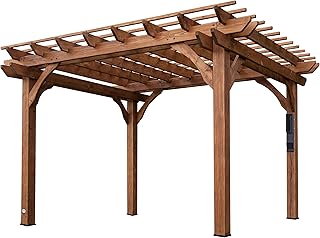
The one entry here for people who’d rather buy lumber than a kit: 3-way brackets and post bases sized for nominal 4×4 stock, so you set the geometry and the steel keeps it square. Pair it with cedar for a build that looks site-made, and use the post bases to hold end grain off concrete — that single detail adds years.
Modern Shade 10×20 Hybrid Hardtop with Textilene Shade
A hybrid solves the two-material problem honestly: hardtop above for rain, retractable Textilene beneath to soften glare and cut the noise of rain on panels. The wood-grain finish on aluminum is a fair trade if you want the look without the refinishing schedule, and the privacy curtains genuinely help on a shared property line.
AECOJOY 8′ x 5′ Grill Gazebo, Lean-To Hardtop
Purpose-built proportions for a grill station, with enough clearance and a sloped hardtop that keeps smoke moving and rain off your cook surface. Small footprint, heavy-duty frame, and the wall-mount design means no posts crowding a narrow deck.
PURPLE LEAF 10′ x 10′ Retractable Canopy Pergola
The thick aluminum posts here are the differentiator — plenty of budget canopy pergolas flex at the corners, and this one doesn’t. The yarn-dyed fabric holds color far better than surface-printed canopy material, and sliding it open in shoulder season is the whole point of choosing fabric over a fixed roof.
Frequently Asked Questions
Is aluminum or wood better for a pergola?
Aluminum for low maintenance, dimensional stability, and long spans. Wood for warmth, customization, and the ability to modify it later with a saw. If you won’t commit to re-staining every two to three years, choose aluminum.
Do polycarbonate roof panels get too hot underneath?
Quality panels carry a UV-blocking layer and reduce heat gain meaningfully, but a solid roof over a dark patio still traps warmth. Adding a fabric layer below or leaving the sides fully open makes a noticeable difference.
Can I mount a lean-to pergola to vinyl siding?
Not to the siding itself. Fasteners must reach framing, and you need spacers plus flashing or sealant at every penetration to keep water out of the wall cavity.
Are louvered pergolas worth the extra cost?
If you use the space daily and your weather changes fast, yes — independently adjustable louvers plus an integrated drainage system give you shade, ventilation, and rain cover in one structure. For occasional weekend use, a retractable canopy delivers most of the benefit for less.
Final Thoughts
For most backyards, the Modern Shade 10×20 hybrid hardtop is the smartest material combination on this list — rain protection and adjustable shade in one frame. Choose the PURPLE LEAF 10′ x 20′ louvered pergola with drainage if you want the most control over light and weather, and grab the slanted roof bracket kit if you’d rather build in cedar and make it your own.