Key takeaways
- Backplate footprint: Measure your existing plate before ordering. A smaller replacement leaves paint shadows and exposed drywall patches around a standard 4-inch round box, and you’ll be caulking or repainting to hide it.
- Wet vs. damp rating: Damp-rated fixtures belong under a deep soffit or covered porch only. Anything exposed to driving rain — garage flanks, unsheltered entries, side walls — needs a wet rating, full stop.
- Bulb clearance and socket depth: An E26 socket doesn’t guarantee your bulb fits. Check interior height against the bulb you plan to use; oversized filament LEDs and larger globes crowd out fast in compact lanterns.
- Finish durability: Powder-coated aluminum resists corrosion better than painted steel, which is worth prioritizing in coastal or road-salt environments. Look for aluminum or treated metal rather than generic “rust-resistant” claims.
- Glass style versus maintenance: Clear glass looks sharpest but shows every insect and water spot. Ripple, seeded, or frosted glass hides grime and diffuses glare — a practical choice for fixtures at eye level.
What's inside
Swapping an outdoor sconce is one of those jobs that looks trivial until you’re standing on a ladder at dusk, holding a fixture in one hand and a wire nut in the other, wondering why the mounting plate doesn’t line up with the junction box. The hardware is rarely the hard part. The frustration comes from fixtures that arrive with flimsy stamped-metal backplates, gaskets that don’t seal against lap siding, or sockets set so deep that a standard A19 bulb won’t sit flush. And once water finds a way in, you’re back on that ladder in eighteen months.
This guide comes from actually mounting these things — checking backplate footprints against 4-inch round boxes, testing how the gasket behaves on textured surfaces, and looking at whether the wire leads are long enough to work with comfortably. Below you’ll find picks that hold up to real weather and real installation conditions, plus the specs worth checking before you order.
As an Amazon Associate we earn from qualifying purchases.


How to Choose a Outdoor Wall Sconce (2026)
- Backplate footprint: Measure your existing plate before ordering. A smaller replacement leaves paint shadows and exposed drywall patches around a standard 4-inch round box, and you’ll be caulking or repainting to hide it.
- Wet vs. damp rating: Damp-rated fixtures belong under a deep soffit or covered porch only. Anything exposed to driving rain — garage flanks, unsheltered entries, side walls — needs a wet rating, full stop.
- Bulb clearance and socket depth: An E26 socket doesn’t guarantee your bulb fits. Check interior height against the bulb you plan to use; oversized filament LEDs and larger globes crowd out fast in compact lanterns.
- Finish durability: Powder-coated aluminum resists corrosion better than painted steel, which is worth prioritizing in coastal or road-salt environments. Look for aluminum or treated metal rather than generic “rust-resistant” claims.
- Glass style versus maintenance: Clear glass looks sharpest but shows every insect and water spot. Ripple, seeded, or frosted glass hides grime and diffuses glare — a practical choice for fixtures at eye level.
The Best Outdoor Wall Sconce (2026)s Reviewed
Modern Black Exterior Wall Lanterns
A clean-lined lantern with a genuinely straightforward install — the leads are long enough to work with one-handed on a ladder, and the mounting hardware matches standard box spacing without shimming. Clear glass and an E26 socket keep bulb choices wide open, so you can dial in warmth and brightness after the fact.
MAXvolador Exterior Wall Lanterns (2-Pack)
The two-pack is the smart buy for flanking a front door or matching a garage pair, since finish consistency between separately ordered fixtures is never guaranteed. The anti-rust treatment and weather seal hold up well on exposed walls, and the proportions suit most standard entries without looking undersized.
DEWENWILS Roman 17.7″ Wall Lantern
At nearly 18 inches tall, this is the pick for tall entryways or wide garage facades where smaller fixtures disappear against the wall. The water-ripple glass is the real advantage — it softens the light and does an excellent job hiding the dust and insect debris that make clear glass look neglected within a season.
mirrea 12″ Modern Cylinder Porch Light (2-Pack)
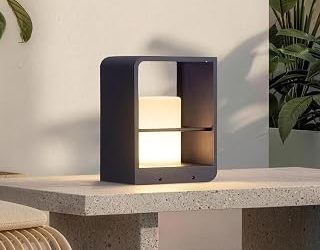
Cast-aluminum cylinders with up-and-down light throw, which reads far more architectural than a traditional lantern and works well on modern or minimalist exteriors. The aluminum body is the standout spec here: it simply won’t rust, making these a strong choice for coastal installations where steel fixtures fail early.
Beveled Glass Wall Sconce (2-Pack)
The beveled glass edges catch light in a way that lifts these above basic budget lanterns, and the black finish suits both traditional and transitional exteriors. A sensible pair for anyone updating two matched locations without committing to a premium price.
Frequently Asked Questions
Can I install an outdoor sconce myself?
If you’re comfortable turning off the breaker, verifying with a non-contact tester, and connecting three wires, yes — most installs take 20 to 30 minutes. If there’s no existing junction box, that’s an electrician’s job, since running new exterior circuits requires permits in most jurisdictions.
What bulb temperature works best outdoors?
2700K to 3000K reads as warm and welcoming for entries and porches. Cooler 4000K light suits security-focused garage and driveway locations, where clarity matters more than atmosphere.
How do I stop water getting behind the fixture?
Bed the backplate against the wall with the supplied gasket, then run a bead of exterior silicone along the top and sides — leaving the bottom edge open so any trapped moisture can drain out rather than pool inside.
Do these work with smart bulbs and dimmers?
Standard E26 sockets accept smart bulbs without modification, though cold weather can slow Wi-Fi bulb response. For dimming, confirm your bulb is dimmable and pair it with an LED-rated dimmer to avoid flicker.
Final Thoughts
For most homes, the MAXvolador two-pack hits the best balance of weather resistance, install ease, and value for matched entry lighting. Choose the DEWENWILS Roman lantern if you need presence on a taller wall and want glass that stays looking clean between washes, or the mirrea aluminum cylinders if you want a modern profile and genuine corrosion immunity in a salt-air climate.