Key takeaways
- Shipping weight per seat: Divide the total shipping weight by the number of pieces. A cast aluminum dining chair should land somewhere around 18 to 25 pounds. Anything under 14 pounds is thin-walled casting that will flex at the arm joints within a couple of seasons.
- Hardware material: Pull up the assembly manual before you buy if it’s posted. Stainless steel bolts are what you want; zinc-plated carbon steel will bleed rust streaks down your table legs even though the aluminum itself is fine. Swapping in stainless replacements costs about fifteen dollars and an hour of your time, so it’s not a dealbreaker — just budget for it.
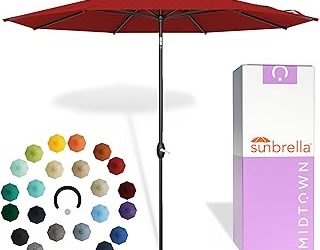
- Umbrella hole diameter: Standard market umbrella poles run 1.5 inches, but many pole sets taper to 1.875 inches at the base. Look for a stated 2.0-inch hole and a threaded cap, or plan on shimming with a rubber sleeve to stop the pole from rattling in wind.
- Finish type: Two-stage powder coat over an etched primer holds up dramatically better than single-pass paint. If a listing mentions a chip-resistant or baked-on finish, that’s a good sign. Keep a matching touch-up pen on hand for the inevitable chair-leg scuff.
- Cushion attachment and fill: Tie-on cushions migrate; hook-and-loop or strap-secured cushions stay put. Open-cell foam wrapped in a quick-dry cover drains after rain, while sealed foam holds water and mildews from the inside. Slipcovers you can unzip and machine wash are worth paying for.
What's inside
I’ve hauled enough flat-pack patio sets to the curb to know the pattern: powder-coated steel tubing rusts from the inside out, and resin wicker turns brittle after two summers of UV. Cast aluminum is the material that finally broke that cycle in my own backyard. It’s poured into molds rather than bent from sheet stock, so the frames have real mass, the joinery is bolted rather than crimped, and the metal itself doesn’t rust — aluminum oxidizes into a thin protective skin instead of flaking apart. The tradeoff is that quality varies wildly between manufacturers, and product listings rarely tell you which castings are thick enough to matter.
This guide breaks down what I look for when I’m evaluating a cast aluminum set with a tape measure and a screwdriver in hand: casting weight, hardware quality, cushion construction, and how much assembly reality differs from the box art. Below are the sets worth your attention in 2026, from compact bistro pairs to seven-piece dining spreads, along with the specs that actually predict how a set will hold up.
As an Amazon Associate we earn from qualifying purchases.


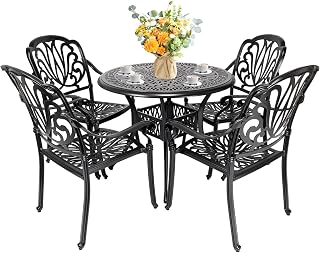


How to Choose a Cast Aluminum Patio Furniture (2026)
- Shipping weight per seat: Divide the total shipping weight by the number of pieces. A cast aluminum dining chair should land somewhere around 18 to 25 pounds. Anything under 14 pounds is thin-walled casting that will flex at the arm joints within a couple of seasons.
- Hardware material: Pull up the assembly manual before you buy if it’s posted. Stainless steel bolts are what you want; zinc-plated carbon steel will bleed rust streaks down your table legs even though the aluminum itself is fine. Swapping in stainless replacements costs about fifteen dollars and an hour of your time, so it’s not a dealbreaker — just budget for it.
- Umbrella hole diameter: Standard market umbrella poles run 1.5 inches, but many pole sets taper to 1.875 inches at the base. Look for a stated 2.0-inch hole and a threaded cap, or plan on shimming with a rubber sleeve to stop the pole from rattling in wind.
- Finish type: Two-stage powder coat over an etched primer holds up dramatically better than single-pass paint. If a listing mentions a chip-resistant or baked-on finish, that’s a good sign. Keep a matching touch-up pen on hand for the inevitable chair-leg scuff.
- Cushion attachment and fill: Tie-on cushions migrate; hook-and-loop or strap-secured cushions stay put. Open-cell foam wrapped in a quick-dry cover drains after rain, while sealed foam holds water and mildews from the inside. Slipcovers you can unzip and machine wash are worth paying for.
The Best Cast Aluminum Patio Furniture (2026)s Reviewed
VINGLI 5-Piece Cast Aluminum Dining Set (Bronze)
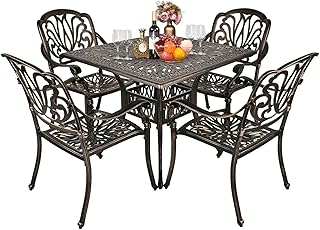
The bronze finish on this set reads as genuinely antiqued rather than sprayed-on brown, and the umbrella table’s center hole is properly reinforced with a cast collar instead of a punched hole. Assembly runs about ninety minutes for one person; the chair backs arrive pre-attached, which saves the fiddliest step.
Darlee Nassau 5-Piece with 48-Inch Round Table
Darlee is the benchmark here — the castings are noticeably heavier than the import competition, and the Nassau chairs use welded rather than bolted back panels, which eliminates the rattle that develops on cheaper frames. The 48-inch round table seats four comfortably with room for serving dishes, and the sesame cushions are on removable zip covers.
Ailismail 7-Piece with 59-Inch Rectangular Table
If you regularly feed six, the rectangular top is the practical choice: rounds waste corner space and force awkward elbow geometry past four diners. The thicker cushions here are a genuine upgrade over the thin pads most sets ship with, and the retro lattice pattern hides water spots well.
5-Piece All-Weather Set with 2.0″ Umbrella Hole
The oversized umbrella hole is the standout spec — it accommodates thicker cantilever and market poles without shimming, which is rarer than it should be. Check your bolt hardware on arrival and consider a stainless swap if you’re in a coastal or high-humidity climate.
C/G 3-Piece Bistro Set (Antique Copper)
For a front porch, balcony, or a corner that only ever seats two, this is the right footprint — no compromise on casting quality just because the scale is small. The antique copper finish weathers into a warmer patina than standard bronze, and both chairs plus the table assemble in under thirty minutes.
Frequently Asked Questions
Does cast aluminum patio furniture rust?
The aluminum itself won’t, but the steel hardware and any welded steel components will. If you see rust on a cast aluminum set, it’s almost always coming from bolts, washers, or a hidden bracket. Replacing those with stainless equivalents solves it permanently.
Will cast aluminum furniture blow away in wind?
Cast is substantially heavier than tube aluminum, and a typical dining chair holds its position in ordinary gusts. Storms are different — anchor an umbrella base, tip chairs forward against the table, and consider furniture clips if you’re on an exposed deck.
How do I restore a faded finish?
Wash with a mild degreaser, scuff any chalked areas with a fine abrasive pad, wipe with denatured alcohol, then apply a self-etching primer and an exterior enamel rated for metal. Two thin coats beat one heavy one, and full cure takes several days before you load the frames.
Can I leave it outside all winter?
The frames handle it fine. Cushions do not — store them dry and indoors. In freeze-thaw regions, tip tables so water doesn’t pool in the umbrella hole and freeze, which can stress the casting collar over repeated cycles.
Final Thoughts
For a straightforward four-seat setup that will still look right in a decade, the Darlee Nassau earns its price through heavier castings and better joinery than anything else in this group. If you’re feeding a crowd, the Ailismail 7-piece with the 59-inch rectangular table gives you real elbow room and cushions worth sitting on, while the C/G bistro set handles small porches and balconies without cutting corners on build quality.