Key takeaways
- Lay geometry: A 30-degree hang is the target, not a taut line. Look for 10 feet or more of fabric length and at least 55 inches of width, or a purpose-built flat-lay design if you’re a stubborn back sleeper.
- Bug and weather coverage: Integrated mosquito netting plus a rainfly turns a hammock into a shelter. Separate nets work, but they add fiddly setup in the dark and another stuff sack to lose.
- Suspension quality: Included tree straps vary wildly. Multi-loop daisy-chain webbing at 1 inch wide protects bark and lets you fine-tune height without knots. Cheap rope suspension is the first thing worth replacing.
- Fabric and stitching: 210T ripstop or 70D parachute nylon hits the balance of packability and durability. Check for triple-stitched channel seams; that’s where failures start, not in the middle of the panel.
- Realistic load rating: Published capacities assume static, evenly distributed weight. Give yourself margin, especially if you’re adding an underquilt, gear sling, or a second occupant.
What's inside
Anyone who has spent a night in a hammock knows the difference between hanging out and actually sleeping. The first is easy. The second depends on a stack of small variables most listings never mention: the sag angle you can achieve with the straps included in the bag, whether the fabric has enough width to let your shoulders settle flat, and how the ridgeline (or lack of one) affects that shoulder-squeeze that wakes you at 2 a.m. Buyers usually discover this after the purchase, mid-trip, wrapped like a burrito with their feet higher than their head.
I’ve hung, rigged, re-rigged, and modified enough of these to have opinions about seam placement. This guide covers six sleeping hammocks worth considering for 2026, from bug-net shelter systems to bare-bones double nylon you can customize with a whipping knot and a length of Amsteel. I’ll flag what each one does well out of the box, and where a little DIY tinkering pays off.
As an Amazon Associate we earn from qualifying purchases.


How to Choose a Sleeping Hammock (2026)
- Lay geometry: A 30-degree hang is the target, not a taut line. Look for 10 feet or more of fabric length and at least 55 inches of width, or a purpose-built flat-lay design if you’re a stubborn back sleeper.
- Bug and weather coverage: Integrated mosquito netting plus a rainfly turns a hammock into a shelter. Separate nets work, but they add fiddly setup in the dark and another stuff sack to lose.
- Suspension quality: Included tree straps vary wildly. Multi-loop daisy-chain webbing at 1 inch wide protects bark and lets you fine-tune height without knots. Cheap rope suspension is the first thing worth replacing.
- Fabric and stitching: 210T ripstop or 70D parachute nylon hits the balance of packability and durability. Check for triple-stitched channel seams; that’s where failures start, not in the middle of the panel.
- Realistic load rating: Published capacities assume static, evenly distributed weight. Give yourself margin, especially if you’re adding an underquilt, gear sling, or a second occupant.
The Best Sleeping Hammocks of 2026, Reviewed
3-in-1 Camping Hammock Tent with Mosquito Net & RainFly (Dark Green)
The most complete out-of-the-box sleep system here: hammock body, zippered no-see-um net, and rainfly bundled together for genuinely lightweight backpacking. Setup rewards practice, so pitch it in the yard twice before you rely on it, and consider swapping the stock stakes for aluminum shepherd’s hooks.
ENO DoubleNest Lightweight Camping Hammock
Eagles Nest Outfitters remains the reference point for build quality, with clean channel construction, aluminum wiregate carabiners, and fabric that holds its shape after seasons of use. It ships without suspension, which is arguably a feature: pair it with Atlas straps or rig your own continuous loops and adjustable whoopie slings.
Flat Lay Camping Hammock Tent with Mosquito Net & RainFly
The flat-lay geometry uses a spreader-supported design to reduce the diagonal cocoon effect, which makes it the pick for back and stomach sleepers who normally can’t get comfortable. It’s slightly bulkier and less forgiving of sloppy hang angles, so measure your tree spacing carefully.
772 lb Capacity Lightweight Double Hammock (Black)
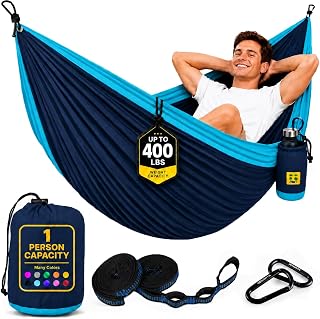
Generous fabric dimensions and a serious load rating make this the value workhorse for two-person lounging or one person with an underquilt and gear. The included hardware is adequate rather than impressive, so upgrading to steel carabiners is a five-minute, ten-dollar improvement.
SZHLUX Camping Hammock with 2 Tree Straps
The convertible single-or-double sizing plus attached carry bag makes this the easiest one to grab for a spontaneous afternoon at the beach or a backyard nap. The multi-loop straps are the standout inclusion at this price and hang straight without cinching down on bark.
Frequently Asked Questions
Can you actually sleep well in a hammock every night?
Yes, and many side sleepers report less back pain than on a mattress. The keys are a deep sag, a diagonal body position, and insulation underneath, since compressed fill loses all its loft.
Do I need an underquilt?
Below roughly 70°F, yes. A sleeping pad inside works as a budget substitute, but it shifts around; a DIY underquilt from a cheap synthetic throw and shock cord costs very little and transforms cold-weather comfort.
How far apart should my anchor points be?
Twelve to fifteen feet is ideal for most 10-foot hammocks. Wider spacing needs longer straps and a higher attachment point to preserve the sag.
Are hammock straps safe for trees?
Wide webbing straps spread pressure and won’t girdle bark. Rope and paracord will cut into the cambium, so avoid them for anything but a temporary rig on hardware anchors.
Final Thoughts
For a complete, weather-ready sleep setup, the 3-in-1 Camping Hammock Tent with net and rainfly is the most practical single purchase. Stubborn back sleepers should go straight to the Flat Lay model, and anyone building a long-term system around custom suspension will get the most mileage out of the ENO DoubleNest.