Key takeaways
- Waterproof vs. water-resistant: Coated polyester and poly tarps shed rain outright; shade cloth does not, no matter how dense the weave. Decide whether you want a dry space or a cool one, because very few covers give you both.
- Measure the frame, not the opening: Take your outside-to-outside beam dimensions, then subtract nothing. Covers are cut to nominal sizes and shrink slightly under tension, so a cover matching your frame footprint usually lands right. Buying long and folding the excess is safer than buying short.
- Drainage and pitch: Built-in drain holes only help if water can reach them. Plan at least a half-inch of drop per foot of run, or add a ridgeline cable or a length of PVC under the center to force a crown.
- Grommets and hems: Look for double-stitched hems with reinforced webbing and grommets every 18 to 24 inches. Wide-spaced grommets in a single-fold hem are where failures start. Bungee loops or spring-tensioned ties absorb gusts that rigid zip ties transmit straight into the fabric.
- Wind plan: Every cover is a sail. Choose one you can drop in ten minutes — tie straps or carabiners, not screws through the fabric — so you can pull it before a storm rather than replace it after.
What's inside
Rain is what separates a pergola cover that works from one you end up cutting down with a utility knife. Fabric that looked tight on a calm Saturday turns into a sagging bladder holding twenty gallons overhead, grommets tear out at the corner where all the load concentrates, and the first real gust folds the whole panel over the rafters. Add the cheap-hem problem — stitching that unravels after two seasons of UV — and most people replace their cover twice before they figure out what actually matters.
This guide is written from the ladder, not the catalog. We look at how each cover handles standing water, whether the grommet spacing lines up with typical rafter layouts, what hardware you’ll need to add, and how the material behaves once it’s under tension across a 10-foot span. Below you’ll find our current picks for 2026, a short buying checklist, and answers to the install questions that come up mid-project.
As an Amazon Associate we earn from qualifying purchases.



How to Choose a Waterproof Pergola Cover
- Waterproof vs. water-resistant: Coated polyester and poly tarps shed rain outright; shade cloth does not, no matter how dense the weave. Decide whether you want a dry space or a cool one, because very few covers give you both.
- Measure the frame, not the opening: Take your outside-to-outside beam dimensions, then subtract nothing. Covers are cut to nominal sizes and shrink slightly under tension, so a cover matching your frame footprint usually lands right. Buying long and folding the excess is safer than buying short.
- Drainage and pitch: Built-in drain holes only help if water can reach them. Plan at least a half-inch of drop per foot of run, or add a ridgeline cable or a length of PVC under the center to force a crown.
- Grommets and hems: Look for double-stitched hems with reinforced webbing and grommets every 18 to 24 inches. Wide-spaced grommets in a single-fold hem are where failures start. Bungee loops or spring-tensioned ties absorb gusts that rigid zip ties transmit straight into the fabric.
- Wind plan: Every cover is a sail. Choose one you can drop in ten minutes — tie straps or carabiners, not screws through the fabric — so you can pull it before a storm rather than replace it after.
The Best Waterproof Pergola Covers Reviewed
Alion Home Universal Replacement Canopy (20′ x 10′)
The most versatile pick here, and the one we’d reach for on a large frame: the 20-foot length lets you cover a two-bay pergola with a single panel and no leaky seam down the middle. The Muddy Water colorway hides pollen and leaf staining far better than light beige, which matters if you’re not planning to hose it down monthly.
17′ x 6.8′ Waterproof Pergola Canopy Replacement Cover, Dark Gray
This one is built the way a replacement cover should be — coated polyester with drainage holes already placed and adjustable tie straps that let you retension after the fabric relaxes in hot weather. The narrow 6.8-foot width suits pathway and lean-to style pergolas where a 10-foot panel would overhang awkwardly.
10′ x 20′ Heavy Duty Beige Canopy Top with Valance
A genuinely heavy top designed for event frames, which means thicker material and better corner reinforcement than most pergola-specific covers. The valance is the sleeper feature: it breaks up wind at the edge and directs runoff away from the posts instead of down them.
Xpose Safety Better Blue Poly Tarp (5′ x 7′)
Not a pergola cover, but a genuinely useful 5-mil companion for patching, covering a bar cart, or shielding a section of decking mid-project. Keep one folded in the shed — it costs less than a coffee run and saves a cushion set.
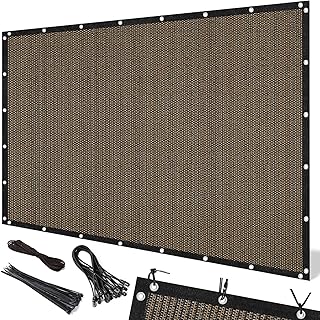
90% Sun Shade Cloth, 10′ x 12′ (Mocha)
The right answer when heat, not rain, is the real complaint. The grommeted edge and breathable knit let wind pass instead of fighting it, so it survives gusts that would tear a solid panel — just don’t expect it to keep you dry. The FAIR WIND 8′ x 12′ shade cloth is the better fit for narrower frames and uses noticeably improved grommets.
Frequently Asked Questions
Will a waterproof cover make my patio hotter?
Yes, somewhat. Solid coated fabric traps warm air underneath. Leave a few inches of gap at the ends of the frame so heat can escape, or run a solid panel over the seating area and shade cloth over the rest.
How do I stop water from pooling in the middle?
Create a pitch or a crown. The easiest fix is a taut cable or a PVC pipe run down the center under the fabric, which lifts the middle and sends water toward the edges. Retension the straps every few weeks during the first season.
Can I leave it up through winter?
Not recommended in snow country. Snow load on a horizontal panel can bend aluminum frames and split wood rafters. Take it down, dry it fully, and store it out of sunlight.
How do I attach a cover to a wooden pergola?
Use eye screws in the rafters paired with bungee balls or carabiners through the grommets. This gives the fabric a little movement in wind and lets you release the whole panel quickly without touching the hem.
Final Thoughts
For most frames, the Alion Home 20′ x 10′ replacement canopy is the practical default — full coverage, no center seam, forgiving color. If your pergola is narrower or you want drainage and tensioning handled out of the box, the 17′ x 6.8′ dark gray cover is the smarter buy. And if your real problem is afternoon sun rather than rain, save your money and hang the 90% shade cloth in Mocha instead.