Key takeaways
- Skip PVC and adhesive backings entirely: If the listing says vinyl, PVC, or “sticky,” walk away. Natural rubber and silicone are the two safe grip materials for laminate. A quick test on a hidden section under furniture will tell you within two weeks whether a pad is going to react.
- Match thickness to your door clearance: A quarter inch is the sweet spot for cushion without turning your rug into a trip hazard. Measure the gap under interior doors before you commit, since 3/8″ pads under a thick wool rug will scrape paint off the bottom edge.
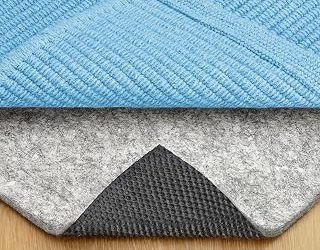
- Felt density beats felt thickness: Two pads can both claim 1/4″, but a 32-ounce recycled felt will still feel supportive after three years while a fluffy 16-ounce version compresses into a pancake. Squeeze a corner in your hand; if it collapses easily, it will collapse under a coffee table too.
- Pick your construction by rug weight: Heavy wool and hand-knotted rugs stay put with felt-only pads and gain cushion without extra grip. Lightweight cotton flatweaves, jute, and machine-made polypropylene need the rubber or silicone layer to keep corners from creeping.
- Cut it two inches shy on every side: Buy the next size up and trim with a fresh utility blade against a straightedge. Felt cuts cleanly, and a slightly undersized pad lets the rug edge taper to the floor instead of forming a ridge people catch their toes on.
What's inside
Laminate is a sandwich: a printed wear layer, a fiberboard core, and a backing, all clicked together and floating over an underlayment. That construction is exactly why the wrong rug pad causes trouble. Cheap PVC-coated mesh and plasticized foam can react with the acrylic topcoat, leaving a hazy yellow ghost of your rug outline that no amount of scrubbing removes. Then there’s the movement problem: laminate is slick, planks flex slightly underfoot, and a rug that shifts an inch with every pass grinds grit into the wear layer like fine sandpaper.
I’ve pulled up enough rugs in my own place to know which pads leave a mess behind and which come up clean. This guide covers what actually matters for laminate specifically, then walks through six pads worth your money, from dense felt-and-rubber hybrids to budget grippers that hold a runner in place without the chemical baggage.
As an Amazon Associate we earn from qualifying purchases.


How to Choose a Rug Pad For Laminate Floor (2026)
- Skip PVC and adhesive backings entirely: If the listing says vinyl, PVC, or “sticky,” walk away. Natural rubber and silicone are the two safe grip materials for laminate. A quick test on a hidden section under furniture will tell you within two weeks whether a pad is going to react.
- Match thickness to your door clearance: A quarter inch is the sweet spot for cushion without turning your rug into a trip hazard. Measure the gap under interior doors before you commit, since 3/8″ pads under a thick wool rug will scrape paint off the bottom edge.
- Felt density beats felt thickness: Two pads can both claim 1/4″, but a 32-ounce recycled felt will still feel supportive after three years while a fluffy 16-ounce version compresses into a pancake. Squeeze a corner in your hand; if it collapses easily, it will collapse under a coffee table too.
- Pick your construction by rug weight: Heavy wool and hand-knotted rugs stay put with felt-only pads and gain cushion without extra grip. Lightweight cotton flatweaves, jute, and machine-made polypropylene need the rubber or silicone layer to keep corners from creeping.
- Cut it two inches shy on every side: Buy the next size up and trim with a fresh utility blade against a straightedge. Felt cuts cleanly, and a slightly undersized pad lets the rug edge taper to the floor instead of forming a ridge people catch their toes on.
The Best Rug Pad For Laminate Floor (2026)s Reviewed
RUGPADUSA Dual Surface (8’x10′, 1/4″)
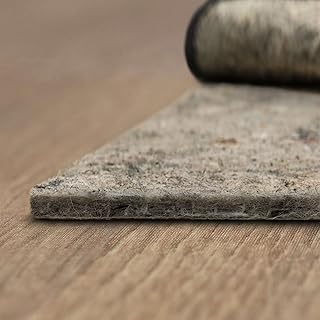
Dense recycled felt bonded to natural rubber, and the rubber is the real thing rather than a synthetic imitation, which is why it grips hard without off-gassing onto your topcoat. This is the pad I recommend when someone has an expensive rug on a floating floor and wants to install it once and forget it.
RUGPADUSA Basics (9’x12′, 1/4″)
Pure felt with no grip layer, built for heavy rugs that anchor themselves. It shines under a big living room piece where you want that underfoot give and a bit of sound deadening, though a lightweight rug will slide right across it.
Veken Non Slip Cushioned Rug Pad Gripper (8’x10′)
The silicone dot pattern grips laminate impressively for the price and stays chemically inert, so no discoloration risk. The felt layer is softer than the RUGPADUSA equivalent and will compress faster in high-traffic paths, but for bedrooms and guest rooms it earns its keep.
Mohawk Home Felt Rug Pad (9’x12′)
A straightforward felt-only underlay with respectable density and a genuinely comfortable feel underfoot. Best paired with rugs over about 40 pounds, or with a furniture layout that pins the corners down.
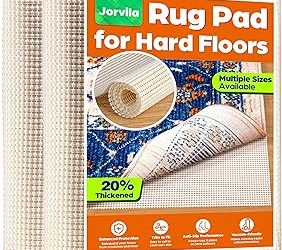
Jorvila Non-Slip Rug Pad Gripper (8’x10′)
A budget-friendly option that handles the main job of keeping lighter rugs in position without wandering. Cushion is thinner than the spec suggests once weight sits on it, so treat this as a grip solution rather than a comfort upgrade.
Frequently Asked Questions
Will a rubber rug pad stain my laminate?
Natural rubber is safe on cured laminate. What stains is PVC and plasticizer-laden vinyl, which migrates into the acrylic wear layer and yellows it permanently. Check the material listing, not the marketing language.
Do I need a pad if my rug already has a backing?
Yes, and arguably more so. Latex and rubber backings woven into rugs are usually the plasticized type, and putting felt between that backing and your laminate is cheap insurance.
Can I trim a felt and rubber pad myself?
Absolutely. Lay it rubber-side down, mark with chalk, and score along a metal straightedge with a sharp utility knife. Two or three passes beats one aggressive cut.
How often should I lift the rug and pad?
Every six months or so. Pull both up, vacuum the laminate, and check for grit trapped underneath. That habit does more for your floor’s lifespan than any product choice.
Final Thoughts
For most laminate installations the RUGPADUSA Dual Surface is the pick that solves both problems at once, with real rubber grip and enough felt to stay supportive for years. If your rug is heavy enough to hold its own, the RUGPADUSA Basics gives you cushion at a lower cost, and the Mohawk Home Non Slip dual-surface pad is a solid middle ground when you want grip and cushion without the premium price.