Key takeaways
- Match thickness to rug weight: Heavy wool and thick pile rugs sit fine on 1/4″ felt. Thin flatweaves and kilims need less loft or they’ll wrinkle — go 1/8″ to 1/4″. Save the 7/16″ and 1/2″ pads for rooms where underfoot comfort beats stability, like bedrooms.
- Know your backing chemistry: Natural rubber is safe on sealed hardwood. Cheap PVC and adhesive-backed vinyl can plasticize and leave a haze or sticky residue on polyurethane finishes. If a listing won’t name the material, treat that as a warning.
- Felt for protection, rubber for grip: Felt handles cushioning and abrasion defense but won’t stop movement on its own. Rubber grips but offers minimal padding. Dual-surface pads bond both, which is why they dominate the category.
- Trim smaller, not to size: Cut the pad about an inch shorter on each side so it disappears under the rug edge and doesn’t create a lip that catches feet or vacuum heads. Sharp utility knife, straightedge, single confident pass.
- Consider what’s under the rug: Radiant heat floors need thinner, more breathable pads. Rug-over-carpet needs a firm low-profile pad to stop the rug from creeping. Tile and LVP are the most forgiving surfaces.
What's inside
Pull back the corner of any area rug that’s been down a few years and you’ll find the evidence: a faint grid of discoloration, grit ground into the finish, maybe a rug backing that’s started fusing to the polyurethane. I’ve lifted enough rugs during floor refinishing jobs to know that the pad underneath is doing more structural work than the rug itself. It absorbs the compression from foot traffic, keeps abrasive dust from acting like sandpaper against your boards, and stops the whole assembly from skating sideways every time someone crosses the room in socks.
The trouble is that “rug pad” covers wildly different products. A 1/8″ foam gripper and a 7/16″ memory foam cushion solve entirely different problems, and buying the wrong one usually means either a rug that still slides or a rug that feels spongy and unstable underfoot. This guide breaks down what actually matters — thickness, material construction, floor compatibility, and how the pad interacts with rug weight — then walks through six options I’d genuinely recommend depending on your setup.
As an Amazon Associate we earn from qualifying purchases.


How to Choose a Rug Pad For Area Rug (2026)
- Match thickness to rug weight: Heavy wool and thick pile rugs sit fine on 1/4″ felt. Thin flatweaves and kilims need less loft or they’ll wrinkle — go 1/8″ to 1/4″. Save the 7/16″ and 1/2″ pads for rooms where underfoot comfort beats stability, like bedrooms.
- Know your backing chemistry: Natural rubber is safe on sealed hardwood. Cheap PVC and adhesive-backed vinyl can plasticize and leave a haze or sticky residue on polyurethane finishes. If a listing won’t name the material, treat that as a warning.
- Felt for protection, rubber for grip: Felt handles cushioning and abrasion defense but won’t stop movement on its own. Rubber grips but offers minimal padding. Dual-surface pads bond both, which is why they dominate the category.
- Trim smaller, not to size: Cut the pad about an inch shorter on each side so it disappears under the rug edge and doesn’t create a lip that catches feet or vacuum heads. Sharp utility knife, straightedge, single confident pass.
- Consider what’s under the rug: Radiant heat floors need thinner, more breathable pads. Rug-over-carpet needs a firm low-profile pad to stop the rug from creeping. Tile and LVP are the most forgiving surfaces.
The Best Rug Pad For Area Rug (2026)s Reviewed
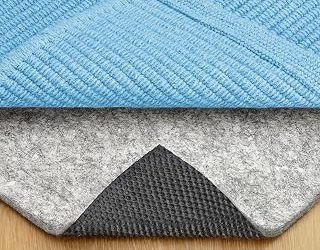
RUGPADUSA Dual Surface Felt + Rubber
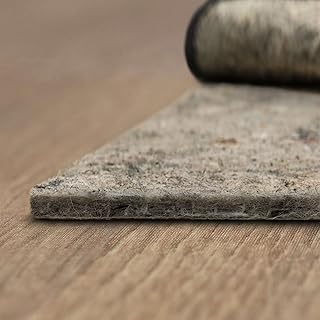
This is the pad I default to for living rooms and dining rooms — the recycled felt layer gives real cushioning while the natural rubber underside genuinely locks a rug in place on hardwood, tile, or vinyl. At 1/4″ it’s the sweet spot: enough body to protect the floor, thin enough that the rug edges still lie flat.
RUGPADUSA Basics 1/4″ Felt
Pure felt with no rubber, which makes it the right call under heavy rugs that already stay put or when you’re layering over wall-to-wall carpet. It’s also the safest bet for freshly refinished or oiled floors where you want zero chemistry touching the surface.
Mohawk Home Non Slip Felt + Latex Rubber
A solid mid-priced dual-surface option made domestically, with a latex rubber gripper that holds well without the premium price tag. The felt density runs slightly lower than RUGPADUSA’s, so it compresses a bit faster in high-traffic paths, but for bedrooms and secondary spaces it’s excellent value.
RUGPADUSA Cloud Comfort Memory Foam
At 7/16″ this one changes how a room feels — walking across a thin rug on this pad is closer to walking on carpet. The water-resistant barrier is a genuine advantage in kitchens or homes with pets, though the loft means thin rugs will show some movement at the edges.
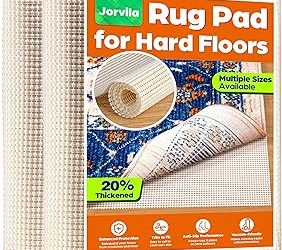
Jorvila Non-Slip Rug Pad Gripper
A budget-friendly grip-focused pad that does the one job it advertises: keeping rugs from sliding on hard floors. Cushioning is modest compared to felt-based options, but for renters or anyone solving a pure safety problem at 8×10, it’s a sensible buy.
Frequently Asked Questions
Will a rug pad damage my hardwood floors?
A quality natural rubber or felt pad won’t. Problems come from PVC-based and adhesive-backed pads, which can react with polyurethane over time and leave residue or discoloration. Also wait a full 30 days after any floor refinishing before laying anything down.
What size pad should I buy for an 8×10 rug?
Buy the 8×10 and trim roughly an inch off each dimension, so the pad ends about half an inch to an inch inside the rug perimeter. This keeps the pad invisible and prevents the edge from creating a trip point.
Can I use a rug pad on top of carpet?
Yes, and you should — rugs over carpet are the worst offenders for creeping and bunching. Use a firm, thin felt pad rather than anything soft or rubberized, since added squish makes the movement problem worse.
How often do rug pads need replacing?
Good felt and rubber pads run 8 to 10 years in normal use. Replace sooner if you notice permanent compression in traffic lanes, crumbling rubber, or the rug starting to slide again despite the pad being in place.
Final Thoughts
For most rooms, the RUGPADUSA Dual Surface strikes the best balance of grip, cushioning, and floor safety, and it’s the pad I’d install in my own house without hesitation. If your rug already stays put or sits over carpet, the RUGPADUSA Basics felt pad is the smarter and cheaper choice, and the Mohawk Home dual-surface pad covers the middle ground nicely if you’re outfitting several rooms at once.