Key takeaways
- Match the pad to your floor finish: Natural rubber and felt are safe bets on sealed hardwood. Avoid cheap PVC or adhesive-heavy backings, which can react with urethane and oil finishes over time and leave marks that show up only when you move the rug.
- Pick thickness by function, not feel: A 1/4″ pad adds real cushion and sound damping in living rooms and bedrooms. Under a dining table or a door swing, go thinner or you’ll fight chair legs and clearance issues forever.
- Understand dual-surface vs. gripper-only: Felt-plus-rubber pads grip the floor and stop the rug from creeping. Pads designed for carpet-over-carpet work differently, so check the product notes before layering.
- Plan to trim it yourself: Size the pad about an inch shorter than the rug on each side so it stays hidden. Felt cuts cleanly with a sharp utility knife and a straightedge; score, snap the fold, and finish the cut.
- Consider spills and pets: Waterproof or moisture-barrier pads keep accidents from reaching the subfloor. If you have dogs or toddlers, this feature earns its keep quickly.
What's inside
Anyone who has knelt on a hardwood floor at 7 a.m. trying to flatten a curled rug corner for the third week running knows the problem isn’t the rug. It’s what’s underneath it, or rather what isn’t. Rugs creep, bunch into ridges under chair legs, and slide half an inch every time someone pivots off the couch. Worse, the wrong backing can bond to a polyurethane finish and leave a hazy residue that no amount of buffing will lift. A rug pad is the least glamorous purchase in a room and the one that quietly determines whether the rug looks intentional or slapdash.
I’ve cut, trimmed, and stress-tested a fair number of pads across white oak, engineered plank, and tile, and the differences show up fast. This guide breaks down what actually matters in a pad, from thickness and grip material to how it behaves under a rolling office chair, then walks through the standouts for 2026 including full-coverage felt-and-rubber slabs and low-profile tape solutions for rugs that only misbehave at the edges.
As an Amazon Associate we earn from qualifying purchases.




How to Choose a/an Area Rug Pads (2026)
- Match the pad to your floor finish: Natural rubber and felt are safe bets on sealed hardwood. Avoid cheap PVC or adhesive-heavy backings, which can react with urethane and oil finishes over time and leave marks that show up only when you move the rug.
- Pick thickness by function, not feel: A 1/4″ pad adds real cushion and sound damping in living rooms and bedrooms. Under a dining table or a door swing, go thinner or you’ll fight chair legs and clearance issues forever.
- Understand dual-surface vs. gripper-only: Felt-plus-rubber pads grip the floor and stop the rug from creeping. Pads designed for carpet-over-carpet work differently, so check the product notes before layering.
- Plan to trim it yourself: Size the pad about an inch shorter than the rug on each side so it stays hidden. Felt cuts cleanly with a sharp utility knife and a straightedge; score, snap the fold, and finish the cut.
- Consider spills and pets: Waterproof or moisture-barrier pads keep accidents from reaching the subfloor. If you have dogs or toddlers, this feature earns its keep quickly.
The Best Area Rug Pads (2026)s Reviewed
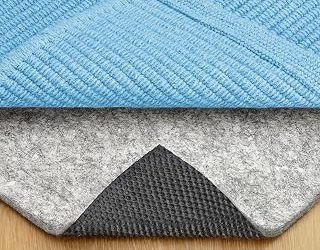
RUGPADUSA Dual Surface Felt + Rubber
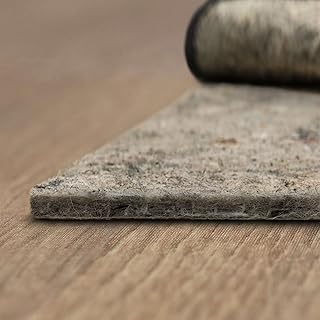
This is the benchmark pad, with a dense felt core bonded to natural rubber that holds position on sealed wood without adhesives or residue. At 1/4″ thick in an 8’x10′ cut, it gives noticeably better underfoot feel and cuts cleanly for custom sizing.
Mohawk Home Non Slip Rug Pad
A US-made felt and latex rubber pad that hits a strong balance of grip, cushion, and price. It performs reliably across hardwood, tile, and low-pile carpet, making it a smart choice if you rotate rugs between rooms.
Veken Cushioned Rug Pad Gripper
The silicone strip pattern on the underside grips well without the tackiness of solid rubber, so it lifts and repositions easily during cleaning. The felt top layer keeps mid-weight rugs from shifting and adds useful sound absorption on upper floors.
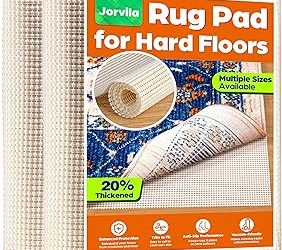
Jorvila Non-Slip Rug Pad Gripper
A thick, cushioned option built around comfort as much as anchoring, and it holds up well in high-traffic hallways and family rooms. Give it a day to relax flat after unrolling before you commit to trim lines.
Rabenda Rug Tape Gripper
When only the corners are the problem, a 12-piece set of reusable double-sided grippers solves it for a fraction of the cost of a full pad. They’re washable, reposition without pulling up finish, and work especially well on flat-woven and low-pile rugs.
Frequently Asked Questions
Will a rug pad damage my hardwood floors?
Quality felt and natural rubber pads are safe on cured, sealed floors. Problems come from PVC-based or heavily adhesive backings, particularly on newer finishes that haven’t fully cured, which can take up to 30 days.
What size pad should I buy for an 8×10 rug?
Buy the matching 8’x10′ pad and trim roughly an inch off each side. That keeps the pad invisible from above while still supporting the rug all the way to the edge.
Can I use rug tape instead of a full pad?
Tape grippers handle sliding and curling corners well, but they add no cushion, no sound damping, and no protection between rug and floor. Use tape for thin rugs and runners; use a full pad anywhere you want comfort.
How do I clean a rug pad?
Vacuum the felt side, then wipe the rubber side with a damp cloth and mild soap. Let it dry completely before putting the rug back down so moisture doesn’t sit against your floor.
Final Thoughts
For most rooms, the RUGPADUSA Dual Surface pad is the one worth paying for, with the Mohawk Home felt and latex pad close behind at a friendlier price and comparable grip. If your rug is thin and the only real issue is corners lifting, skip the full slab and start with the Rabenda tape grippers.