Key takeaways
- Measure the frame, not the box: A “9ft” umbrella is measured across the open span, but rib length varies by brand. Fold the umbrella closed and measure one rib from the hub to the tip, then count your ribs. Six-rib frames and eight-rib frames are not interchangeable, no matter how close the diameter is.
- Solution-dyed beats surface-dyed: In solution-dyed fabric the pigment goes into the fiber before it’s spun, so fading happens evenly and slowly. Surface-dyed polyester is pigment sitting on top of the yarn, and UV strips it in a season or two. If the listing doesn’t say, assume surface-dyed.
- Check the vent construction: A vented top lets hot air escape and gives gusts somewhere to go instead of inverting your canopy. Look for a vent that’s stitched as a separate flap with its own hem, not a slit cut into the main panel.
- Read the seams and the pockets: Double-stitched seams and reinforced rib pockets are where cheap tops fail first. Run your fingers inside each pocket when it arrives — you want a tight sleeve with a doubled tip, not a raw, single-layer corner.
- Know when to replace the whole umbrella: If the crank slips, a rib is bent, or the hub has cracked, a new canopy just puts fresh fabric on a failing skeleton. Budget for a complete unit instead.
What's inside
Nine times out of ten, the frame outlives the fabric. You pull the umbrella out of the garage in April, crank it open, and there it is: a canopy that started life as deep navy and now reads as dusty lavender, with a hairline split creeping out from one of the rib pockets. Meanwhile the pole is straight, the crank turns smooth, and the tilt mechanism still clicks. Tossing the whole thing feels wrong because it is wrong — you’re throwing away twenty pounds of perfectly good aluminum because of eight yards of tired polyester.
This guide is written for people who’d rather spend forty minutes with a rib pocket and a bit of patience than four hundred dollars on a new umbrella. I’ve covered how to read fabric specs that actually predict fade resistance, how to measure your frame so the replacement top doesn’t fight you during install, and where a full replacement umbrella makes more sense than a canopy swap. Below are the tops and umbrellas worth your money in 2026.
As an Amazon Associate we earn from qualifying purchases.


How to Choose a Patio Umbrella Fabric (2026)
- Measure the frame, not the box: A “9ft” umbrella is measured across the open span, but rib length varies by brand. Fold the umbrella closed and measure one rib from the hub to the tip, then count your ribs. Six-rib frames and eight-rib frames are not interchangeable, no matter how close the diameter is.
- Solution-dyed beats surface-dyed: In solution-dyed fabric the pigment goes into the fiber before it’s spun, so fading happens evenly and slowly. Surface-dyed polyester is pigment sitting on top of the yarn, and UV strips it in a season or two. If the listing doesn’t say, assume surface-dyed.
- Check the vent construction: A vented top lets hot air escape and gives gusts somewhere to go instead of inverting your canopy. Look for a vent that’s stitched as a separate flap with its own hem, not a slit cut into the main panel.
- Read the seams and the pockets: Double-stitched seams and reinforced rib pockets are where cheap tops fail first. Run your fingers inside each pocket when it arrives — you want a tight sleeve with a doubled tip, not a raw, single-layer corner.
- Know when to replace the whole umbrella: If the crank slips, a rib is bent, or the hub has cracked, a new canopy just puts fresh fabric on a failing skeleton. Budget for a complete unit instead.
The Best Patio Umbrella Fabrics (2026) Reviewed
9ft Patio Umbrella Replacement Canopy for 8 Ribs (Canopy Only)
This is the straightforward, no-drama swap for a standard eight-rib market frame — clean hems, honest sizing, and rib pockets that slide on without a wrestling match. It’s the one I’d hand to someone doing their first canopy replacement, because the tolerances are forgiving enough that a slightly off measurement won’t ruin the afternoon.
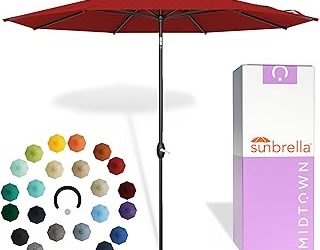
EliteShade USA 10-Year Non-Fading 9Ft Market Umbrella
When the frame is the problem, this is the full replacement to buy: commercial-grade fabric with UPF 50+, a proper vented top, and a crank-and-tilt mechanism that feels machined rather than stamped. The ten-year fade rating is the closest thing to a real warranty in this category, and the Heather Beige holds its tone far better than any big-box polyester I’ve tested.
9ft Vented Replacement Canopy, UPF 50+
The vented flap on this top is properly built — separate panel, own hem, generous overlap — which makes a genuine difference on breezy afternoons when a solid canopy would be trying to become a sail. UPF 50+ and fade-resistant treatment put it a clear step above bargain-bin tops at a similar price.
Sunnyglade 9ft Replacement Canopy, 8 Ribs
Sunnyglade is the value play: the fabric is thinner than the EliteShade, but the cut is accurate and the stitching is tidy, so it goes on cleanly and looks sharp for two or three seasons. A sensible choice for a covered porch or a shaded corner where the canopy isn’t taking full midday sun.
EliteShade USA 9ft Replacement Cover, 8 Ribs (Beige)
Same fabric philosophy as EliteShade’s complete umbrella, sold as a canopy only — which makes it the smartest upgrade path if you own a solid frame and want fabric that won’t need replacing again in eighteen months. It’s a firmer, heavier weave, so give yourself a few extra minutes seating the last two rib pockets.
Frequently Asked Questions
How do I install a replacement canopy without bending a rib?
Open the frame most of the way but not fully, drape the top over it, and seat the pockets on opposite ribs first — one, then the one across from it — working around the circle. Fully cranking the frame open before the last pockets are on is what bends ribs.
Will an eight-rib canopy fit a six-rib frame?
No. The panel geometry is different, and you’ll end up with sagging fabric between ribs and stress concentrated on the pockets. Count ribs before ordering, every time.
How long should patio umbrella fabric actually last?
Budget polyester gives you one to three seasons in direct sun. Solution-dyed performance fabric with a real UV rating should run five to ten years, especially if you close it when it’s not shading anyone.
Can I wash a faded canopy back to life?
You can remove mildew and grime with mild soap, a soft brush, and cold water, and it’ll look dramatically better. You cannot restore lost pigment — once the color has gone chalky, the fibers themselves have been bleached.
Final Thoughts
If your frame is sound, the EliteShade USA 9ft Replacement Cover is the fabric that ends the yearly replacement cycle, with the 9ft Vented UPF 50+ Canopy as a strong mid-priced alternative when you want better airflow for a windy deck. And if the crank or ribs are shot, skip the patch job and go with the EliteShade USA 10-Year Non-Fading 9Ft Market Umbrella — it’s the one that’ll still be standing when the rest of your patio set needs replacing.