Key takeaways
- Glass tube material: Borosilicate is the benchmark — it handles rapid temperature swings without stress cracking. Cheaper units use unspecified tempered glass, which survives fine until a cold rain hits a hot column. If a listing names the glass type, that’s usually a sign the manufacturer sourced it deliberately.
- Burn chamber wall thickness: Thin single-wall steel glows, then warps, then leaks draft. Look for double-wall or heavy-gauge stainless construction around the combustion zone. Warping is the most common reason these heaters stop drafting properly after a season.
- Adjustable air inlet: A fixed inlet gives you one burn rate whether it’s dead calm or gusting. An adjustable damper lets you throttle the draft, which changes both heat output and burn duration — the difference between 90 minutes and three hours on one fill.
- Ash management: A removable ash tray turns cleanup into a 30-second task. Without one, you’re tipping a hot 50-pound tube over a bucket, which is both awkward and a good way to scratch the glass.
- Mobility and rain protection: Lockable caster wheels matter more than plain wheels — you want the heater to stay put on a sloped patio. A stainless rain cap lets you leave the unit outdoors between uses without water pooling in the burn chamber and turning leftover ash into concrete.
What's inside
Anyone who has spent an October evening fussing with a propane patio heater knows the routine: swap the tank, chase down a spark igniter that won’t catch, then watch the flame die because the regulator iced over. Pellet heaters sidestep most of that. Pour in a couple of pounds of hardwood pellets, light the top, and the fuel column burns down in a controlled draft — no hoses, no fittings, no seasonal tank hunt. From a builder’s perspective, the appeal is the simplicity: a double-wall steel tube, an air inlet, and a glass column doing the work of a system with a dozen failure points.
The tradeoff is that pellet heaters are less forgiving of a bad design. Draft geometry, wall thickness, and glass quality separate the units that burn clean for three hours from the ones that smoke, warp, and crack their tube in a single season. This guide sorts through the current crop of pellet patio heaters, flags the construction details worth paying for, and covers the practical stuff nobody mentions in the listing photos — ash cleanout, rain protection, and whether you can actually roll the thing across a lawn.
As an Amazon Associate we earn from qualifying purchases.




How to Choose a Pellet Patio Heater (2026)
- Glass tube material: Borosilicate is the benchmark — it handles rapid temperature swings without stress cracking. Cheaper units use unspecified tempered glass, which survives fine until a cold rain hits a hot column. If a listing names the glass type, that’s usually a sign the manufacturer sourced it deliberately.
- Burn chamber wall thickness: Thin single-wall steel glows, then warps, then leaks draft. Look for double-wall or heavy-gauge stainless construction around the combustion zone. Warping is the most common reason these heaters stop drafting properly after a season.
- Adjustable air inlet: A fixed inlet gives you one burn rate whether it’s dead calm or gusting. An adjustable damper lets you throttle the draft, which changes both heat output and burn duration — the difference between 90 minutes and three hours on one fill.
- Ash management: A removable ash tray turns cleanup into a 30-second task. Without one, you’re tipping a hot 50-pound tube over a bucket, which is both awkward and a good way to scratch the glass.
- Mobility and rain protection: Lockable caster wheels matter more than plain wheels — you want the heater to stay put on a sloped patio. A stainless rain cap lets you leave the unit outdoors between uses without water pooling in the burn chamber and turning leftover ash into concrete.
The Best Pellet Patio Heaters (2026) Reviewed
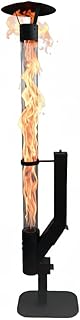
70″ Pellet Patio Heater with Glass Tube Flame
At 70 inches this is the tallest option here, and the extra height genuinely improves the draft — the taller the column, the stronger the chimney effect pulling air through the pellet bed. It doubles as a rocket stove, which makes it the most versatile pick if you want a heater that can also boil water on a camping trip.
70,000 BTU Pellet Patio Heater with Viewing Window
The heavy-hitter of the group and the one I’d point commercial buyers toward — restaurant patios, workshop doorways, anywhere you need output rather than ambiance. It’s a viewing-window design rather than a full glass column, which means less glass to worry about and a more industrial look.
BPS 56″ Smokeless Pellet Heater
The 56-inch height is a sensible middle ground for covered porches where a 70-inch tube feels cramped under a roofline. The included rain cap is the detail I’d highlight — it means you can stage the heater outdoors permanently instead of hauling it into the garage after every use.
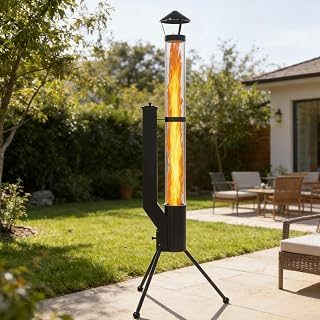
64.5″ Pellet Torch Heater with Ash Tray
A clean, straightforward torch-style build with the ash tray that makes maintenance painless. The full glass tube gives you the wraparound flame view that’s the main reason people choose pellet over propane in the first place.
64″ Pellet Heater with Stainless Rain Cap
This one has the best feature stack for regular use: lockable casters, a carry handle, an ash tray, and an adjustable air inlet all in one unit. If you plan to move the heater between a deck and a fire-pit area through the season, the mobility hardware earns its keep.
Frequently Asked Questions
How many pellets does one burn use?
Most 60-to-70-inch units take roughly 4 to 6 pounds per fill and run 1.5 to 3 hours depending on how open the air inlet is. A 40-pound bag of hardwood grill pellets covers most of a season of weekend use.
Are pellet patio heaters actually smokeless?
They’re low-smoke, not zero-smoke. You’ll get a minute or two of visible smoke at startup before the draft establishes, then it burns clean. Damp pellets are the usual culprit when smoking continues — store your bag sealed and off a concrete floor.
Can I use these under a covered patio?
Only with generous clearance. These vent hot exhaust straight up, and manufacturers typically specify several feet of vertical clearance to combustibles. An open-sided pergola with a high roof is usually fine; a low soffit is not.
How much heat do they actually throw?
Radiant heat from the glass column is effective in roughly a 6-to-10-foot radius, similar to a small fire pit. They warm people, not air, so seating placement matters more than raw BTU numbers.
Final Thoughts
For most backyards, the 64″ model with the stainless rain cap is the smartest buy — the lockable casters, ash tray, and adjustable inlet cover every practical annoyance these heaters have. Go with the 70″ glass tube unit if you want maximum flame drama and rocket-stove versatility, or the 70,000 BTU model if you’re heating a commercial patio and need output over aesthetics.