Key takeaways
- Under 75 sq ft (small balcony, gazebo corner): 20–30 inches, like the addlon 20″ caged plug-in fan
- 75–150 sq ft (typical porch): 44–52 inches, the WINGBO 48″ or 52″ wood-blade fan range
- 150–350 sq ft (large deck, outdoor kitchen): 56–65 inches, where the Ohniyou 60″ and 65″ smart fan land
- 350+ sq ft or open garage bays: 72 inches, such as the Minislak 72″ with 8 aluminum blades
What's inside
Anyone who has wired a fan into a screened porch box knows the job is half electrical work and half weather-proofing. Outdoor ceiling fans live in an environment that indoor models simply cannot survive: swings in humidity, wind-driven rain, salt haze near the coast, and pollen that cakes onto every blade edge. Pick the wrong one and you will be back on the ladder in eighteen months chasing a wobble, a seized bearing, or a motor housing weeping rust down your ceiling boards.
This guide walks through what actually separates a durable outdoor fan from a repainted indoor one — UL wet versus damp listings, blade materials, DC motor behavior, and the mounting hardware most people overlook until the box is already open. You will also get real numbers to shop by, a short list of installation moves that keep the fan quiet for years, and a few models worth considering across different porch sizes and budgets.
Our recommended picks:
As an Amazon Associate we earn from qualifying purchases.




Start With The Listing: Wet, Damp, Or Neither
Every outdoor-rated fan carries a UL listing stamped on the motor housing or spec sheet, and it dictates where the fan can legally and safely go. A wet-rated fan can take direct rain — pergolas, open decks, uncovered patios. A damp-rated fan handles humidity and blowing mist but needs a roof above it, meaning covered porches, carports, and three-season rooms. Nothing else belongs outside, no matter how rugged the finish looks. If you have an exposed installation, the WINGBO 48″ wet rated fan with sealed ABS blades is the category to shop; for a covered porch, damp-rated options like the 65″ outdoor black fan with light or the 52″ solid wood fan in dark walnut open up more style choices.
Size The Blade Span To The Space, Not The Ceiling
Blade span drives air movement more than motor wattage does. Measure your covered area and match it:
- Under 75 sq ft (small balcony, gazebo corner): 20–30 inches, like the addlon 20″ caged plug-in fan
- 75–150 sq ft (typical porch): 44–52 inches, the WINGBO 48″ or 52″ wood-blade fan range
- 150–350 sq ft (large deck, outdoor kitchen): 56–65 inches, where the Ohniyou 60″ and 65″ smart fan land
- 350+ sq ft or open garage bays: 72 inches, such as the Minislak 72″ with 8 aluminum blades
Then check CFM. Anything above roughly 5,500 CFM moves serious air; the Ohniyou’s 6,800 CFM rating is the kind of figure that makes a humid August evening tolerable.
Why DC Motors Win Outdoors
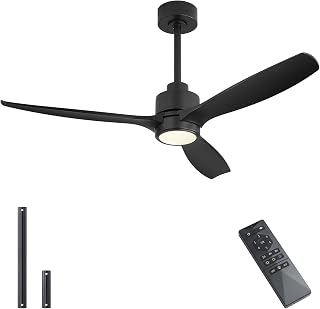
Brushless DC (BLDC) motors draw less current, run cooler, and hold low speeds without the hum you get from a cheap AC motor on a capacitor-based control. Cooler running matters outside because heat plus humidity is what kills windings. DC models also give you six speeds instead of three, a real reversing switch on the remote rather than a slider you can’t reach, and low-speed settings quiet enough to talk over — the 35dB figure on the Ohniyou is representative of what a good DC unit can do. Every fan on this list uses a DC motor, which is now the default worth insisting on.
Mounting Hardware Is Where DIY Installs Go Wrong
A standard plastic ceiling box will not hold a fan. You need a metal, fan-rated box marked for at least 35 lbs (70 lbs if the fan will be paddle-mounted with no support), anchored to a brace bar or blocking between joists. On a sloped porch ceiling, confirm the canopy’s maximum degree rating and order a slope adapter if you exceed it. Downrod length also matters: aim for blades 8–9 feet off the finished floor, which usually means a 6–12 inch downrod on a 9-foot ceiling. Renters or anyone without a box overhead should look at the addlon 20″ plug-in caged fan — it hangs from a hook and plugs into a GFCI outlet, no wiring required.
Controls, Lights, And Long-Term Serviceability
Remote-only fans are common outdoors because wall switches invite water into the box. That is fine, but keep a spare remote or choose app control as a backup — the Minislak 72″ and 65″ smart fan both cover this, the latter adding Alexa integration. On lighting, integrated LED panels rarely have replaceable bulbs, so favor fans with 3CCT selectable color temperature and dimming so you can tune output instead of replacing the fixture. If you already have porch lighting, a no-light fan is the cleaner, more reliable choice.
Tips
- Torque every blade bolt in a star pattern and re-check them after the first week of running — most wobbles trace back to uneven blade seating, not a bad motor.
- Run a bead of clear silicone around the top of the canopy where it meets a wood ceiling to stop capillary water from tracking into the box.
- Hose the blades down twice a season. Pollen and dust build unevenly and create imbalance that stresses the bearing.
- Set the fan to reverse (clockwise) at low speed in cooler months to push trapped warm air back down under a covered porch roof.
Frequently Asked Questions
Can I use an indoor ceiling fan on a covered porch?
No. Indoor fans use particleboard or plywood-laminate blades that swell and delaminate in humidity, and their motor housings lack sealed gaskets. Even fully sheltered, you will see warping within a season or two.
How much airflow do I actually need?
For a covered patio you want at least 4,000 CFM to feel a genuine breeze, and 6,000+ if the space is open on multiple sides where air escapes. Larger, slower-turning blades deliver that more quietly than small blades spun fast.
Do outdoor fans keep mosquitoes away?
Somewhat. Sustained airflow above roughly 4 mph disrupts their flight and disperses the carbon dioxide plume they track, which is one more argument for sizing up rather than down.
Are wood blades a bad idea outside?
Solid wood, properly sealed, holds up well on a covered porch — that is different from the engineered blades on indoor fans. The 52″ damp-rated wood model is built for it; just keep it out of direct rain.
Conclusion
Match the listing to your exposure, size the span to your square footage, insist on a DC motor, and put the same care into the mounting box that you put into choosing the fan. Do those four things and almost any well-built outdoor fan — whether that is a compact plug-in caged unit over a gazebo table or a 72-inch aluminum-blade workhorse spanning an open garage — will run quietly through many summers without a second trip up the ladder.