Key takeaways
- Roof construction: A galvanized steel double roof with a vent gap between layers pulls heat and smoke up and out instead of trapping it against the underside. Single-skin polycarbonate looks fine in photos but yellows and softens over a hot grill.
- Footprint versus grill count: A 6×8 handles one full-size cart grill with room to move. If you’re running a kettle plus a pellet smoker, size up to a 6×12 or 6×13 — the MUPATER and similar long-format frames are built for exactly that two-appliance layout.
- Frame material and maintenance: Powder-coated aluminum is essentially set-and-forget and won’t rust at the fasteners. Cedar looks better and feels substantial but wants a coat of penetrating oil every couple of seasons, especially on the end grain at the post bases.
- Electrical done right: Built-in outlets and USB strips save you from running an extension cord across a walkway. Check that the run is GFCI-protected at the source and that the strip is rated for outdoor use — not just weather-resistant plastic over an indoor part.
- Anchoring and snow load: Look for post plates with at least four bolt holes and a stated wind or snow rating. Concrete wedge anchors into a slab take twenty minutes and are the single biggest upgrade to stability on any of these kits.
What's inside
Anyone who has wheeled a grill out from under a dripping eave in November knows the real problem isn’t the rain — it’s the compromise. You either cook exposed and let the weather dictate the menu, or you push the grill under a porch roof it was never rated for. A pop-up canopy melts. A patio umbrella cooks itself. What a grill station actually needs is a hard roof with vented clearance above the firebox, posts anchored into something solid, and enough counter surface that you’re not balancing a platter of raw chicken on the lid.
This guide covers six purpose-built grill gazebos worth your weekend and your concrete anchors. I’ve weighted the picks toward build quality you can verify by hand — post thickness, roof gauge, how the shelves attach — plus the practical stuff nobody mentions until assembly day: whether the hardware is metric or SAE, how many people you need to lift the roof panels, and whether the electrical is genuinely useful or a token USB port. Footprint, material, and grill capacity all get called out so you can match the structure to the pad you already have.
As an Amazon Associate we earn from qualifying purchases.



How to Choose a Grill Gazebo (2026)
- Roof construction: A galvanized steel double roof with a vent gap between layers pulls heat and smoke up and out instead of trapping it against the underside. Single-skin polycarbonate looks fine in photos but yellows and softens over a hot grill.
- Footprint versus grill count: A 6×8 handles one full-size cart grill with room to move. If you’re running a kettle plus a pellet smoker, size up to a 6×12 or 6×13 — the MUPATER and similar long-format frames are built for exactly that two-appliance layout.
- Frame material and maintenance: Powder-coated aluminum is essentially set-and-forget and won’t rust at the fasteners. Cedar looks better and feels substantial but wants a coat of penetrating oil every couple of seasons, especially on the end grain at the post bases.
- Electrical done right: Built-in outlets and USB strips save you from running an extension cord across a walkway. Check that the run is GFCI-protected at the source and that the strip is rated for outdoor use — not just weather-resistant plastic over an indoor part.
- Anchoring and snow load: Look for post plates with at least four bolt holes and a stated wind or snow rating. Concrete wedge anchors into a slab take twenty minutes and are the single biggest upgrade to stability on any of these kits.
The Best Grill Gazebos (2026) Reviewed
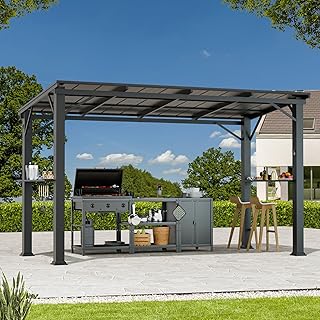
Modern Shade Aluminum Grill Gazebo 6×8
The extra-wide column design gives you a genuinely rigid frame before you’ve even anchored it, and the galvanized steel double roof handles heat better than any single-layer panel I’ve worked under. Aluminum means zero rust maintenance at the joints, which is why this is my default recommendation for coastal and high-humidity yards.
Sunjoy Wooden Grill Gazebo 8 x 12 ft.
The most substantial pick here — a cedar-framed structure on a steel hardtop with real built-in outlets, sized for a full cook station rather than a single grill. Budget a second pair of hands and a full day; the decorative fence panels are the fiddly part, not the roof.
Backyard Discovery Saxony XL 12′ x 6′
Backyard Discovery’s engineering shows in the details that matter: stated wind resistance, dedicated snow support bracing, and bar tops that are actually deep enough to plate on. The cedar arrives pre-stained and the hardware is well-labeled, which makes this the smoothest build of the group.
MUPATER 6 x 13 FT Wooden Grill Gazebo
Purpose-built for two full-size grills, with a sloping metal roof that sheds water and snow instead of pooling it. If you run a gas grill alongside a smoker, this is the layout that stops you from playing musical appliances every cookout.
Grill Gazebo 6’x12′ with Side Shelf
A well-judged middle option: rustproof steel frame, generous side shelf, and the small conveniences — bottle opener, tool hooks — mounted where you’d actually put them. Good value for a long footprint without stepping up to cedar prices.
Frequently Asked Questions
Is it safe to grill under a gazebo?
With a hardtop rated for it, yes — the vented double-roof designs here are built for open flame beneath. Keep at least the manufacturer’s stated clearance above the grill lid, never grill under fabric or a solid unvented roof, and don’t enclose more than two sides.
Do I need to anchor it to concrete?
Strongly recommended. Every one of these kits ships with post plates, and wedge anchors into a slab or ground screws into compacted soil are what keep the structure put in a summer squall.
How long does assembly take?
Plan on four to eight hours with two people, longer for the 12-foot cedar builds. Lay out and sort all hardware first, dry-fit the frame before torquing anything down, and save roof panels for a windless morning.
Cedar or aluminum?
Aluminum if you want to build it once and forget it. Cedar if you want the structure to read as part of the house — just commit to re-oiling it every other season.
Final Thoughts
For most yards, the Modern Shade Aluminum 6×8 is the smart buy — maintenance-free, genuinely stiff, and sized for a single grill with elbow room. Step up to the Backyard Discovery Saxony XL if you want engineered snow and wind bracing plus real bar-top workspace, or the MUPATER 6 x 13 if you’re covering two grills and want every inch of that length working for you.