Key takeaways
- Fabric and fade rating: Saturated colors punish cheap polyester. Look for UPF 50+ ratings and explicit fade warranties measured in years, since dyed-then-woven fabric holds pigment far better than surface-printed canopies. Reds and yellows fade fastest, so pay the premium there.
- Rib count and material: Eight ribs distribute wind load better than six, and fiberglass or reinforced steel ribs flex instead of snapping. Open the umbrella fully and watch how the ribs seat into the hub, since sloppy tolerances there are where failures start.
- Pole diameter and base math: Most tables accept a 1.5-inch pole; measure yours before ordering. A 9-foot canopy on a table needs at least 50 pounds of base weight, and freestanding setups want 75 pounds or more, which is easy to solve with a sand-fillable base or a poured concrete plug in a planter.
- Tilt and crank mechanism: Push-button collar tilt is simpler and lasts longer than auto-tilt cranks with extra linkage. Give the crank a full cycle on arrival and listen for grinding, since a rough gearbox rarely improves with use.
- Vent construction: A vented top lets pressure escape instead of turning the canopy into a sail. Check that the vent flap is stitched down at the top edge rather than left loose, which is the difference between a real vent and a decorative one.
What's inside
Color is the first thing that goes wrong on a patio umbrella and the last thing anyone thinks about at checkout. You pick a bold canopy in a photo lit like a resort, it shows up three shades off, and by the second August it has faded to a chalky version of itself while the ribs squeak every time the wind shifts. Anyone who has spent a weekend leveling pavers or building a table from cedar knows the frustration: the umbrella is the cheapest part of the setup and the part that dates the whole thing fastest.
This guide comes from the perspective of someone who takes things apart. I care about what the rib hinges are made of, whether the crank gearbox is serviceable, how the canopy seams are stitched, and whether the pole diameter actually matches the hole in a standard table. Below are six colorful patio umbrellas worth your money in 2026, plus a buying checklist that focuses on the details you can verify yourself before the first storm rolls through.
As an Amazon Associate we earn from qualifying purchases.



How to Choose a Color Patio Umbrella (2026)
- Fabric and fade rating: Saturated colors punish cheap polyester. Look for UPF 50+ ratings and explicit fade warranties measured in years, since dyed-then-woven fabric holds pigment far better than surface-printed canopies. Reds and yellows fade fastest, so pay the premium there.
- Rib count and material: Eight ribs distribute wind load better than six, and fiberglass or reinforced steel ribs flex instead of snapping. Open the umbrella fully and watch how the ribs seat into the hub, since sloppy tolerances there are where failures start.
- Pole diameter and base math: Most tables accept a 1.5-inch pole; measure yours before ordering. A 9-foot canopy on a table needs at least 50 pounds of base weight, and freestanding setups want 75 pounds or more, which is easy to solve with a sand-fillable base or a poured concrete plug in a planter.
- Tilt and crank mechanism: Push-button collar tilt is simpler and lasts longer than auto-tilt cranks with extra linkage. Give the crank a full cycle on arrival and listen for grinding, since a rough gearbox rarely improves with use.
- Vent construction: A vented top lets pressure escape instead of turning the canopy into a sail. Check that the vent flap is stitched down at the top edge rather than left loose, which is the difference between a real vent and a decorative one.
The Best Color Patio Umbrella (2026)s Reviewed
JEAREY 9FT Patio Umbrella, Peacock Blue
The peacock blue reads as a genuine saturated teal rather than the washed navy you often get, and the eight-rib frame with waterproof canopy handles a breezy afternoon without the ribs rattling. Push-button tilt plus crank means fewer moving parts to fail, which makes this the safest all-around pick for a standard six-seat table.
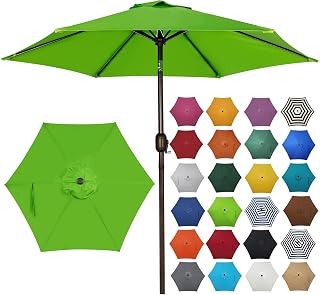
7.5 ft Market Umbrella, Lime
The 7.5-foot span is the right call for bistro tables and tight balconies where a 9-footer overhangs the railing and catches wind it has no business catching. The lime canopy is loud in the best way and pairs unexpectedly well with weathered gray decking or raw cedar.
AMMSUN 7ft Fringe Umbrella, Wave Colorful
Tassel trim on a steel pole with UPF 50+ fabric gives you a vintage seaside look without the boutique price, and the multi-color wave pattern hides dust and pollen better than any solid canopy. The fringe does need a quick shake-out after rain, so treat it as a fair-weather statement piece rather than a leave-it-up-all-season umbrella.
EliteShade USA 9ft 3-Tier, Sunflower Yellow
This is the one I would spend real money on. The 10-year non-fading claim on a yellow canopy is a serious commitment, and the three-tier commercial-grade construction with layered ventilation genuinely reduces the lift you feel in gusts.
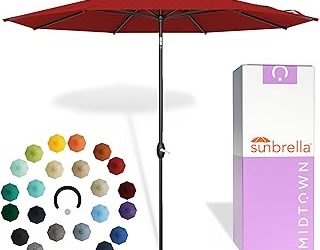
Sunnyglade 9′ Patio Umbrella, Red
An aluminum pole means no rust bleeding down onto light-colored stone, and the eight-rib waterproof polyester canopy in red is a clean, classic look for pool decks. Expect some mellowing of the red over a few seasons; the tradeoff is a price point that lets you rotate colors.
Frequently Asked Questions
Which umbrella colors fade the slowest?
Blues, greens, and grays hold up best because their pigments are more UV-stable. Reds, oranges, and bright yellows fade fastest, so buy those only when the manufacturer backs the fabric with a multi-year non-fading guarantee.
Can I replace just the canopy later?
Often yes, if the frame uses standard rib counts and lengths. Measure rib length and count before ordering a replacement top, and keep the original hardware since hub screws are rarely included with aftermarket canopies.
Do I need a base if the umbrella goes through a table?
Yes. The table hole only guides the pole; the base carries the load. Skipping it is the single most common cause of a broken pole and a cracked tabletop.
How do I keep the color looking new?
Close and cover it when not in use, rinse pollen off with plain water before it sets, and never pressure wash the canopy. Storing it dry over winter prevents both mildew staining and mechanism corrosion.
Final Thoughts
If you want one umbrella that still looks right in 2030, the EliteShade sunflower yellow earns its price through fabric quality and real ventilation. For a balanced everyday choice, the JEAREY peacock blue is hard to beat, and the AMMSUN fringe umbrella is the pick when you want your patio to have a personality rather than just shade.