Key takeaways
- Rib material and count: Eight ribs distribute canopy tension better than six, but material matters more than the number. Fiberglass ribs bend and snap back in gusts; steel ribs take a permanent set once they kink. If your yard catches wind off open ground, pay the small premium for fiberglass.
- Pole diameter and table fit: Most budget poles measure 1.5 inches, which slips through standard 2-inch table holes with a shim. Measure your table opening before ordering, and keep a strip of closed-cell foam or a hardware-store reducer ring on hand to kill the wobble.
- Crank mechanism quality: Turn the handle slowly on the first open and listen. A healthy crank pulls smoothly with even resistance. Clicking or sudden slack usually means the pulley cord jumped its groove, which you can often reseat yourself before the umbrella ever sees weather.
- Canopy weight and vent: Look for 180g polyester or heavier with UV50+ treatment. A wind vent at the crown lets pressure escape instead of lifting the whole canopy, and it drops the temperature underneath noticeably on still afternoons.
- Base weight, bought separately: Almost none of these include a base. Plan on 30 to 40 pounds when the pole runs through a table, and 50 pounds or more for freestanding use. Underweighting the base is the single most common reason budget umbrellas fail.
What's inside
Shopping for a patio umbrella turns confusing fast. Nearly every listing in the budget tier looks identical from the thumbnail: 9 feet across, eight ribs, a crank on the pole, a tilt button near the top. Then you get one home, thread the pole through your table, and discover the ribs flex like fishing rods, the canopy sits an inch too low over your head, or the crank grinds because the internal pulley cord was routed sloppily at the factory. The difference between a $60 umbrella that survives three summers and one that folds in a July thunderstorm comes down to details you can’t see in photos.
I’ve assembled and re-assembled enough of these to know which specs actually matter and which are marketing filler. This guide covers six affordable market umbrellas worth considering in 2026, what to inspect the moment you unbox one, and the small setup habits that add years to a cheap frame. Everything here sits in the value bracket, so expect steel or fiberglass rather than teak and marine-grade acrylic.
As an Amazon Associate we earn from qualifying purchases.


How to Choose a Patio Umbrella Best Price (2026)
- Rib material and count: Eight ribs distribute canopy tension better than six, but material matters more than the number. Fiberglass ribs bend and snap back in gusts; steel ribs take a permanent set once they kink. If your yard catches wind off open ground, pay the small premium for fiberglass.
- Pole diameter and table fit: Most budget poles measure 1.5 inches, which slips through standard 2-inch table holes with a shim. Measure your table opening before ordering, and keep a strip of closed-cell foam or a hardware-store reducer ring on hand to kill the wobble.
- Crank mechanism quality: Turn the handle slowly on the first open and listen. A healthy crank pulls smoothly with even resistance. Clicking or sudden slack usually means the pulley cord jumped its groove, which you can often reseat yourself before the umbrella ever sees weather.
- Canopy weight and vent: Look for 180g polyester or heavier with UV50+ treatment. A wind vent at the crown lets pressure escape instead of lifting the whole canopy, and it drops the temperature underneath noticeably on still afternoons.
- Base weight, bought separately: Almost none of these include a base. Plan on 30 to 40 pounds when the pole runs through a table, and 50 pounds or more for freestanding use. Underweighting the base is the single most common reason budget umbrellas fail.
The Best Patio Umbrella Best Price (2026)s Reviewed
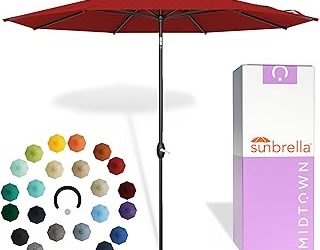
9′ Outdoor Patio Umbrella with 8 Sturdy Ribs
This is the baseline workhorse of the category: eight ribs, push-button tilt, hand crank, and a canopy sized right for a six-seat round table. Assembly takes about ten minutes with no tools, and the tilt hinge sits high enough on the pole that you can angle the shade without ducking every time you stand up.
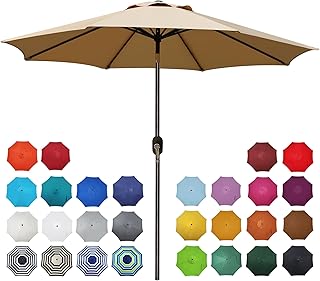
JEAREY 9FT Patio Umbrella (Beige)
JEAREY’s 9-footer earns its place on canopy quality: the waterproof coating actually beads water instead of soaking through at the seams, and the beige fabric resists the pink-to-gray fade that plagues dyed budget polyester. The eight ribs hold their shape well, though I’d still crank it closed before leaving the house on a windy day.
Sunnyglade 9′ Patio Umbrella (Red)
Sunnyglade pairs an aluminum pole with a waterproof polyester canopy, and that aluminum is the key detail: it won’t rust where the finish gets scratched during winter storage. The red canopy is genuinely saturated rather than orange-tinted, which is rarer than it should be at this price.
Ayge 9 FT Patio Umbrella, Fiberglass Frame
If you have one upgrade to spend, spend it here. The fiberglass ribs flex under gusts and return straight, and the 180G UV50+ canopy is measurably heavier in hand than the thin fabric on entry-level models. This is the pick for exposed decks and coastal yards.
9FT Patio Umbrella with Solar Lights
The LED strips run along each rib and charge off a small crown panel, giving you two or three hours of soft ambient light after sunset. Treat the lighting as a pleasant bonus rather than the reason to buy, and store it indoors over winter to protect the battery pack.
Frequently Asked Questions
What size umbrella fits my table?
Add roughly two feet to your tabletop diameter. A 48-inch round table pairs well with a 9-foot canopy; a smaller bistro or balcony setup is better served by the JEAREY 7.5 ft model, which won’t overhang your railing.
Can I leave it open overnight?
Don’t. Wind loads spike unpredictably, and an open canopy acts like a sail bolted to your table. Cranking it closed takes fifteen seconds and prevents the majority of frame failures I’ve seen.
Why does my crank feel stiff?
Usually debris or a dry pulley. Open the umbrella fully, wipe the exposed cord, and hit the crank housing with a dry silicone spray. Avoid oil-based lubricants, which attract grit.
Do these come with a base?
No. Budget every listing here as pole-plus-canopy only and add a base sized to your setup.
Final Thoughts
For most patios, the Ayge 9 FT with its fiberglass frame is the smartest long-term buy, and the JEAREY 9FT is the value pick if you want a durable canopy without the frame upgrade. Choose the JEAREY 7.5 ft for compact balconies, and pair whichever you pick with a base heavier than you think you need.