Key takeaways
- Fuel source first: Electric units need 120V shore power or a serious battery setup — a 500W heater pulls roughly 42Ah per hour from a 12V bank. If you’re dry camping, propane is the only realistic answer.
- Ventilation and CO safety: Any combustion heater consumes oxygen and produces carbon monoxide. Look for a low-oxygen depletion sensor (ODS) and tip-over shutoff, run a battery-powered CO alarm at head height, and keep intentional cross-ventilation open. Never sleep with an unvented heater running.
- BTU matched to volume, not ambition: Roughly 3,000–4,000 BTU handles a 2–3 person backpacking tent or ice shanty; 9,000 BTU suits a wall tent, garage bay, or screened patio. Oversizing means constant cycling and wasted fuel.
- Mounting and stability: A wide reinforced base or foldable tank holder is the difference between a heater that stays put on uneven ground and one that goes over at 2 a.m. Check whether the unit accepts a remote hose for a bulk tank — that upgrade path saves real money.
- Packed size and runtime: Weigh the whole system, not just the heater. A 1 lb canister plus regulator is often lighter than the heater itself, and swap frequency in freezing temps is higher than the spec sheet suggests.
What's inside
Anyone who has spent a night in a canvas wall tent in late October knows the real problem isn’t the cold air — it’s the cold that creeps up through your pad, condenses on the fly, and turns a good trip into a countdown until sunrise. Camp heating gets talked about like it’s one product category, but it isn’t. A propane radiant heater and a 500W desk unit solve two completely different problems, and buying the wrong one means either a dead battery bank or a heater you can’t safely run where you actually need it.
This guide is written from the perspective of someone who has actually rigged, mounted, and hauled these things: which units tolerate being bounced around in a truck bed, which ones you can feed from a 20 lb tank with an adapter hose, and which ones belong in a hard-sided camper with shore power instead of a tent. Below you’ll find the picks worth your money in 2026, plus the selection criteria that matter more than BTU numbers on a box.
As an Amazon Associate we earn from qualifying purchases.



How to Choose a Space Heater For Camping (2026)
- Fuel source first: Electric units need 120V shore power or a serious battery setup — a 500W heater pulls roughly 42Ah per hour from a 12V bank. If you’re dry camping, propane is the only realistic answer.
- Ventilation and CO safety: Any combustion heater consumes oxygen and produces carbon monoxide. Look for a low-oxygen depletion sensor (ODS) and tip-over shutoff, run a battery-powered CO alarm at head height, and keep intentional cross-ventilation open. Never sleep with an unvented heater running.
- BTU matched to volume, not ambition: Roughly 3,000–4,000 BTU handles a 2–3 person backpacking tent or ice shanty; 9,000 BTU suits a wall tent, garage bay, or screened patio. Oversizing means constant cycling and wasted fuel.
- Mounting and stability: A wide reinforced base or foldable tank holder is the difference between a heater that stays put on uneven ground and one that goes over at 2 a.m. Check whether the unit accepts a remote hose for a bulk tank — that upgrade path saves real money.
- Packed size and runtime: Weigh the whole system, not just the heater. A 1 lb canister plus regulator is often lighter than the heater itself, and swap frequency in freezing temps is higher than the spec sheet suggests.
The Best Space Heater For Camping (2026)s Reviewed
Lerat 500W Portable Mini Heater
This is the pick for powered campsites, van builds with an inverter, or a camper you’re prepping before bed — 500W is gentle enough to run on a modest circuit without tripping anything, and the overheating plus tip-over protection makes it safe to leave upright on a bunk shelf. It won’t heat a tent off-grid, but as a takes-the-edge-off unit near an outlet it’s hard to beat for the size.
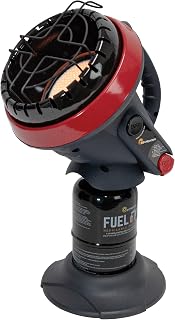
Mr. Heater Little Buddy (3,800 BTU)
The classic one-canister solution: it threads directly onto a 1 lb propane bottle, sits on a stable footprint, and includes an ODS that cuts fuel if oxygen drops. Ideal for ice shanties, pop-up blinds, and small tents where you want warmth while awake and manageable fuel consumption.
Mr. Heater Portable Buddy (9,000 BTU)
Still the benchmark for serious cold. The swiveling regulator, folding handle, and dual heat settings mean it works equally well in a wall tent, an uninsulated garage, or a workshop, and it accepts a hose-and-filter setup for bulk tanks. Build quality is genuinely better than the price suggests.
Portable Propane Heater with Foldable Tank Holder
Cordless operation and a control valve you can actually dial in make this a smart pick for hunters and anglers who need adjustable output without a power source. The foldable tank holder collapses flat for transport, which matters when you’re loading a sled or pack frame.
Cordless Propane Camping Heater with Foldable Tank Holder
Fast radiant warmth is the selling point here — it throws directional heat almost immediately, which is exactly what you want when breaking camp in the dark. Best used in well-ventilated tents and open patio setups rather than sealed enclosures.
Frequently Asked Questions
Can I safely run a propane heater inside a tent?
Only with deliberate ventilation, an ODS-equipped heater, a CO alarm, and never while sleeping. Crack two openings on opposite sides to create airflow, and shut the heater down before you turn in.
How long does a 1 lb propane canister last?
Expect roughly 5–6 hours on a 3,800 BTU unit at full output, less in sub-freezing temps as canister pressure drops. Warming the bottle in your jacket briefly before connecting helps.
Is an electric heater ever practical for camping?
Yes — at RV parks, powered campsites, and in van conversions with shore power. A 500W unit is the sweet spot; anything higher will overload a 15A pedestal shared with other loads.
Should I use a bulk tank instead of small canisters?
For basecamp stays over two nights, absolutely. A 20 lb tank plus a rated hose and fuel filter cuts cost per BTU dramatically and eliminates midnight canister swaps.
Final Thoughts
For most campers, the Mr. Heater Portable Buddy is the one to buy — it has the output for a wall tent and the durability to survive years of tailgates and truck beds. Downsize to the Little Buddy if you’re heating a shanty or small tent on 1 lb bottles, and keep the Lerat 500W mini heater in the bin for powered sites where quiet, flameless warmth is the smarter play.