Key takeaways
- Hose length over tank size: Measure your longest flight. A 4-foot hose means the machine sits two treads below you and slides down; 8 feet or more lets you park the unit on a landing and work an entire run without repositioning. Reach beats capacity every time on stairs.
- Suction rating in kPa: This is the number that determines how dry your treads are when you finish. The 18kPa-class portables pull noticeably more water back out of the pile than older 8–10kPa units, which matters enormously on stairs where padding sits directly on wood and trapped moisture leads to musty odors.
- Hand tool geometry: A wide flat tool is useless on a stair nose. Look for a narrow 3.5-inch head for edges and corners plus a wider tool for the tread field. Clear tool windows are worth having — watching the dirty water track through tells you when a section is genuinely clean.
- Total carry weight: You will be lifting this thing repeatedly. Anything past 20 pounds filled becomes a two-hand awkward hug on a narrow staircase. Portables in the 10–15 pound range strike the practical balance.
- Heat and dwell capability: Warm water breaks down body oils and traffic soil far better than cold. Machines with active heating or a hot-water system loosen set-in grime on high-traffic treads that cold extraction simply pushes around.
What's inside
Stairs are the worst-case scenario for any cleaning machine. You’re working at an awkward angle on a surface that’s part horizontal, part vertical, with a nose edge that collects grit like a gutter. A full-size upright won’t sit level on a tread, and the tank sloshing behind you on a landing is a genuine trip hazard. Meanwhile stair carpet takes more concentrated foot traffic per square inch than anywhere else in the house, so the fibers pack down and hold soil deep in the pile where a surface pass does nothing.
I’ve hauled a lot of machines up and down staircases while working on rental turnovers and my own century-old treads, and the pattern is clear: what matters on stairs is hose reach, hand-tool design, and suction strong enough to pull water back out so you’re not left with damp padding. This guide covers portable spot extractors and a couple of full-size machines with genuinely useful stair attachments, plus the buying criteria that actually predict good results on a staircase.
As an Amazon Associate we earn from qualifying purchases.



How to Choose a Carpet Cleaner Stairs (2026)
- Hose length over tank size: Measure your longest flight. A 4-foot hose means the machine sits two treads below you and slides down; 8 feet or more lets you park the unit on a landing and work an entire run without repositioning. Reach beats capacity every time on stairs.
- Suction rating in kPa: This is the number that determines how dry your treads are when you finish. The 18kPa-class portables pull noticeably more water back out of the pile than older 8–10kPa units, which matters enormously on stairs where padding sits directly on wood and trapped moisture leads to musty odors.
- Hand tool geometry: A wide flat tool is useless on a stair nose. Look for a narrow 3.5-inch head for edges and corners plus a wider tool for the tread field. Clear tool windows are worth having — watching the dirty water track through tells you when a section is genuinely clean.
- Total carry weight: You will be lifting this thing repeatedly. Anything past 20 pounds filled becomes a two-hand awkward hug on a narrow staircase. Portables in the 10–15 pound range strike the practical balance.
- Heat and dwell capability: Warm water breaks down body oils and traffic soil far better than cold. Machines with active heating or a hot-water system loosen set-in grime on high-traffic treads that cold extraction simply pushes around.
The Best Carpet Cleaner Stairs (2026)s Reviewed
Uwant Carpet Cleaner with Steam & Hot/Cold Water System
The steam and hot-water system is the differentiator here — it softens compacted traffic lanes on treads before extraction, which is exactly the problem stairs present. Combined with 18kPa suction, it’s the machine I’d reach for on a staircase that hasn’t been cleaned in years.
BISSELL Little Green 3353D
The reference-standard portable for a reason: compact enough to sit on a tread, with specialty tools that handle both the flat and the riser. The tank capacity is modest, so plan on refills for a long flight, but the build holds up to real use.
Shark StainStriker PX202
Four tools including a 3.5-inch stain head and a crevice tool make this unusually well-suited to stair geometry, where the nose edge and the corner where tread meets riser trap the most soil. Excellent for spot work and pet accidents on stairs.
Hoover PowerScrub Deluxe
The SpinScrub brushes give you genuine mechanical agitation, and HeatForce drying cuts dry time meaningfully. It’s a full-size upright, so you’re relying on the hose and upholstery tool for stairs — workable if you have a landing to stage from, and it doubles as your whole-house machine.
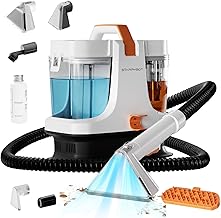
Starrybot Upholstery Cleaner, 18kPa Pet Stain Extractor
A straightforward, light portable with strong suction and no complications. If your stair cleaning is mostly reactive — pet accidents, spills, tracked-in mud — this handles it without the storage footprint of a full machine.
Frequently Asked Questions
How long do carpeted stairs take to dry?
Four to eight hours with good extraction, longer in humid weather. Run a fan aimed up the stairwell and avoid walking on them barefoot until fully dry to prevent re-soiling.
Can I use a full-size upright on stairs?
Not on the treads themselves. Use the hose and hand tool with the machine parked on a landing or at the base, and never leave it perched on a step.
Do I need special solution for stairs?
No, but use less than you think. Over-wetting is the main mistake on stairs because water migrates into the padding and subfloor where extraction can’t reach.
How often should stair carpet be deep cleaned?
Every six months for a busy household, annually otherwise. Vacuum treads weekly with a crevice tool along the nose edge to prevent grit from cutting the fibers.
Final Thoughts
For most homes, the Shark StainStriker PX202 is the smart default — its tool set matches stair geometry better than anything else at the price. Step up to the Uwant with its hot-water system if you’re tackling years of set-in traffic soil, or choose the BISSELL Little Green 3353D if you want a proven, compact portable that will still be running in a decade.