Our Short List of 3

- Best for: A main bedroom where the purifier should react to dust and pollen on its own, day and night.
- Filtration: 3-in-1 system with pre-filter, H13 HEPA filter, and activated carbon
- CADR: 141 CFM for smoke, AHAM verified
- Room size: up to 219 sq ft at the faster air-change rate
- Sensor: AirSight Plus laser PM2.5 sensor with Auto Mode

- Best for: A small bedroom or home office that needs strong, simple cleaning with no account or app involved.
- Motor: 56W high-torque motor, per the listing title
- CADR: 143 CFM smoke, 153 CFM dust, 167 CFM pollen, AHAM Verifide
- Room cycling: refreshes a 222 sq ft room 4.8 times per hour
- Filtration: 3-in-1 filter with HEPA sleep mode
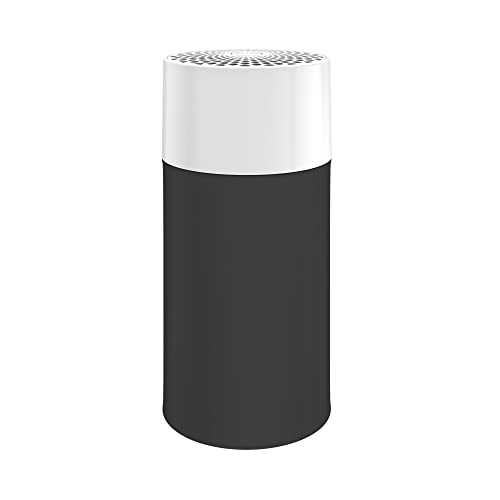
- Best for: A small bedroom or nursery where washable pre-filters and a softer, fabric-covered look matter.
- Filtration: HEPASilent technology for dust, pet dander, smoke, pollen, and allergens
- Included: 2 washable pre-filters
- Room cycling: cleans 161 sq ft in about 12.5 minutes on high
- Extended figure: up to 772 sq ft in 60 minutes on high
All 4 Picks at a Glance
| Product | Specs | Action |
|---|---|---|
| Levoit Core 300S |
| Check price on Amazon |
| Levoit Core 300 |
| Check price on Amazon |
| Blueair Blue Pure 411 |
| Check price on Amazon |
 Levoit LV-H128 |
| Check price on Amazon |
Key takeaways
- Compare four air purifiers sized for small bedrooms, dorms and desks, with verified CADR figures, filter types and noise levels from Amazon listings.
Buying an air purifier for a small room sounds simple until the coverage numbers start contradicting each other. One listing advertises a four-figure square footage, another quotes a far smaller room at several air changes per hour, and both machines look nearly identical. The real decision is matching a purifier’s verified CADR to your actual room size, then deciding whether you need a sensor, an app, or nothing more than a quiet fan beside the bed.
This guide is for bedroom sleepers bothered by dust and pollen, dorm residents with almost no spare floor space, desk workers sharing a small home office, and pet owners whose cat sleeps in the same room. Every pick below was chosen from the product names, coverage figures, filter types, and noise levels printed on its Amazon listing.
Quick Picks
As an Amazon Associate we earn from qualifying purchases
| Product | Best for | Key spec from title |
|---|---|---|
| Levoit Core 300S | Sleepers who want the purifier to adjust itself overnight | AHAM VERIFIDE with Auto Mode and air quality sensor |
| Levoit Core 300 | Buyers who want proven cleaning power without an app | 56W high torque motor, covers up to 1,073 sq ft at one air change per hour |
| Blueair Blue Pure 411 | Design-conscious small bedrooms and nurseries | HEPASilent filtration with 2 washable pre-filters |
| Levoit LV-H128 | Desks, dorm shelves, and nightstands with no floor space | Dual H13 HEPA filter in a 3.3 lb desktop body |
How to Choose
Match CADR to your room, not the headline coverage
The big square-footage number in a product title is usually calculated at one air change per hour, which is too slow to keep up with pollen drifting in or a litter box in the corner. The more useful figure is CADR, the clean air delivery rate, and the room size quoted alongside it at roughly five air changes per hour. A small bedroom of 120 to 200 square feet needs a CADR somewhere around 100 to 140 CFM to cycle its air at that faster pace. Before ordering, find the listing’s AHAM figures if it publishes them, and compare the smaller, faster-cycling room size against your own room’s measurements rather than the headline number.
Decide how much filter the room actually needs
Most small-room purifiers stack a pre-filter, a HEPA-grade filter, and activated carbon into one cartridge, and that combination covers dust, dander, pollen, and everyday odors well. Where models differ is in the details: a dual HEPA layout gives fine particles two passes at the media, while a washable fabric pre-filter on some designs catches lint and pet hair before it loads the main filter, stretching the interval between cartridge changes. If cooking smells or a smoker’s room share your wall, carbon capacity matters more than an extra fan speed. Check which replacement cartridge the listing names, because filters are the ongoing commitment you are really buying.
Take the noise figure seriously if it sleeps with you
A purifier only helps a bedroom if it can run all night without disturbing anyone, so the lowest listed noise level matters more than the top speed’s output. Listings for the quieter models here quote figures in the mid-twenties of decibels on sleep settings, roughly the level of a whisper-quiet room, while turbo modes climb far higher and are meant for a quick clean before bed. Also look for a display that switches off or dims, since a bright air-quality light at eye level can be its own sleep problem. If the machine is headed for a desk instead, noise matters less and a compact footprint matters more.
Choose controls you will actually use
The control question splits buyers into two camps. Sensor-driven models read the air with a laser particle sensor and change fan speed on their own, and app control adds schedules and voice commands through a phone or smart speaker. That suits set-and-forget buyers and anyone whose allergies flare unpredictably. Manual models with a top touch panel and a timer do the same cleaning with less to configure, no account to create, and nothing to reconnect after a router change. Neither approach cleans better by itself; the filter and CADR do that. Pick based on whether you will genuinely open an app to manage a bedroom appliance.
The 4 Best Options
Levoit Core 300S
- Best for: A main bedroom where the purifier should react to dust and pollen on its own, day and night.
- Filtration: 3-in-1 system with pre-filter, H13 HEPA filter, and activated carbon
- CADR: 141 CFM for smoke, AHAM verified
- Room size: up to 219 sq ft at the faster air-change rate
- Sensor: AirSight Plus laser PM2.5 sensor with Auto Mode
A main bedroom where the purifier should react to dust and pollen on its own, day and night.
It needs a 2.4 GHz Wi-Fi connection for app features, so confirm your network supports that band before relying on schedules.
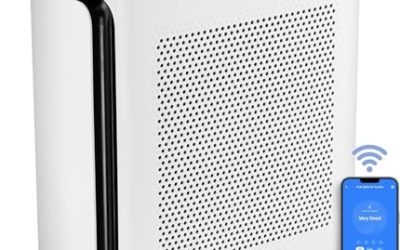
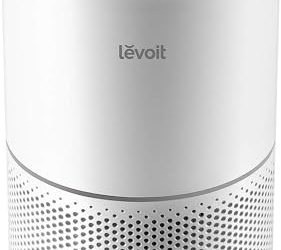
The Core 300S fits the small bedroom where the purifier has to run itself. Its listing describes an AirSight Plus laser sensor that reads PM2.5 in real time and drives an Auto Mode, so the fan rises when dust or cooking drift enters the room and settles back down afterward. The AHAM figures printed for it center on a room of about 219 square feet, which matches a typical bedroom or a small studio corner. VeSync app control and voice assistant compatibility suit buyers who already run schedules for lights and plugs, while the sleep setting keeps the unit beside a bed without a glowing display demanding attention.
Levoit Core 300
- Best for: A small bedroom or home office that needs strong, simple cleaning with no account or app involved.
- Motor: 56W high-torque motor, per the listing title
- CADR: 143 CFM smoke, 153 CFM dust, 167 CFM pollen, AHAM Verifide
- Room cycling: refreshes a 222 sq ft room 4.8 times per hour
- Filtration: 3-in-1 filter with HEPA sleep mode
A small bedroom or home office that needs strong, simple cleaning with no account or app involved.
There is no sensor or Auto Mode, so you choose the fan speed yourself; check the listing for the genuine Core 300 replacement cartridge it names.
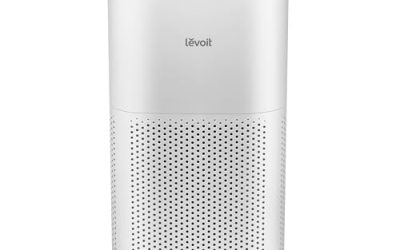
The Core 300 is the same cylinder shape with the smart layer removed, and for many small rooms that is the better trade. The listing leads with a 56W high-torque motor and AHAM-verified CADR figures, and it quotes refreshing a 222 square foot room 4.8 times per hour, which is exactly the pace allergy-minded buyers should shop for. Everything is handled from the touch panel on top: fan speeds, a timer, and a filter-change indicator. It suits a guest room, a rental, or any space where the person using it will never install a purifier app, and its sleep mode with the display off keeps it bedroom-appropriate.
Blueair Blue Pure 411
- Best for: A small bedroom or nursery where washable pre-filters and a softer, fabric-covered look matter.
- Filtration: HEPASilent technology for dust, pet dander, smoke, pollen, and allergens
- Included: 2 washable pre-filters
- Room cycling: cleans 161 sq ft in about 12.5 minutes on high
- Extended figure: up to 772 sq ft in 60 minutes on high
A small bedroom or nursery where washable pre-filters and a softer, fabric-covered look matter.
This is the non-auto version with manual speeds only, and the main filter still needs periodic replacement even though the pre-filters wash.
The Blue Pure 411 takes a different route from the sealed-cartridge crowd: its listing highlights HEPASilent filtration paired with washable fabric pre-filters, two of which are included, so the outer layer that catches hair and lint can be rinsed or vacuumed instead of replaced. Blueair’s figures say it cleans a 161 square foot room in about 12.5 minutes on high, which is the right scale for a small bedroom or nursery, and the fabric sleeve look makes it less of an appliance to hide. A single button cycles the speeds, which keeps it friendly for a child’s room or a guest who will not read a manual.
Levoit LV-H128
- Best for: A dorm room, desk, or small nightstand where a full-size cylinder simply will not fit.
- Filtration: dual H13 HEPA filter in a 3-stage design
- Particle capture: 99.97 percent of airborne particles down to 0.3 microns, per the listing
- Floor area: 225 sq ft in the specification table
- Noise level: 27 dB in the specification table
A dorm room, desk, or small nightstand where a full-size cylinder simply will not fit.
Its reach is personal-space scale, so do not expect it to keep up with a large bedroom; confirm the room size against the listed floor area first.
The LV-H128 is the pick when there is no floor to spare. At 3.3 pounds it sits on a desk, a dorm shelf, or a crowded nightstand, and its specification table lists a floor area of 225 square feet, so it is aimed squarely at personal-space cleaning rather than open-plan rooms. The dual H13 HEPA layout gives the small cartridge two layers of fine-particle media, and the listing describes capturing 99.97 percent of airborne particles down to 0.3 microns. A fragrance sponge adds a scent option for stale dorm air. Touch controls keep the top surface simple, and the listed 27 dB noise level suits a machine that will live an arm’s length from your pillow or keyboard.
Which One Fits Your Situation
A light sleeper with seasonal allergies
Choose the Levoit Core 300S. The sensor-driven Auto Mode means the fan can idle at its quietest through the night and still respond when pollen counts or dust push the air quality down, and the sleep setting keeps both noise and display light low. Its AHAM room figure of about 219 square feet covers most main bedrooms without oversizing the machine.
A dorm room with one free corner of desk
Choose the Levoit LV-H128. At 3.3 pounds it lives on the desk or shelf instead of competing for the tiny patch of floor between the bed and the mini fridge, and its listed 225 square foot floor area is honestly matched to a single-occupancy room. The fragrance sponge also helps with the stale, shared-hallway smell that drifts into dorm rooms.
A nursery or young child’s bedroom
Choose the Blueair Blue Pure 411. One-button control removes any settings a curious toddler could turn into a problem, the washable pre-filters handle the lint and soft-toy fibers nurseries generate, and its 161 square foot cleaning figure lines up with the size of most children’s rooms. The fabric exterior also looks less like tempting machinery than a glossy tower.
A rental or guest room you do not want to manage
Choose the Levoit Core 300. Guests get a touch panel and a timer rather than an app prompt, the filter indicator says plainly when the cartridge is due, and the AHAM-verified CADR figures are strong enough for a spare bedroom that hosts allergy-sensitive visitors. Nothing about it needs your Wi-Fi password or a firmware update.
Common Mistakes
- Sizing by the headline coverage figure, which is usually quoted at one air change per hour, instead of the smaller room size listed at four to five air changes per hour.
- Buying a desktop purifier for a full bedroom, then blaming the category when a personal-space unit cannot cycle a large room’s air quickly enough.
- Ignoring the replacement filter’s model name at checkout, which leads to generic cartridges that fit poorly or genuine ones ordered for the wrong Core variant.
- Running the purifier against a wall or under a shelf, blocking the intake that most small cylinders draw from around their base or sides.
- Turning the unit off during the day to save the filter, when dust and pollen build up fastest with windows opening and people moving through the room.
Frequently Asked Questions
How many air changes per hour does a small room need?
For allergy and dust control, listings and AHAM guidance generally point to about four to five air changes per hour in the room being cleaned. That is why the same purifier shows a large coverage figure at one change per hour and a much smaller one at the faster rate. Size your purchase by the smaller, faster figure and the purifier will keep up on a medium fan speed.
Is a sensor with Auto Mode worth it in a bedroom?
It is worth it if your air quality swings, for example when cooking smoke drifts in or a pet sleeps in the room some nights and not others. The sensor raises the fan only when particles rise, then settles it back down. If your room stays fairly consistent and you are happy setting a speed each evening, a manual model like the Core 300 covers the same cleaning ground.
How often will the filter need replacing?
Most small-room cartridges are rated in months rather than years, and the exact interval printed on each listing depends on the model and how many hours a day it runs. Both Levoit cylinders include a filter-change indicator, which takes the guesswork out. Budget for the genuine replacement cartridge named in the listing, and treat washable pre-filters, like the Blue Pure 411’s, as a way to protect the main filter rather than replace it.
Can one small purifier handle a studio apartment?
Only the sleeping corner of it, realistically. A purifier cleans the air volume it can cycle, so in an open studio it will do its best work near the bed or desk where you spend the most hours. Position it in that zone with clearance around the intake, run it continuously, and expect the far kitchen end of the room to benefit less. For whole-studio coverage, a larger unit with a higher CADR is the honest answer.
More from Amazon
Programs that pair well with the guide above. Offers and eligibility are set by Amazon and may change.
A free business account with business pricing and bulk-buying tools for work, shop or home office.
Create a business accountFree shipping on eligible items, Prime Video and more. Eligible new members can start with a free trial.
Start a Prime free trialAudiobooks and podcasts to listen to on the go. Eligible new members can start with a free trial.
Try Audible freeAd-free music streaming. Eligible new subscribers can start with a free trial.
Try Music Unlimited freeAs an Amazon Associate we earn from qualifying purchases.