Key takeaways
- Hand tool geometry: The nozzle needs a flat lip wide enough to cover a tread in two or three passes but narrow enough to work the corner where riser meets tread. Anything wider than about 6 inches starts fighting the geometry of a standard step.
- Recovery suction: Look for 18Kpa or better on portables. Stairs can’t be blocked off for six hours to dry, so the machine has to pull the water back out rather than just push it into the backing and pad.
- Hose length and machine footprint: If you’re using a full-size unit parked at the bottom, you need enough hose to reach the landing without repositioning. A portable you can set on the step above is often the smarter play.
- Heat, real or borrowed: Onboard heating or a steam function loosens set-in traffic soil far better than cold water. If a machine lacks it, fill the tank from the tap at the hottest setting the manual allows.
- Tank access and weight when full: You’ll be carrying it. A 1-gallon tank full of solution is roughly eight pounds before you add the machine, so check the empty weight and how easily the dirty tank dumps.
What's inside
Stairs are the worst surface in the house to clean and the easiest to neglect. Every tread catches grit off shoe soles, the nosing takes the brunt of foot traffic, and the risers collect splatter you only notice when afternoon light hits them sideways. A full-size upright is dead weight on a staircase — you end up balancing a 20-pound machine on a 10-inch tread while trying to keep the hose from dragging the whole thing down behind you. Meanwhile the dirt keeps compacting into the pile until the middle of each step reads two shades darker than the edges.
I’ve spent a lot of weekends hauling extractors up and down my own stairs, and the pattern is consistent: what matters on stairs is not tank size or motor wattage on the box, it’s whether the hand tool actually seats flat against a curved nosing and whether the suction pulls enough water back out that you’re not left with damp treads overnight. This guide covers portable spot extractors and one full-size machine with a decent hose reach, plus what to look for in specs that actually translate to results on a staircase.
As an Amazon Associate we earn from qualifying purchases.



🛒 Best Price Today on Amazon
Prime members get fast, free shipping on everything above, plus member-only deals. New members get a 30-day free trial — cancel anytime.
How to Choose a Carpet Stair Cleaner (2026)
- Hand tool geometry: The nozzle needs a flat lip wide enough to cover a tread in two or three passes but narrow enough to work the corner where riser meets tread. Anything wider than about 6 inches starts fighting the geometry of a standard step.
- Recovery suction: Look for 18Kpa or better on portables. Stairs can’t be blocked off for six hours to dry, so the machine has to pull the water back out rather than just push it into the backing and pad.
- Hose length and machine footprint: If you’re using a full-size unit parked at the bottom, you need enough hose to reach the landing without repositioning. A portable you can set on the step above is often the smarter play.
- Heat, real or borrowed: Onboard heating or a steam function loosens set-in traffic soil far better than cold water. If a machine lacks it, fill the tank from the tap at the hottest setting the manual allows.
- Tank access and weight when full: You’ll be carrying it. A 1-gallon tank full of solution is roughly eight pounds before you add the machine, so check the empty weight and how easily the dirty tank dumps.
The Best Carpet Stair Cleaner (2026)s Reviewed
Uwant Carpet Cleaner with Steam & Hot/Cold Water System
The three-mode water system is the standout here: cold for fresh spills, hot for ground-in traffic lanes, steam for the stubborn pet stuff that’s been sitting. Paired with 18Kpa recovery, it’s the machine I’d reach for on a staircase that hasn’t been extracted in a few years.
Hoover PowerScrub Deluxe Carpet Cleaner
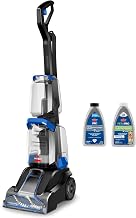
This is the full-size option in the group, and the reason it earns a spot is the upholstery and pet tool set combined with HeatForce drying — the SpinScrub brushes in the hand tool do genuine mechanical agitation rather than just wetting the fiber. Best if you’re doing the stairs as part of a whole-floor job rather than a quick touch-up.
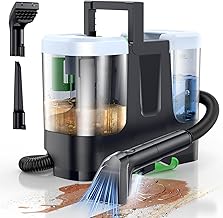
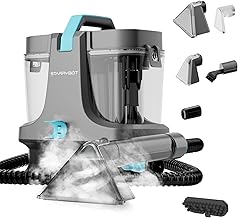
Starrybot Portable Carpet Cleaner with Steam
Steam plus heating in a body light enough to rest on the tread above you, which is exactly the ergonomics stairs demand. The heat makes a visible difference on older set-in spots that cold-water portables tend to smear around.
BISSELL Little Green 3353D
The Little Green has been the default portable extractor for years and the specialty tool set is why — the narrow crevice and stair tools genuinely reach the tread-to-riser seam. No heating element, so fill it hot from the tap and work in smaller sections.
Starrybot Upholstery Cleaner Machine
The stripped-down sibling: 18Kpa extraction in a compact body aimed at pet stains, sofas, and car interiors. If your stairs mostly need spot work rather than a full deep clean, this covers it without the bulk.
Frequently Asked Questions
How long do carpeted stairs take to dry?
Four to six hours with a good portable extractor, longer if you overwet. Run a box fan at the bottom of the stairwell pointed up — the airflow does more than any drying setting on the machine.
Can I use a portable spot cleaner on a whole staircase?
Yes, and it’s usually easier than a full-size unit. Expect to refill and empty the tanks two or three times for a standard 14-step flight, since portable tanks run small.
Do I need to vacuum first?
Always. Wet grit turns into mud that grinds deeper into the pile. Vacuum each tread and the corners with a crevice tool before any solution touches the carpet.
What about pet stains that soaked into the pad?
Extract first, then apply an enzyme treatment, let it dwell the full time on the label, and extract again. One pass with plain solution lifts the visible stain but leaves the odor source in the backing.
Final Thoughts
For most staircases, the Uwant with its hot-water and steam modes is the most capable pick, and the Starrybot Portable with Steam is the lighter, easier-to-carry alternative that gives up surprisingly little. If your stairs are one part of a larger carpet project, the Hoover PowerScrub Deluxe earns its footprint with real brush agitation and faster drying.