Key takeaways
- Live enzymes, not just surfactants: Look for bacterial or enzymatic formulas that digest uric acid. Detergent-only sprays lift the visible mark and leave the crystals behind, guaranteeing a repeat.
- Volume matched to the job: Proper saturation means soaking the spot until it’s as wet as the original accident. A 32 oz bottle handles a few incidents; gallon jugs make sense if you have multiple cats or a habitual sprayer.
- Fiber and backing safety: Check for CRI certification or a manufacturer statement on wool, nylon, and synthetic blends. Test an inside-the-closet patch first — dye-sensitive carpets exist and you won’t know until it’s too late.
- Fragrance strategy: Cats return to scents they recognize. Heavy floral or citrus masking can either deter or confuse them. Fresh, neutral scents tend to work better than anything strongly perfumed.
- Extraction capability: Enzymes need dwell time, then the liquid has to come out. A wet/dry extractor pulls contaminated moisture from the pad — something towels physically cannot do on a deep soak.
What's inside
Cat urine is a chemistry problem disguised as a stain. The uric acid crystals bond to carpet fibers and the backing underneath, and they reactivate every time humidity rises — which is why a spot you scrubbed in March comes roaring back in July. Soap and water spread it. Steam alone can set it. And most bargain sprays just perfume the room while the source keeps working.
I’ve pulled up enough carpet in my own house to know the difference between a cleaner that reaches the pad and one that sits on top looking busy. This guide covers what actually breaks down urine at the molecular level, how to apply it so it penetrates instead of puddling, and which products hold up when you’re dealing with a repeat offender rather than a one-time accident.
As an Amazon Associate we earn from qualifying purchases.



🛒 Best Price Today on Amazon
Prime members get fast, free shipping on everything above, plus member-only deals. New members get a 30-day free trial — cancel anytime.
How to Choose a Cleaner For Cat Urine On Carpet (2026)
- Live enzymes, not just surfactants: Look for bacterial or enzymatic formulas that digest uric acid. Detergent-only sprays lift the visible mark and leave the crystals behind, guaranteeing a repeat.
- Volume matched to the job: Proper saturation means soaking the spot until it’s as wet as the original accident. A 32 oz bottle handles a few incidents; gallon jugs make sense if you have multiple cats or a habitual sprayer.
- Fiber and backing safety: Check for CRI certification or a manufacturer statement on wool, nylon, and synthetic blends. Test an inside-the-closet patch first — dye-sensitive carpets exist and you won’t know until it’s too late.
- Fragrance strategy: Cats return to scents they recognize. Heavy floral or citrus masking can either deter or confuse them. Fresh, neutral scents tend to work better than anything strongly perfumed.
- Extraction capability: Enzymes need dwell time, then the liquid has to come out. A wet/dry extractor pulls contaminated moisture from the pad — something towels physically cannot do on a deep soak.
The Best Cleaner For Cat Urine On Carpet (2026)s Reviewed
Urine B-Gone Enzyme Cleaner, 1 Gallon
The gallon format is the real advantage here — you can flood a spot properly instead of rationing spray, which is the single biggest mistake people make with urine treatment. The lavender scent is present but not overwhelming, and it handles laundry and upholstery alongside carpet.
Nature’s Miracle Cat Urine Destroyer Plus
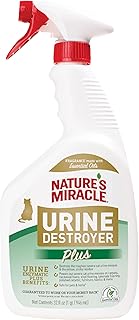
Formulated specifically for cat urine rather than generic pet messes, which shows in how it handles older set-in marks. Give it the full dwell time on the label; rushing this one is where people conclude it didn’t work.
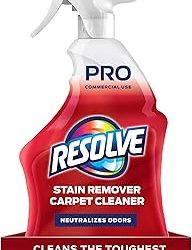
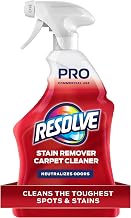
Resolve Urine Destroyer Spray
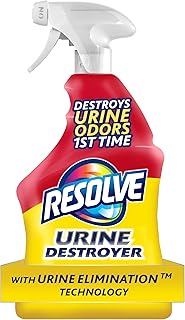
The most accessible pick for everyday accidents, with a trigger sprayer that’s genuinely comfortable for spot work. It’s strongest on fresh incidents — for something that’s been marinating for weeks, reach for a dedicated enzymatic soak instead.
Rocco & Roxie Stain & Odor Eliminator
The bio-enzymatic formula and CRI Seal of Approval make this my default recommendation when someone doesn’t want to think about it. It’s equally at home on crate liners, litter mats, and car upholstery, which makes the bottle earn its shelf space.
Bull Shot Pro Carpet Spot Remover
The foaming action lifts stains upward rather than driving them deeper, which is useful when urine has mixed with dirt or a food spill in high-traffic areas. Pair it with an enzyme treatment — it’s a stain specialist, not an odor eliminator.
Frequently Asked Questions
Why does the smell keep coming back after cleaning?
Because the urine soaked through to the carpet pad and subfloor while your cleaner only reached the surface fibers. Humidity reactivates the remaining crystals. The fix is saturating deeply enough to reach the same depth the urine did, then extracting.
Can I use a steam cleaner on cat urine?
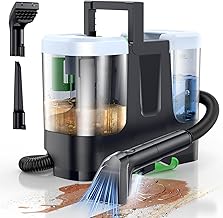
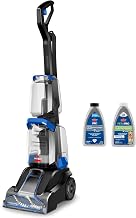
Not as a first step. Heat can permanently bond the proteins to synthetic fibers. Treat with enzymes first, let them work, then extract with cool or lukewarm water using something like the BISSELL Little Green.
How long should the cleaner sit before blotting?
Most enzymatic formulas need 10 to 15 minutes minimum, and stubborn spots benefit from covering the area with a damp towel or plastic to prevent evaporation. Enzymes die when they dry out.
Do vinegar and baking soda actually work?
They neutralize some surface odor temporarily, but neither breaks down uric acid crystals. Worse, vinegar residue can interfere with enzymes applied afterward. Skip the DIY route and go straight to a bio-enzymatic product.
Final Thoughts
For most households, Rocco & Roxie is the reliable all-rounder — certified safe, effective across surfaces, and forgiving of imperfect technique. If you’re managing multiple cats or a long-standing problem area, the gallon of Urine B-Gone lets you saturate properly without counting ounces. Add the BISSELL Little Green if you want to actually pull that contaminated moisture back out of the pad rather than hoping it evaporates clean.