Key takeaways
- Wattage vs. space volume: A 600W unit handles a tight, insulated pump house or a sealed crawl bay under roughly 200 square feet. Bigger or leakier spaces need either 1500W or multiple small heaters placed near the vulnerable runs rather than one central unit.
- Thermostat behavior: Look for a built-in thermostat that cycles on around 38–40°F, not a comfort thermostat aiming for 70°F. Freeze-protection models idle most of the winter and only fire when temps actually drop, which keeps your electric bill sane.
- Mounting and footprint: Crawl spaces flood, and anything sitting on a vapor barrier collects dust. Wall-mountable or bracket-equipped housings keep the unit off the ground and away from debris. Measure your clearance before you buy — some portable towers simply won’t stand up down there.
- Safety cutoffs: Tip-over shutoff, overheat protection, and a flame-retardant housing aren’t optional in a space full of joists, wiring, and insulation batts. Verify the unit is ETL or UL listed and rated for unattended operation.
- Circuit load: A 1500W heater draws about 12.5 amps and will monopolize a 15-amp circuit. Two 600W units total 10 amps and give you redundancy — if one fails mid-cold-snap, you’re not fully exposed. Never run either through a lightweight extension cord.
What's inside
Anyone who’s crawled under a house in January with a heat gun and a roll of pipe insulation knows the drill: you’re on your back in six inches of clearance, trying to thaw a copper line before it splits and floods the joists. Crawl spaces and pump houses are the weak link in most plumbing systems because they’re unconditioned, poorly sealed, and often skipped during insulation retrofits. A single burst supply line can dump hundreds of gallons before anyone notices, and the repair bill dwarfs what a dedicated freeze-protection heater costs.
This guide covers small-wattage utility heaters built specifically for freeze protection, plus a couple of larger portable units that make sense for accessible crawl spaces or attached utility rooms. I’ve broken down what actually matters when you’re shopping — thermostat behavior, mounting options, wattage math, and the safety features that keep a heater from becoming a hazard in a dusty, low-clearance space. If you’re weatherizing this fall, start here.
As an Amazon Associate we earn from qualifying purchases.


🛒 Best Price Today on Amazon
Prime members get fast, free shipping on everything above, plus member-only deals. New members get a 30-day free trial — cancel anytime.
How to Choose a Crawl Space Heater To Keep Pipes From Freezing (2026)
- Wattage vs. space volume: A 600W unit handles a tight, insulated pump house or a sealed crawl bay under roughly 200 square feet. Bigger or leakier spaces need either 1500W or multiple small heaters placed near the vulnerable runs rather than one central unit.
- Thermostat behavior: Look for a built-in thermostat that cycles on around 38–40°F, not a comfort thermostat aiming for 70°F. Freeze-protection models idle most of the winter and only fire when temps actually drop, which keeps your electric bill sane.
- Mounting and footprint: Crawl spaces flood, and anything sitting on a vapor barrier collects dust. Wall-mountable or bracket-equipped housings keep the unit off the ground and away from debris. Measure your clearance before you buy — some portable towers simply won’t stand up down there.
- Safety cutoffs: Tip-over shutoff, overheat protection, and a flame-retardant housing aren’t optional in a space full of joists, wiring, and insulation batts. Verify the unit is ETL or UL listed and rated for unattended operation.
- Circuit load: A 1500W heater draws about 12.5 amps and will monopolize a 15-amp circuit. Two 600W units total 10 amps and give you redundancy — if one fails mid-cold-snap, you’re not fully exposed. Never run either through a lightweight extension cord.
The Best Crawl Space Heater To Keep Pipes From Freezing (2026)s Reviewed
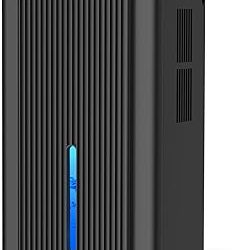
600W Utility Heater with Built-In Thermostat, Well House Heater
This is the straightforward workhorse of the category — 120V, 600W, and a thermostat tuned for freeze prevention rather than comfort heating. It’s the unit I’d install in a sealed pump room or a partitioned crawl bay where you just need the air to stay above freezing without babysitting anything.
600W Pump House Heater with Thermostat
Nearly identical in output to the above, but worth considering as a second unit for larger crawl spaces where one heater can’t cover both ends of the plumbing run. The built-in thermostat holds a stable floor temperature and the compact body fits between joists without much fuss.
600W Utility Heater with Dual-Screen Display
The dual-screen display is the real differentiator here — you can read set point and actual temperature at a glance instead of crawling down with a thermometer to confirm the thing is working. For anyone who wants verification without a trip under the house, that readout earns its keep.
BREEZOME 1500W Portable Electric Heater
At 1500W with 90° oscillation and a 24-hour timer, this is overkill for a small pump house but genuinely useful in a tall, accessible crawl space or an attached utility room with exposed lines. The 37 dB noise floor and remote are nice extras if the space shares a wall with a bedroom.
DREO Space Heater with Thermostat
The PTC ceramic element heats fast and the ECO mode keeps consumption reasonable during long cold stretches. Five modes and a 12-hour timer give you flexibility, though like any tower-style portable, it needs level footing and enough headroom to stand upright.
Frequently Asked Questions
Is 600W enough to keep crawl space pipes from freezing?
In a small, insulated, sealed space — yes, typically. If your crawl space has open vents, missing vapor barrier, or exceeds a couple hundred square feet, either seal it up first or run two units positioned near the most exposed pipe runs.
Can I leave a crawl space heater running all winter?
That’s exactly what thermostat-controlled freeze-protection heaters are designed for. They stay dormant above their set point and only cycle when the temperature drops, so actual runtime is a fraction of the season.
Do I still need pipe insulation if I install a heater?
Absolutely. Insulation reduces how hard the heater has to work and buys you time if the unit fails or the power goes out. Foam sleeves on supply lines plus a heater is the belt-and-suspenders approach.
What about heat tape instead of a space heater?
Heat tape protects individual pipes; a heater protects the whole space, including the valves, pressure tank, and anything else that can freeze. Many setups use both — tape on the most vulnerable line, a heater for ambient protection.
Final Thoughts
For most crawl spaces and pump houses, the 600W Utility Heater with Built-In Thermostat is the practical default — right wattage, right thermostat range, minimal fuss. Step up to the 600W model with the Dual-Screen Display if you want to verify operation without crawling under the house, and consider the BREEZOME 1500W for larger accessible spaces where you need real heating capacity rather than just freeze protection.