Key takeaways
- For most players, the best dice tower for tabletop gaming is a lined wood or engineered-wood tower with a stable 5 x 5 inch-or-larger base, a 6–8 inch catch tray, and clearance for 19 mm dice. Choose a folding model for a small apartment or…
The best dice towers for tabletop gaming are compact, stable towers with a catch tray at least 6–8 inches wide, enough internal clearance for standard 16–19 mm dice, and a construction that suits your table’s noise, storage, and portability limits.
Our top picks
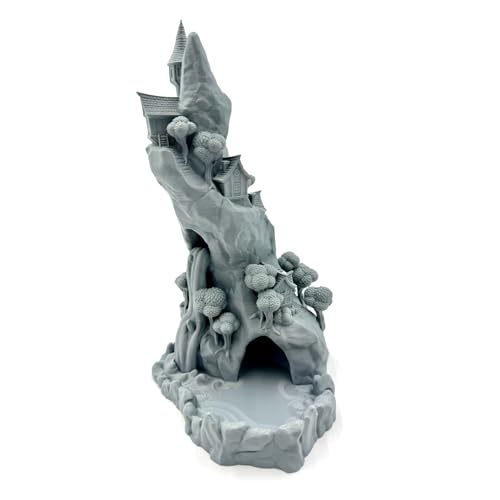

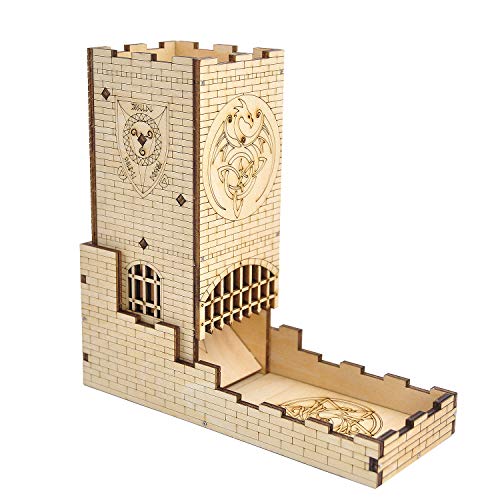

As an Amazon Associate we earn from qualifying purchases at no extra cost to you. Ratings are shown as listed on Amazon.
Quick picks by gaming situation
| Gaming situation | Best dice-tower type | Useful target specifications | Why it works |
|---|---|---|---|
| Small apartment or coffee table | Low-profile folding tower | 7–10 in. tall; under 6 in. deep; 1–2 lb. | Uses less table space and stores easily between sessions. |
| Children, pets, or crowded tables | Wide-base tower with enclosed tray | Base at least 5 x 5 in.; tray walls 1–1.5 in. high | Resists tipping and keeps dice from rolling onto the floor. |
| Quiet games or late-night play | Wood or foam-lined tower | Felt, cork, or silicone landing surfaces | Reduces the sharp clatter of dice striking bare wood or metal. |
| Travel and conventions | Collapsible fabric, acrylic, or magnetic tower | Folded thickness under 2 in.; under 1.5 lb. | Fits in a game bag without sacrificing containment. |
| Large role-playing game table | Tall solid tower with generous tray | 10–14 in. tall; tray 8–10 in. wide | Handles repeated rolls while keeping results visible to everyone. |
What makes a dice tower good?
A dice tower is more than a decorative chute. Dice enter at the top, bounce across internal shelves or deflectors, and land in a tray. The design should produce reliable containment without making every roll unnecessarily loud or difficult to retrieve.
Dice containment
Containment is the first buying criterion. Look for side walls that are taller than the largest dice you use and an exit opening that feeds directly into the tray rather than launching dice across the table. A tray with walls around 1–1.5 inches high is suitable for most polyhedral dice. If you use oversized D20s, metal dice, or handfuls of dice, choose a deeper tray and a broader opening.
Check the tray’s usable area rather than its outside dimensions. A tower advertised as 6 inches wide may offer only 4 inches of actual landing space after thick side walls and the tower body are included. For a role-playing game using several D6s or a D20 plus modifiers, a 6–8 inch tray is a practical minimum. A 9–10 inch tray is more forgiving, but it takes valuable room from maps, character sheets, and player boards.
Footprint and stability
Measure the tower’s base, not just its height. A 5 x 5 inch base generally feels stable on a normal dining table, while a narrow 3 x 3 inch tower can tip when bumped unless it has a heavy bottom or a non-slip pad. Leave approximately 2 inches of clearance around the tower so players can reach the tray and lift dice without knocking over nearby pieces.
On a 30-inch-deep table, a tower with a 6-inch base and an 8-inch tray can consume roughly one-third of the available front-to-back space when players need room to roll, write, and manage cards. For a small 10 x 12 foot room with a compact dining table, a folding tower is usually more practical than a tall, permanently assembled display piece because it can be stored vertically on a shelf or in a cabinet.
Materials compared: quietness, durability, and weight
| Construction | Typical weight | Noise level | Strengths | Trade-offs |
|---|---|---|---|---|
| Solid wood | 1.5–4 lb. | Medium; low with felt or cork lining | Stable, attractive, repairable, and durable | Bulky for travel; finish can scratch or dent |
| Engineered wood or MDF | 1–3 lb. | Medium | Consistent dimensions and usually lower cost | Edges can chip; swelling is possible if exposed to moisture |
| Acrylic or plastic | 0.5–1.5 lb. | Medium to high | Lightweight, easy to wipe clean, and often collapsible | Can scratch, flex, or sound harsh without lining |
| Metal | 2–6 lb. | High unless padded | Very stable and resistant to impact | Heavy, loud, and less comfortable on delicate furniture |
| Fabric or neoprene | 0.3–1 lb. | Low to medium | Portable, quiet, and easy to fold | Less rigid; can collapse or allow dice to pile unevenly |
Solid wood is the safest all-purpose choice for a permanent game room. MDF and engineered wood offer similar shapes at a lower price, but inspect the edges and joints because those areas usually show wear first. Acrylic works well for renters and travelers because it is light and does not require furniture modification. Metal is best when stability matters more than sound, such as at a busy convention table, but add a felt pad underneath to protect a wood or glass surface.
Best dice towers by use case
Best for small tables: a folding or low-profile tower
Choose a tower that folds flat or has a footprint no deeper than 5–6 inches. These models are preferable for coffee tables, card tables, and dining tables shared with a board game. Favor a tray that slides or folds out rather than one that permanently extends behind the tower. The compromise is capacity: a compact tower may be less comfortable for ten or more dice at once, so it suits D20 rolls, small pools, and board-game quantities better than mass combat rolls.
Best for families: a wide, enclosed tower
For children, pets, or players who frequently bump the table, choose a broad base, rounded corners, and a tray with a fully enclosed front and sides. A tower with a magnetic or latched rear panel is useful because loose panels can become a choking hazard or disappear between sessions. Avoid very narrow decorative towers, which can be knocked over by a sleeve, paw, or passing elbow.
Best for quiet rooms: a lined wooden tower
Felt, cork, leather, silicone, or thin neoprene lining makes a greater difference than the outer material alone. The noisiest points are usually the entry ramp, internal deflectors, and the tray floor. A lined wooden tower gives a softer sound while retaining enough weight to stay put. Avoid bare metal if you play in a shared living space or at night; the impact can be surprisingly sharp.
Best for travel: a collapsible fabric or acrylic model
Travel towers should fold without tools and fit beside a rulebook or tablet. Confirm the assembled locking method before buying: snaps and magnets are convenient, but loose-fit panels can shift during use. A folded thickness below 2 inches and a weight below 1.5 pounds are sensible targets. Fabric models are quietest and lightest, while acrylic models are easier to clean and often hold their shape better.
Best for a dedicated game room: a heavy solid-wood tower
If the tower will remain on a gaming table, weight and presentation become advantages. A 10–14 inch tower with a 5–7 inch base can provide consistent rolls and good visibility across a larger table. Check the route into the room before choosing an oversized design: measure doorways, stair turns, and the width between the table and wall. A large tower is not difficult to move by itself, but it becomes awkward when carried alongside a stack of games or a removable table leaf.
Noise, tray size, and dice compatibility
Standard polyhedral dice are commonly around 16–19 mm across, but many games use larger resin, metal, or oversized novelty dice. Measure your largest die and compare it with the tower’s internal channel. Allow at least 3–4 mm of clearance on each side so dice do not wedge at corners. For metal dice, favor a reinforced tower and padded landing surfaces; their extra weight can damage thin acrylic, chip MDF edges, or make a small tray jump when struck.
Tray size should match the way you roll. A 6-inch tray is adequate for one or two D20s or a handful of D6s. Choose 8 inches or more for dice pools, advantage rolls, or games where several players share one tower. A broad tray is useful only if its walls are high enough to contain the result and its interior does not hide small dice in corners.
Durability and maintenance realities
The parts that wear first are usually felt liners, magnetic closures, thin acrylic hinges, and the bottom edges of MDF panels. Felt can compress or collect dust after frequent play; it can usually be replaced with adhesive-backed felt or thin craft foam. Wipe plastic and finished wood with a dry or barely damp cloth, and keep liquids away from MDF joints.
Before buying, check whether the tower arrives assembled or flat-packed. Assembly can take 10–30 minutes for a simple panel design, but glued wooden towers are harder to repair if a deflector breaks. For a tower that will be stored often, prioritize captive hinges, strong magnets, and panels that cannot be installed backward. A model that takes an extra minute to fold but keeps every part attached is less frustrating than one with removable pieces that get lost.
Bottom line
For most players, the best dice tower for tabletop gaming is a lined wood or engineered-wood tower with a stable 5 x 5 inch-or-larger base, a 6–8 inch catch tray, and clearance for 19 mm dice. Choose a folding model for a small apartment or travel bag, a wide enclosed design for family play, and a heavier padded tower for a dedicated game room. Prioritize containment and usable tray space before decorative details: a tower that keeps every roll on the table and leaves room for the rest of the game is the one you will use most.