Key takeaways
- A multimeter turns guesswork into a number. It tells you whether a wall outlet is live, whether a car battery is healthy.
A multimeter turns guesswork into a number. It tells you whether a wall outlet is live, whether a car battery is healthy, whether a thermostat wire is carrying signal, or whether a fuse has quietly blown. When you search for the best digital multimeter under 200 dollars, the cap sits far above what most households need, so the real task is picking the right feature set and the right safety posture instead of chasing the biggest number.
This guide speaks to homeowners, car owners, and electronics hobbyists who want a meter for appliance repair, automotive checks, and basic household wiring questions. A few of the listings below are budget two-thousand-count meters, a few are auto-ranging models with true RMS readings, and one is a full electrical test kit. We judge them only from what the titles state, which means no claims of shop use, just what the spec sheet shows and who each design suits.
Quick Picks
Our top picks



As an Amazon Associate we earn from qualifying purchases at no extra cost to you.
| Product | Best for | Key spec from the title |
|---|---|---|
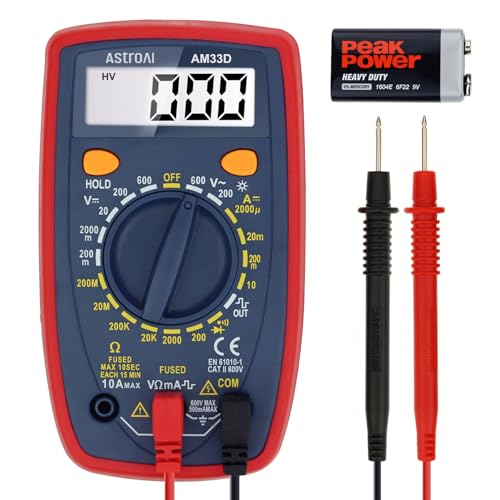
| AstroAI 2000-Count Meter | Basic household and battery checks | 2000 counts, AC/DC voltage, current, continuity, diode |
| Klein Tools MM325 | Everyday electrical work | Manual-ranging, 600V AC/DC |
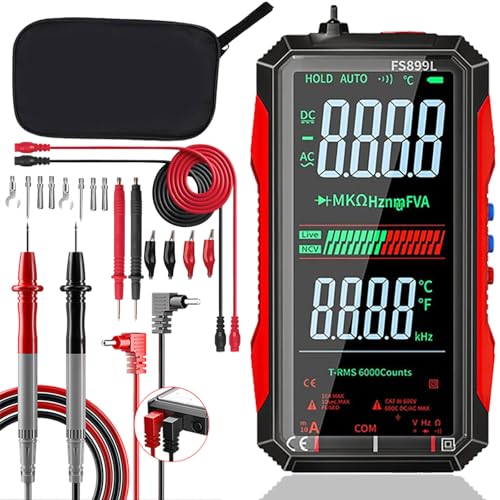
| AstroAI True RMS 6000-Count | Automotive and home troubleshooting | True RMS, 6000 counts, auto-ranging |
| Fluke 17B+ | Higher-voltage and serious DIY work | 1000V AC/DC, current to 10A |
| Klein Tools 69149P Kit | Homeowners who want a full set | Multimeter, non-contact voltage tester, outlet tester |
| KAIWEETS Meter with Case | Car battery and DIY checks | Double fuses, carrying case |
How to Choose
Counts, ranging, and true RMS
Counts describe display resolution. A 2000-count meter is fine for checking whether a battery reads near 12 volts, while a 6000-count meter shows finer steps. Auto-ranging picks the measurement range for you, which is easier for beginners, while manual-ranging means you turn the dial to the expected range, which many electricians prefer for speed and predictability. True RMS matters when you measure non-sinusoidal signals, such as from variable-speed motors or electronic loads; a basic average-responding meter can misread them.
Safety category and voltage rating
Home wiring work calls for a meter with a recognized safety category rating, typically CAT III for fixed installations. The listings that show 600V or 1000V figures hint at that class, but always confirm the category on the listing or the meter itself. Fused current inputs are an important protection, because a mistake in the current mode can destroy a meter or hurt you. Double fuses, mentioned in one listing, are a good sign.
Features that earn their place
Continuity with an audible beep, a diode test, a backlit display, and a hold function are genuinely useful. Extras like capacitance, temperature, and a non-contact voltage sensor add value for appliance and HVAC jobs. A flip stand or magnetic hanger helps when you need both hands free. Check that test leads are included and in decent condition, because poor leads are a common source of flaky readings.
What to ignore and where budgets cut corners
Ignore giant display sizes and flashy colors if the safety rating is vague. Cheaper meters tend to cut corners on input protection, lead quality, and accuracy at the extremes of a range. For occasional jobs in 2026, a straightforward meter with clear safety markings is a better buy than a feature-stuffed one with no documentation.
The 6 Best Options
AstroAI 2000-Count Digital Multimeter
This is a basic meter that measures AC and DC voltage, current, resistance, continuity, and diodes. It is aimed at beginners who want to learn the basics, check batteries, and verify whether an outlet or cord has power without spending much.
- Strength: it covers the essential functions a household needs.
- Strength: the simple design is easy to learn.
- Trade-off: 2000 counts limits resolution, and the title does not mention true RMS.
For a first meter the learning value is high: you can compare a fresh battery with a drained one, trace a dead extension cord with continuity mode, and learn what resistance actually reads on a heating element. Those small exercises build the confidence you need before you move on to household circuits.
It makes a fine first meter for a student or a glovebox tool. Skip it if you work on electronic loads or want finer measurement steps. The listing does not state a safety category in the title, so confirm it before using the meter on household wiring.
Klein Tools MM325
The MM325 is a manual-ranging meter that lists 600V AC/DC voltage, plus battery, current, resistance, diode, and continuity checks. It is for people who value a trusted electrical-tool brand and are comfortable turning a dial to pick a range.
- Strength: the 600V figure matches the kinds of voltages found in homes and light commercial work.
- Strength: the manual-ranging layout gives quick, predictable readings once you know the dial.
- Trade-off: manual ranging has a learning curve for beginners.
Because the dial is the interface, you build a feel for the circuit by choosing the range yourself, and that habit transfers to every other meter you pick up later. The brand’s focus on electrical trades also shows in the layout, which favors the checks a tradesperson repeats daily.
Electricians and serious DIYers tend to like this layout because it responds quickly. Skip it if you want auto-ranging simplicity or true RMS from the title.
AstroAI True RMS 6000-Count Meter
This model adds true RMS and auto-ranging at 6000 counts, with a focus on automotive and home electrical troubleshooting. That combination suits people who want fewer settings to think about and better handling of varied signals.
- Strength: auto-ranging makes it quick for beginners to grab a reading.
- Strength: true RMS and higher counts give finer, more reliable readings on motor and electronic loads.
- Trade-off: the title is truncated, so confirm safety category and fuse details on the listing.
The extra resolution is useful when diagnosing a parasitic battery drain or comparing small voltage drops across a connection, where a coarser display hides the clue. It pairs well with a basic set of alligator clips if you want to leave the leads attached while you work.
It is a good step up for a car hobbyist. Skip it if you want a recognized professional brand or the highest voltage rating.
Fluke 17B+
The Fluke 17B+ lists 1000V AC/DC voltage and current measurements up to 10A, along with resistance, continuity, and diode functions. It is aimed at people who want a long-established name and the higher voltage headroom in the title.
- Strength: the 1000V figure and 10A current range offer plenty of headroom for home and shop work.
- Strength: the brand’s reputation for dependable instruments appeals to those who plan to keep a meter for years.
- Trade-off: it sits at a higher spend level than the budget meters in this group.
Its longer service life can spread the cost over many years, which is the honest way to think about a pricier instrument. Having generous voltage and current headroom also means you are less likely to push it past its limits when a job turns out bigger than planned.
This is the buy-once option for people who expect to use a meter often. Skip it if you check a battery twice a year, because a simpler meter will do the job.
Klein Tools 69149P Electrical Test Kit
This three-piece kit includes a digital multimeter, a non-contact voltage tester, and an outlet tester, along with leads and batteries. It is built for homeowners who want a ready-to-go set for checking outlets, switches, and wires.
- Strength: three different testers cover quick screening and detailed measurement.
- Strength: leads and batteries are included, so you can start immediately.
- Trade-off: the multimeter in the kit may offer fewer advanced features than a standalone model.
A sensible workflow is to wave the non-contact tester near a cable first, then confirm with the meter, and use the outlet tester as a final sanity check on receptacles. Having all three in one kit makes that routine easy to follow and hard to skip.
The outlet tester is useful for spotting reversed wires or missing grounds. Skip it if you only need a single meter and prefer to spend on a higher-grade one.
KAIWEETS Digital Multimeter with Case
KAIWEETS pitches this meter for car battery checks and DIY jobs, with AC/DC voltage, double fuses, and a case. The double fuses and storage case reflect a focus on protection and portability.
- Strength: double fuses add protection against input mistakes.
- Strength: the included case keeps the leads and meter together.
- Trade-off: the title is partly truncated, so confirm counts, true RMS, and safety rating on the listing.
Keeping spare fuses and the leads in the case means the kit is ready for roadside battery checks or a quick look at a trailer light circuit. Neat storage protects the probe tips, which are easy to bend when tossed loose into a tool bag.
It suits a car owner who wants a tidy kit in the trunk. Skip it if you need a professional-brand meter for regular wiring work.
Which One Fits Your Situation
You mostly work on cars and batteries
The AstroAI True RMS 6000-Count or the KAIWEETS meter with case give you voltage readings and fuse protection suited to the garage.
You are learning electronics and basic wiring
The AstroAI 2000-Count meter is simple, and the Klein Tools 69149P kit adds a voltage tester and outlet tester for safe screening before you open a box.
You work on household circuits regularly
The Klein Tools MM325 or the Fluke 17B+ bring higher voltage figures and trusted brand names. Choose the Fluke if you want headroom and longevity.
You want one tool for a family toolbox
The Klein Tools 69149P kit makes sense because members can use the non-contact tester for quick checks and the meter for deeper measurements.
Common Mistakes
- Plugging leads into the current jacks while measuring voltage, which can blow fuses or damage the meter.
- Assuming every meter is safe on household wiring without checking the safety category.
- Choosing by count figures alone and ignoring input protection and lead quality.
- Relying only on a non-contact voltage tester and skipping a confirming reading with the meter.
- Leaving the dial in a current or resistance setting and then touching live circuits.
Related guides
- Battery Powered Floodlight Camera With Local Storage
- Cordless Drill Brush Attachment For Bathroom Grout
- Rechargeable Emergency Lantern For Power Outages
Frequently Asked Questions
Do I need true RMS?
For simple battery and outlet checks, no. It becomes important when measuring variable-speed motors, dimmers, or electronic power supplies, where a basic meter can misread the signal.
What is the difference between auto-ranging and manual-ranging?
Auto-ranging picks the range for you, which is easier for beginners. Manual-ranging needs you to select the range, but it usually responds faster and lets you control exactly what you measure.
Can I use a multimeter to check a wall outlet?
Yes, with the meter in AC voltage mode and the leads placed carefully in the slots. If you are unsure, use an outlet tester or call an electrician, because live wiring carries real risk.
How many counts do I need?
Two thousand counts is enough for general checks. Six thousand counts offers finer steps, which helps when you read small voltage differences in automotive or electronics work.
More from Amazon
Programs that pair well with the guide above. Offers and eligibility are set by Amazon and may change.
A free business account with business pricing and bulk-buying tools for work, shop or home office.
Create a business accountFree shipping on eligible items, Prime Video and more. Eligible new members can start with a free trial.
Start a Prime free trialAudiobooks and podcasts to listen to on the go. Eligible new members can start with a free trial.
Try Audible freeAd-free music streaming. Eligible new subscribers can start with a free trial.
Try Music Unlimited freeAs an Amazon Associate we earn from qualifying purchases.