Key takeaways
- Battery: Convenient for small to medium jobs, with no fuel mixing or exhaust at the work area. Check battery compatibility, runtime under load, and whether the tool is rated for the bit diameter and soil you expect.
- Gas: Often suited to longer sessions and demanding jobs away from charging access. It brings fuel, noise, exhaust, maintenance, and starting procedures to consider.
- Drill-powered attachment: Can be economical for occasional small planting holes if your drill is compatible and its manufacturer permits the attachment. It is not a substitute for a purpose-built auger in large, deep, or tough-soil work.
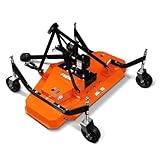
- Tractor-mounted: A practical option for many holes on accessible land with a compatible tractor and three-point hitch. It requires room to maneuver and careful operation around people, structures, and buried services.
Best Earth Augers for Fast Post Holes and Planting
The best earth augers are the ones whose bit diameter, digging depth, torque, and control match your job: choose a manageable single-person auger for planting and light fencing, or a higher-torque two-person or tractor-mounted model for larger holes and demanding soil.
Before choosing by engine size or price, check the hole diameter your project actually needs, the space available to operate, and what lies underground. A wider bit removes much more soil and places a greater load on the operator and machine. In rocky, root-filled, or compacted ground, control and a suitable bit matter as much as raw power.
Our top picks

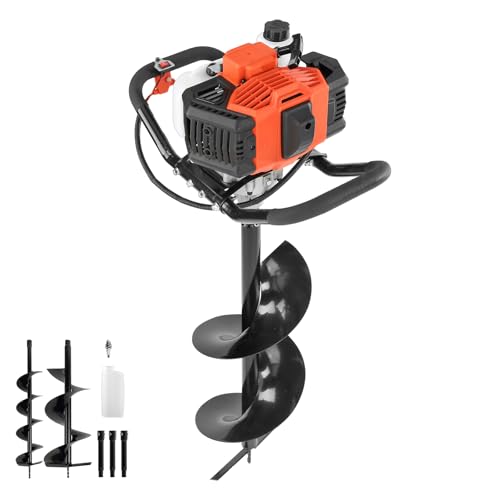


As an Amazon Associate we earn from qualifying purchases at no extra cost to you. Ratings are shown as listed on Amazon.
Choose by job and soil
| Job or condition | Useful starting specification | What to prioritize |
|---|---|---|
| Small bulbs, annuals, or narrow seedlings | 2–3 in diameter; about 8–12 in deep | Lightweight handheld power auger or drill attachment; easy bit changes |
| Shrubs and larger plants | 4–6 in diameter; about 12–24 in deep | Steady torque, a sharp cutting edge, and a manageable machine weight |
| Fence posts | 6–12 in diameter; commonly 24–36 in deep, depending on post and local requirements | Match hole width to the post and backfill plan; use a two-person or mounted auger for large bits or repeated holes |
| Compact clay or dry, packed soil | Project-specific diameter and depth | High torque, low-speed control, and a bit designed for tough soil; avoid forcing a stalled bit |
| Loose soil or frequent shallow planting | 2–6 in diameter; typically under 18 in deep | Light weight, quick starting, and convenient transport |
| Stony ground or roots | Use the narrowest practical bit and proceed cautiously | Operator control and the ability to stop and clear obstructions; no ordinary auger is a safe substitute for locating underground utilities |
These are planning ranges, not universal construction specifications. Post depth depends on post length, frost line, soil, wind exposure, and local rules. Check the project requirements before drilling.
What to compare before buying
Diameter and depth
Bit diameter determines the hole size; a bit that is too wide wastes effort and backfill, while one that is too narrow may not leave room to position or brace a post. For a fence, measure the post and decide how much clearance the installation calls for. For planting, choose a hole that accommodates the root ball without leaving an unnecessarily oversized cavity.
Also check the auger’s usable bit length and the machine’s stated drilling capacity. A long bit does not guarantee a clean, straight hole to its full length: soil buildup, stones, and the need to withdraw the bit to clear spoil can limit practical depth.
Torque, speed, and operator control
Torque helps turn a bit through resistant soil, but more torque can also make a jammed bit harder to control. Look for a dependable handle arrangement, a throttle or speed control that lets you work gradually, and a clutch or other overload protection where provided. Read the manual for the required grip and operating position.
A powerful machine is not automatically the best choice for one person. Wider bits and dense ground can produce sudden kickback when the cutting edge catches a root or stone. For repeated large holes, a two-person machine or a properly matched tractor-mounted auger may be more suitable than a high-powered handheld unit.
Bit design and construction
Bits vary in cutting heads, flighting, and replaceable wear parts. A sharp, appropriately shaped cutting edge helps the bit bite; the spiral flighting lifts loosened soil out of the hole. Replaceable blades or tips can be a practical advantage if you expect to work in abrasive ground. Check that replacement parts are available and that the bit connection matches the powerhead.
Longer, heavier bits can be tiring to handle and may be awkward to transport or store. If you need different hole sizes, compare the cost and availability of compatible bits before committing to a powerhead.
Power source
- Battery: Convenient for small to medium jobs, with no fuel mixing or exhaust at the work area. Check battery compatibility, runtime under load, and whether the tool is rated for the bit diameter and soil you expect.
- Gas: Often suited to longer sessions and demanding jobs away from charging access. It brings fuel, noise, exhaust, maintenance, and starting procedures to consider.
- Drill-powered attachment: Can be economical for occasional small planting holes if your drill is compatible and its manufacturer permits the attachment. It is not a substitute for a purpose-built auger in large, deep, or tough-soil work.
- Tractor-mounted: A practical option for many holes on accessible land with a compatible tractor and three-point hitch. It requires room to maneuver and careful operation around people, structures, and buried services.
Best auger type for each situation
| Your situation | Best fit | Why—and the trade-off |
|---|---|---|
| A few shallow planting holes | Light battery auger or compatible drill attachment | Simple to carry and store; limited suitability for wide holes or difficult soil |
| A garden bed with several shrubs | Single-person power auger with interchangeable 4–6 in bits | Balances hole size and handling; still requires care if the bit catches |
| A short run of fence in ordinary soil | Single-person unit for modest bits, or two-person unit for larger holes | Choose based on bit size, soil, and comfort operating the machine—not hole count alone |
| Many fence posts or repeated agricultural work | Two-person or tractor-mounted auger | Better suited to sustained work; heavier equipment needs more setup and operating space |
| Rocky, root-heavy, or unknown ground | Controlled, cautious digging with a suitable narrow bit—or another digging method | Obstructions can jam an auger abruptly; changing to a shovel or post-hole digger may be safer and more effective |
Plan the job before starting
-
Locate buried services. Contact your local utility-location service before digging, and follow its instructions for marking and safe distances. Do not assume a shallow-looking area is clear.
-
Confirm the hole specification. Check the required depth and diameter for the post or plant, and account for the post’s placement and any backfill material.
-
Check access and footing. Make sure the operator can stand securely and that the machine and bit can be carried to the site. Remove loose obstacles and keep bystanders clear.
-
Start slowly and keep control. Follow the manual’s stance, grip, and starting procedure. Let the cutting edge work rather than leaning heavily on the machine. Stop if the bit binds, then follow the manufacturer’s instructions for clearing it.
-
Withdraw and clear as needed. Soil packed into the flighting reduces cutting efficiency. Lift the bit out periodically, clear spoil only when the machine is stopped as directed, and check the hole depth with a tape or marked probe.
Price and ownership trade-offs
As a broad market guide, basic drill attachments and small planting augers may cost roughly $30–$200, battery or gas powerheads often fall around $150–$600, and heavier two-person or mounted equipment can range from several hundred dollars to well over $1,000. Actual prices vary by power source, included bits, batteries, and accessories.
Compare the complete setup, not just the machine: compatible bits, batteries or fuel, protective equipment, and replacement cutting parts can change the total. For occasional garden planting, a light tool may be the sensible purchase. For a long fence or repeated work, paying for a bit system and power source suited to the soil can save time and reduce strain.
Bottom line
For planting, favor a light, controllable auger with small interchangeable bits. For ordinary fencing, match bit diameter and depth to the post and choose enough torque without overlooking kickback control. For large holes, many posts, or tough ground, step up to a two-person or tractor-mounted setup—or choose another digging method if rocks and roots make augering unpredictable.