Key takeaways
- Foam density: This is the spec that matters most and the one most often hidden. High-density foam holds its shape under concentrated weight; low-density foam bottoms out at the hips no matter how thick the panel is. If a listing avoids density language entirely and leans on words like “plush,” it isn’t built for firm support.
- Thickness versus support: Thicker isn’t firmer. A 4-inch soft topper will swallow you deeper than a 2-inch dense one. For firm support, 2 to 3 inches of dense foam usually beats a taller stack of softer material.
- Flippable construction: Dual-sided toppers with different firmness levels per face are genuinely useful, especially if you’re sharing a bed or aren’t certain how firm you want things. You get a second opinion built into the product.
- Anchoring hardware: Firm foam doesn’t drape, so it wants to travel. Anti-slip straps or elastic corner anchors keep the panel put. Check strap length against your mattress depth before ordering.
- Certifications and off-gassing: CertiPUR-US covers emissions and content; Oeko-Tex covers the cover fabric. Either way, unwrap the topper and let it air out somewhere ventilated for a day or two before it goes on the bed.
What's inside
A sagging mattress announces itself around 3 a.m., when you wake up with your lower back curved into a shape it never agreed to. Most shoppers reach for a topper hoping to fix that, then discover the market is stacked with plush pillow tops that make the sinking worse. Firmness is the harder thing to buy, partly because “firm” gets stamped on foam that compresses to nothing under a hip bone, and partly because density numbers rarely make it onto the listing.
I’ve spent enough weekends flipping mattresses, shimming bed slats, and cutting plywood bunkie boards to know that the fix usually comes down to support underneath rather than cushion on top. This guide covers what actually creates firm support in a topper, which specs are worth checking before you click buy, and how the current crop of high-density and dual-sided options compare for back sleepers, stomach sleepers, and anyone rehabilitating a mattress that’s gone soft in the middle.
As an Amazon Associate we earn from qualifying purchases.



🛒 Best Price Today on Amazon
Prime members get fast, free shipping on everything above, plus member-only deals. New members get a 30-day free trial — cancel anytime.
How to Choose a Extra Firm Mattress Topper (2026)
- Foam density: This is the spec that matters most and the one most often hidden. High-density foam holds its shape under concentrated weight; low-density foam bottoms out at the hips no matter how thick the panel is. If a listing avoids density language entirely and leans on words like “plush,” it isn’t built for firm support.
- Thickness versus support: Thicker isn’t firmer. A 4-inch soft topper will swallow you deeper than a 2-inch dense one. For firm support, 2 to 3 inches of dense foam usually beats a taller stack of softer material.
- Flippable construction: Dual-sided toppers with different firmness levels per face are genuinely useful, especially if you’re sharing a bed or aren’t certain how firm you want things. You get a second opinion built into the product.
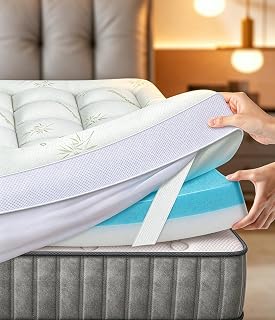
- Anchoring hardware: Firm foam doesn’t drape, so it wants to travel. Anti-slip straps or elastic corner anchors keep the panel put. Check strap length against your mattress depth before ordering.
- Certifications and off-gassing: CertiPUR-US covers emissions and content; Oeko-Tex covers the cover fabric. Either way, unwrap the topper and let it air out somewhere ventilated for a day or two before it goes on the bed.
The Best Extra Firm Mattress Topper (2026)s Reviewed
Extra Firm Mattress Topper Queen 3 Inch, Flippable Dual Sides
The flippable design is the smart engineering here: one face is firm, the other extra firm, so you can dial in support without a second purchase. The high-density core is the real selling point for anyone trying to firm up a mattress that’s developed a hip-level dip.
Glendan Extra Firm Mattress Topper, Queen 3 Inch
Glendan pairs a high-density foam core with a washable cover and anti-slip straps, which solves the two problems firm toppers usually create — drift and dust. Dual certification (CertiPUR-US plus Oeko-Tex) means both the foam and the fabric have been tested, and that’s a meaningful distinction when the cover sits directly against your sheets.
Sleepmax Extra Firm Mattress Topper, 3 Inch Queen
A high-density fusion foam build aimed squarely at pressure relief without the sink, which makes it a reasonable pick for stomach and back sleepers who need their spine held flat. The removable washable cover is the practical touch — foam can’t be laundered, so a cover that can be is worth having.
Fracho 4 Inch King Memory Foam Topper, Dual Layer
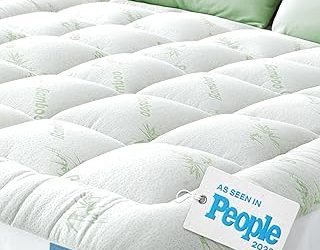
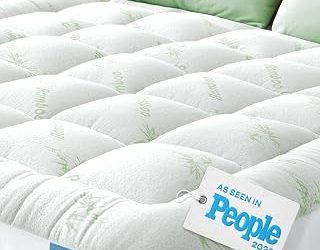
Two inches of bamboo rayon pillow top over two inches of cooling gel memory foam lands at medium-firm rather than extra firm, so read this as the compromise option. Good choice if a genuinely rigid surface has been too much for your shoulders in the past but you still want more structure than your bare mattress offers.
Linenspa 2 Inch Gel Infused Memory Foam Topper, Queen
The thinnest and softest entry on this list, and the most affordable way to test whether a topper helps at all before committing to a dense 3-inch panel. Plush feel with gel infusion for heat management — useful as a comfort layer over an already-firm mattress rather than a fix for a sagging one.
Frequently Asked Questions
Will a firm topper fix a sagging mattress?
Partially. A dense topper bridges shallow dips and evens out the surface, but it can’t rebuild collapsed support underneath. If the sag exceeds roughly an inch and a half, address the foundation first — check for broken slats or a failed center support rail, which is a quick fix with a length of 2×4 and a few brackets.
Does firm foam sleep hotter?
Denser foam does trap more heat than open-cell or softer material, simply because there’s less air moving through it. Gel infusion and breathable covers help. If you run warm, a cotton or bamboo-blend mattress protector over the topper does more for airflow than a synthetic quilted one.
How do I stop the topper from sliding?
Use the included straps first. If it still shifts, a thin non-slip rug pad cut to the mattress dimensions and placed underneath the topper works well and costs very little. Skip the double-sided tape — it leaves residue on the mattress cover.
How long should a firm topper last?
Three to five years for a high-density foam panel with regular use. Rotating it 180 degrees every few months distributes wear, and flippable models effectively double their service life. When it stops recovering its shape overnight, it’s finished.
Final Thoughts
For most people trying to firm up a soft bed, the flippable Extra Firm Queen topper is the sensible starting point because it gives you two firmness levels to test without a second order. The Glendan earns its place on dual certification and anti-slip anchoring, and the Sleepmax is a solid alternative if you want high-density support with a cover you can actually throw in the wash. Whichever you choose, unwrap it early and let it breathe before setting up the bed.