Key takeaways
- Heat delivery method: Infrared quartz warms objects and bodies directly, so it feels warm faster and doesn’t dry out a room as aggressively. Fan-forced ceramic raises ambient air temperature more evenly. For a drafty room with high ceilings, infrared usually wins; for a sealed bedroom, either works.
- Circuit math before anything else: Every 1500W unit pulls roughly 12.5 amps. On a shared 15-amp circuit already running a TV, lamps, and a laptop charger, you will trip the breaker. Map your outlets to their breakers first, and never run one of these on an extension cord or power strip.
- Mounting reality check: Recessed wall units need a framed cavity with proper clearance to combustibles and a nearby outlet inside the wall. Freestanding stoves need nothing but a plug and a few inches of breathing room behind the housing. Be honest about which project you’ll actually finish.
- Thermostat behavior: A digital thermostat with a defined range (60–99°F is common) cycles the element on and off to hold temperature, which cuts your run cost significantly compared to a simple high/low switch you have to manage manually.
- Flame independence: Look for a flame-only mode that runs without the heating element. It’s the feature that keeps the unit useful in April, and it draws almost nothing on LEDs.
What's inside
Every winter I get the same question from friends who’ve just moved into an older house: why is one room always ten degrees colder than the rest? The answer is usually some combination of leaky windows, a poorly balanced duct run, and a thermostat sitting in the warmest hallway. Cranking the central system to fix one cold room is expensive and slow, and most people don’t want to open walls to chase down the real problem. An electric fireplace heater is the pragmatic workaround — a plug-in appliance that pushes 4,000 to 5,100 BTU into the space you actually occupy, with a flame effect that makes the room feel finished rather than patched.
I’ve installed, wired, and torn apart enough of these units to know where the money goes and where corners get cut. This guide walks through the specs that matter on a spec sheet versus the ones that are marketing filler, covers the difference between infrared and fan-forced heat in real rooms, and reviews six units spanning compact stove-style heaters, a 43-inch mantel that doubles as a TV stand, and a recessed 60-inch linear build. Whether you’re setting something on a hearth this weekend or framing an opening into drywall, there’s a fit here.
As an Amazon Associate we earn from qualifying purchases.



🛒 Best Price Today on Amazon
Prime members get fast, free shipping on everything above, plus member-only deals. New members get a 30-day free trial — cancel anytime.
How to Choose a Fireplace Heater Electric (2026)
- Heat delivery method: Infrared quartz warms objects and bodies directly, so it feels warm faster and doesn’t dry out a room as aggressively. Fan-forced ceramic raises ambient air temperature more evenly. For a drafty room with high ceilings, infrared usually wins; for a sealed bedroom, either works.
- Circuit math before anything else: Every 1500W unit pulls roughly 12.5 amps. On a shared 15-amp circuit already running a TV, lamps, and a laptop charger, you will trip the breaker. Map your outlets to their breakers first, and never run one of these on an extension cord or power strip.
- Mounting reality check: Recessed wall units need a framed cavity with proper clearance to combustibles and a nearby outlet inside the wall. Freestanding stoves need nothing but a plug and a few inches of breathing room behind the housing. Be honest about which project you’ll actually finish.
- Thermostat behavior: A digital thermostat with a defined range (60–99°F is common) cycles the element on and off to hold temperature, which cuts your run cost significantly compared to a simple high/low switch you have to manage manually.
- Flame independence: Look for a flame-only mode that runs without the heating element. It’s the feature that keeps the unit useful in April, and it draws almost nothing on LEDs.
The Best Fireplace Heater Electric (2026)s Reviewed
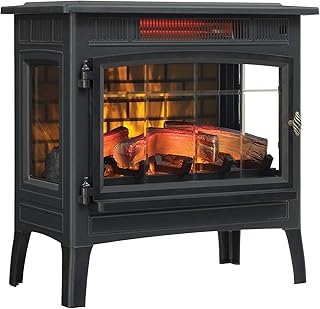
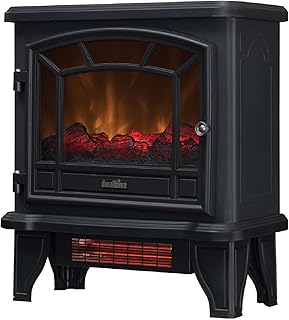
duraflame Freestanding Stove Heater with 3D Flame Effect
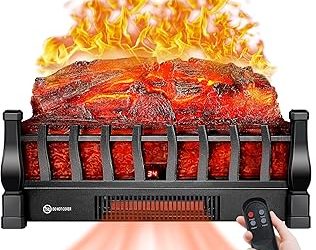
The 3D flame on this one has genuine depth because duraflame layers the effect against a rear reflector rather than projecting onto flat glass. Rated for 1,000 square feet, it’s the unit I recommend when someone wants a cast-iron stove look without any construction work — set it down, plug it in, done.
Dr. Infrared Heater DR-991 Portable Fireplace with Humidifier
The integrated humidifier is the standout here, and it solves a real complaint about electric heat: the parched, static-charged air that comes from running a heater all night. Infrared delivery plus a proper timer and LED display makes this the most technically complete unit on the list, and it runs quiet enough for a bedroom.
duraflame Infrared Quartz Electric Fireplace Stove Heater
Same reliable stove body as the freestanding model above, but swapping in infrared quartz elements changes how the heat feels in a poorly insulated room. If your problem is a cold sunroom or a converted garage, this is the version to buy.
R.W.FLAME 43″ Electric Fireplace Mantel and TV Stand
A wooden surround firebox that carries a television on top is the highest-value footprint on this list, since it eliminates a separate media console. The 750W/1500W split and adjustable LED flame give you fine control, though check that your TV base fits within the top surface before ordering.
ZAFRO 22″ Electric Fireplace Stove with Dual Heat
At 22 inches and 5,100 BTU with a built-in thermostat, this is the compact pick for bedrooms and home offices where floor space is tight. ETL listing and overheat protection are non-negotiable safety baselines, and ZAFRO includes both.
Frequently Asked Questions
Do electric fireplace heaters need venting or a chimney?
No. There’s no combustion, so there’s no exhaust, no carbon monoxide, and no flue required. That’s the core advantage over gas or wood — the installation is electrical, not structural.
What does it actually cost to run one?
At 1500W and an average US rate near 17 cents per kilowatt-hour, expect roughly 25 cents per hour at full output. A working thermostat cuts that substantially because the element cycles off once the room hits temperature.
Can I recess a wall-mounted unit myself?
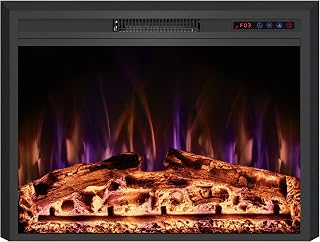
If you’re comfortable cutting drywall and framing between studs, yes. The Tehanld 60″ ultra-thin model is designed for exactly this. Verify the manufacturer’s clearance spec, keep insulation away from the housing, and hire an electrician for any new in-wall receptacle.
Are these safe to run overnight?
Units with ETL listing, tip-over shutoff, overheat protection, and a child lock are designed for extended operation. Keep three feet of clearance from bedding and furniture, and plug directly into a wall outlet.
Final Thoughts
For the best overall combination of heat quality and thoughtful features, the Dr. Infrared DR-991 earns the top spot — the humidifier alone justifies it for anyone running heat in a bedroom. If you want a drop-in-place solution with the best flame effect, the duraflame freestanding stove is the safe bet, and for a clean architectural look worth the framing work, the Tehanld 60″ ultra-thin recessed unit is the one to build around.